Quick Answer
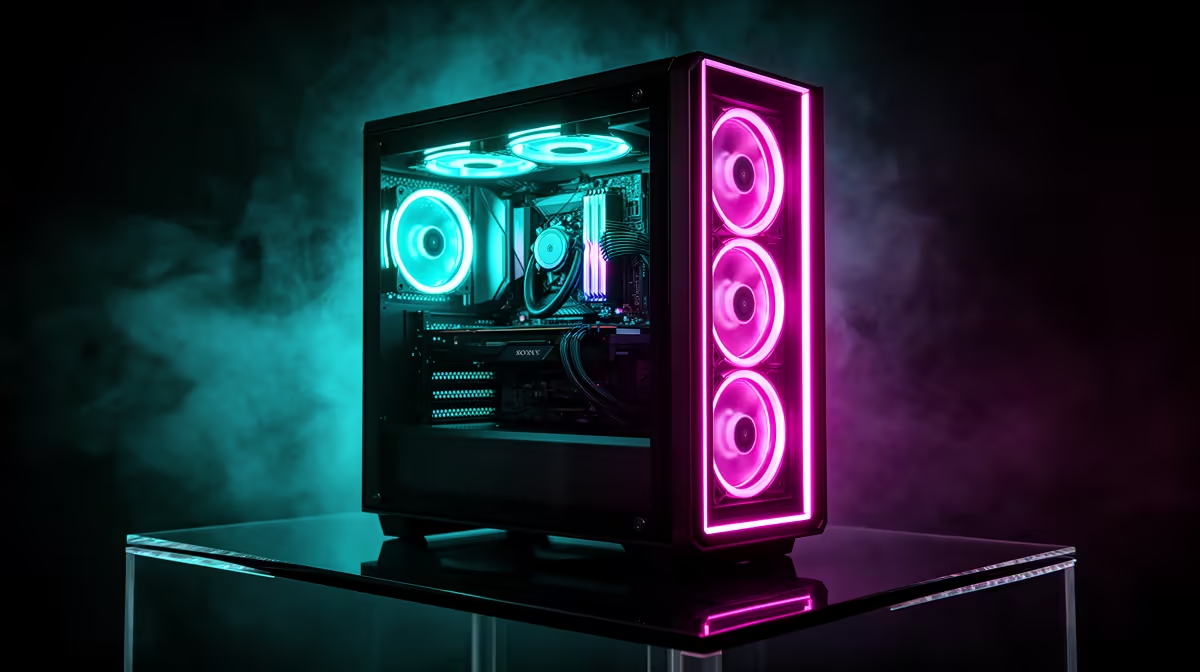
Heat build-up in glass-panel cases is caused primarily by reduced intake airflow from replacing mesh or perforated panels with glass, combined with heat radiation from components being partially trapped by the glass surface. Glass panels block the convective airflow paths that open mesh panels allow, forcing heavier reliance on active fan cooling.
Why Glass Restricts Airflow Naturally 🌡️
Tempered glass is a solid, non-porous surface. When a mesh front panel is replaced with a glass panel, the intake air must enter through smaller gaps around the glass frame edges, through a bottom intake slot, or through separate mesh sections if the design includes them. A full-mesh front panel has effective open area of 60 to 70 percent of its face, while a glass front panel has zero open area and relies entirely on its perimeter gaps, which might total five to fifteen percent of the same face area. This structural difference is the root cause of the three to eight degree Celsius temperature increase that glass-front cases show compared to mesh-front equivalents under identical component and fan configurations.
Heat Radiation and the Glass Greenhouse Effect 🔆
Beyond airflow restriction, glass panels create a mild greenhouse effect by trapping radiated infrared heat from components. GPU shrouds, voltage regulator heatsinks, and M.2 SSD covers all radiate heat as infrared energy, which passes through air but is partially absorbed and re-radiated by glass. In a case where the glass side panel sits within five to ten centimetres of the GPU shroud, this radiated heat raises the local ambient temperature around the GPU. The effect is not dramatic, typically one to three degrees Celsius at GPU level, but it compounds the airflow restriction penalty. In a South African summer where ambient room temperatures are already elevated, this compounding effect is more significant than in a climate-controlled environment.
Compensating for Glass Panel Heat Build-Up 🔧
Builders who choose glass-panel showcase cases can offset the thermal disadvantage through three approaches. First, increase intake fan static pressure using high-static-pressure fans rated at 2.5mm-H2O or above, which push more air through restricted intake paths. Second, mount the 360mm AIO radiator at the top as an exhaust if front intake area is severely restricted, pulling heat out from above. Third, ensure the bottom intake area, usually filtered and below the PSU shroud, is unobstructed by the desk surface by using case feet that raise the case at least 20mm off the desk. Each approach recovers two to five degrees Celsius independently.
Leave a Gap Behind Glass Side Panels ⚡
Positioning a glass-panel case flush against a wall restricts the side panel's heat dissipation and prevents warm air from circulating away from the outer glass surface. Leave at least 150mm of clearance between the glass side panel and any wall or barrier. In a typical South African study or bedroom setup, pulling the case to the front edge of the desk rather than the back corner makes a genuine thermal difference.
FAQ
How much hotter do glass-front cases run compared to mesh-front cases?
In controlled tests with identical components and fan configurations, glass-front cases typically run three to eight degrees Celsius warmer at GPU junction temperature than mesh-front equivalents.
Can I add intake fans to compensate for a glass front panel?
Yes, high-static-pressure fans positioned at any available intake mounting point (bottom, top, or rear intake if the case supports it) help compensate.
Should I choose glass front or mesh front for an RTX 5090 build?
For an RTX 5090 at 575W TDP, a mesh-front case is the safer thermal choice.
Choosing the right case for your GPU and cooling setup?
Browse gaming cases at Evetech including mesh-front and glass-panel designs with full thermal specs to find the layout that matches your performance needs.