Quick Answer
Under R40,000 for an ultrawide monitor, you give up the highest refresh rates, peak HDR brightness and the very largest panels, not core usability. A 34-inch 3440x1440 ultrawide at 100-144Hz is comfortably achievable in that band and is excellent for both work and gaming. You trade flagship extras, not the ultrawide experience itself.
What you actually sacrifice
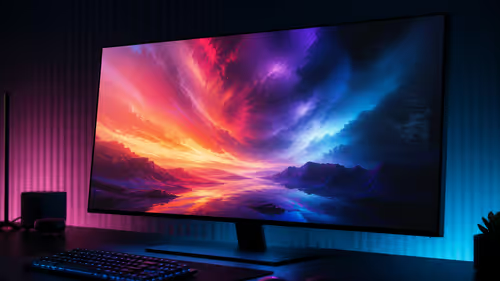
Below R40,000 you typically forgo 240Hz refresh, true HDR1000 brightness, and 38-49 inch super-ultrawide sizes. What you keep is the thing that matters: the 21:9 aspect ratio with 3440x1440 resolution, which gives extra horizontal workspace for spreadsheets and timelines and a wider field of view in games. The core benefit is fully intact.
What you keep
In this band you can get a 34-inch IPS or VA panel at 3440x1440, 100-144Hz, with FreeSync/G-Sync support and good sRGB coverage for content work. That covers productivity, creative editing and gaming well. A higher refresh costs more, but 100-144Hz is already smooth for most games.
Who should stretch and who should not
If you are a competitive shooter player chasing 240Hz, an ultrawide under R40,000 may not satisfy you. If you do mixed work, single-player gaming and creative tasks, this band delivers nearly everything the flagships do for far less. Match the spec to how you actually use the screen.
FAQ
What ultrawide resolution should I expect under R40,000?
3440x1440 (21:9) on a 34-inch panel is the standard and the sweet spot. It gives generous workspace and an immersive game view without needing flagship pricing.
Do I lose gaming smoothness at this price?
No. 100-144Hz with adaptive sync is achievable under R40,000 and is smooth for most genres. You only sacrifice the 240Hz refresh that competitive shooter players chase.
Is HDR worth it on a sub-R40,000 ultrawide?
Entry HDR exists but rarely hits the brightness for a true HDR effect. Treat it as a bonus, not a reason to buy; the resolution and refresh matter more day to day.
sub-R40,000 ultrawide, target a 34-inch 3440x1440 panel at 100-144Hz with adaptive sync. That keeps the full ultrawide benefit and only trades away flagship-tier refresh and HDR you may never need.