Quick Answer
For SA homes, the five most important music sync light features are: onboard microphone for sync without phone dependency, offline operation capability, 2.4GHz Wi-Fi compatibility, sensitivity adjustment, and frequency band customisation. These directly address the connectivity and acoustic realities of SA living spaces.
Onboard Microphone vs Software-Based Sync 🎵
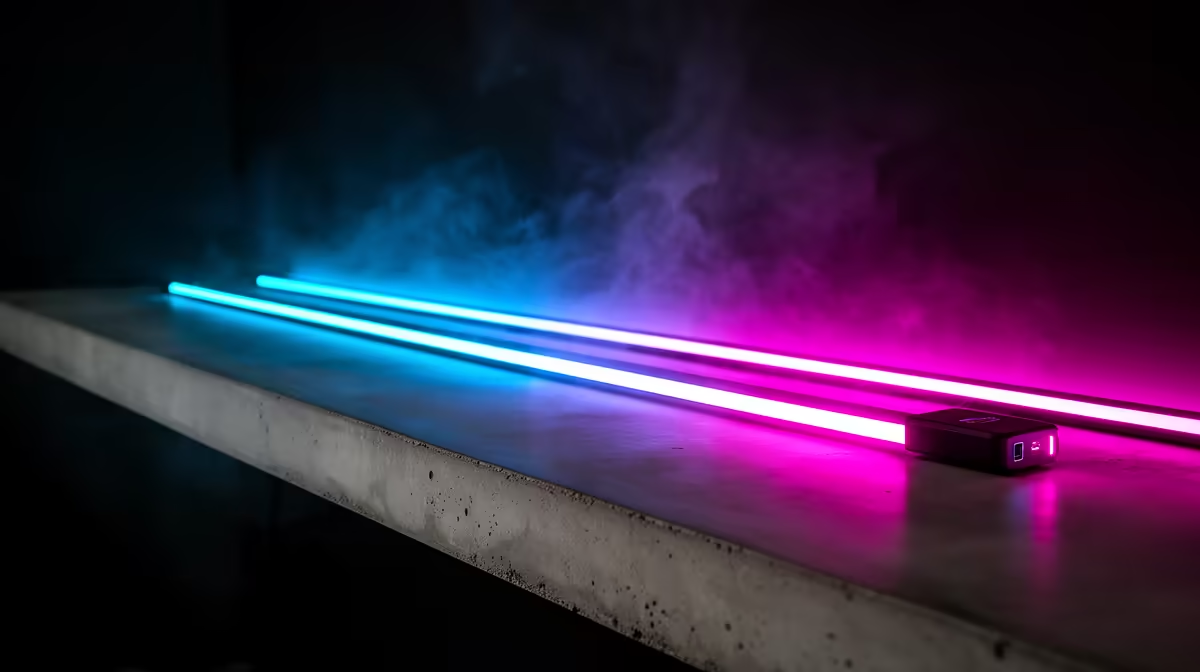
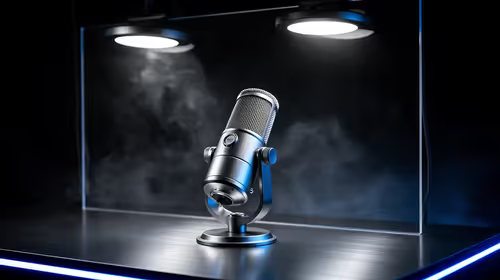
Music sync systems use one of two input methods. An onboard microphone built into the controller panel picks up room audio passively, requiring no phone or PC connection to maintain sync. Software-based sync routes audio through your phone microphone via the companion app. For SA homes where leaving a phone running a background app continuously drains battery and creates notification interruptions, onboard mic systems are significantly more practical for extended gaming sessions. Govee and Nanoleaf both offer systems with onboard rhythm modules. If you stream from a desktop PC, an onboard mic near your speakers picks up music from Spotify or YouTube without any API integration needed.
Offline Operation and Wi-Fi Resilience 🔧
SA internet connections, even on fibre from providers like Openserve or Frogfoot, can experience brief outages during ISP maintenance or cable faults. A music sync LED system that requires an active internet connection will lose its reactive capability during these windows. Systems that cache effects locally and only require Wi-Fi for initial setup and app updates are the more resilient choice. Govee's local API mode and Nanoleaf's local processing architecture both continue operating without internet access once configured. Confirm this feature in specifications before purchasing.
SA-Specific Installation Features Worth Checking 📐
Local wall construction affects microphone performance. SA homes with high ceilings and hard plaster surfaces create strong bass reflections that can cause double-trigger artefacts where a single kick drum registers as two light pulses. A sensitivity adjustment slider in the companion app lets you reduce microphone gain to filter reflected sound. Frequency band customisation, where you independently set the colour response for bass, mid, and treble, lets you tune the effect to your music genre and room acoustics. These two features distinguish quality sync systems from budget alternatives that offer only a single on/off sync mode.
Room Acoustic Quick Fix ⚡
If your music sync lights are triggering erratically due to bass reflections in a hard-walled SA room, place a folded blanket against the wall opposite the controller module for a test session. If sync quality improves, reflections are the cause, and adding a small rug to the room is a permanent fix.
FAQ
Does music sync work with TV audio in a living room setup?
Yes. The onboard microphone picks up any room audio, including TV dialogue and soundtrack. Sensitivity may need to be reduced compared to a music-only setup because TV audio has more dynamic variation than a music playlist.
Will music sync work with South African DStv decoders or streaming boxes?
Yes. Audio from DStv, Netflix via Apple TV, or Google TV plays through your room speakers, and the onboard mic picks it up regardless of the source device. No integration is required between the LED system and the media source.
Can I run music sync and HomeKit automations at the same time?
Yes. Music sync runs at the application layer and HomeKit runs at the network automation layer. A HomeKit automation that changes the base scene colour will affect the music sync palette until the sync mode is manually stopped and restarted.
Looking for music sync LED lights suited to a South African home?
Evetech stocks smart lighting systems with onboard microphone sync and offline operation, available for delivery across SA.