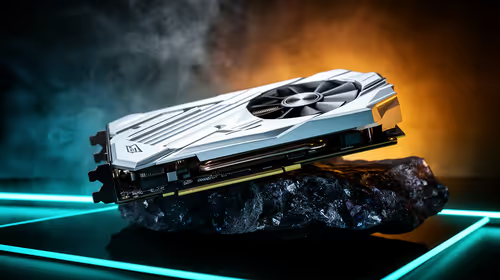
Pushing pixels in 4K or 8K requires serious horsepower. If you are rendering massive 3D scenes or editing heavy video timelines, sluggish VRAM can kill your productivity. Enter the latest generation of graphics cards. But what is the best way to maximize 16GB GDDR7 memory performance in high-resolution workflows? Let us break down how South African creators can squeeze every drop of speed out of this incredible tech.
The Power Behind the Tech 🚀
GDDR7 is incredibly fast. It delivers unprecedented bandwidth for modern GPUs. This means high-resolution textures load almost instantly. When you work with 8K video files, that bandwidth prevents timeline stuttering.
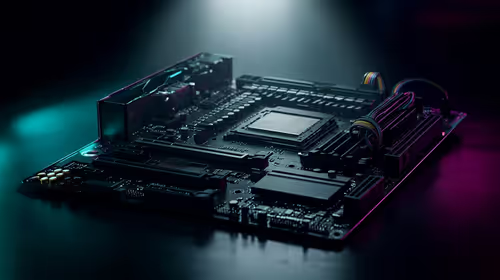
However, raw speed is only half the battle. You need a balanced system to truly get the most out of your VRAM. Pairing a next-gen GPU with an outdated processor is a massive mistake. Building a new rig? Browsing the top-tier gaming PC deals at Evetech is a smart starting point. You want a CPU that can feed data to your graphics card without hesitation. South African creators know that time is money. Spending an extra R3,000 on a better processor now will save you countless hours of rendering time later.
Optimise Your Software Settings 🔧
Hardware needs the right software configuration to shine. First, always install the latest Studio Drivers for your GPU. These drivers are specifically tuned for creative applications rather than just gaming.
Next, look at your cache settings. Programs like DaVinci Resolve or Blender will quickly eat up VRAM if left unchecked. You can manually allocate how much memory these apps use. This ensures your system remains stable during heavy renders. Modern high-performance laptops now pack enough thermal cooling to handle intense workloads without throttling. South African summers can be brutal on electronics. Always ensure your hardware has adequate airflow to prevent thermal throttling during long rendering sessions.
VRAM Management Pro Tip ⚡
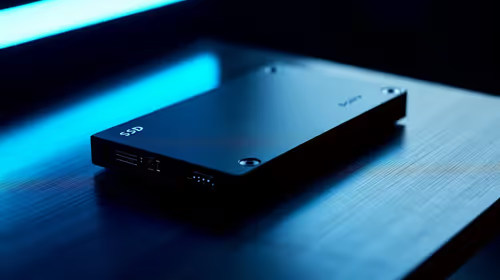
In Premiere Pro or After Effects, regularly clear your media cache. Fragmented cache files force your GDDR7 memory to work harder than necessary. Point your scratch disks to a dedicated Gen4 NVMe SSD to keep bandwidth flowing smoothly.
Eliminate Hidden Hardware Bottlenecks ✨
Your graphics card does not operate in isolation. Fast GDDR7 VRAM needs equally fast storage to fetch high-resolution assets. If you are still using older SATA drives, you are bottlenecking your entire workflow. Upgrade to a PCIe Gen4 or Gen5 NVMe SSD. This allows massive files to stream directly into the GPU memory. Upgrading does not have to cost tens of thousands of ZAR. You can often find massive discounts by keeping an eye on the latest component specials online.
Also, check your system RAM. Having 16GB of GDDR7 on your GPU is fantastic. However, you still need at least 32GB of DDR5 system memory for complex 3D rendering. When the VRAM fills up, the system spills over into your standard RAM. If that standard RAM is slow, your render times will skyrocket. The goal is to keep the data pipeline completely clear. Match your blazing-fast GPU with high-speed storage and ample system memory to guarantee peak efficiency. This allows you to meet tight client deadlines with absolute confidence.
Ready to Supercharge Your Workflow?
Pushing high-resolution pixels requires serious hardware. Whether you need a massive GPU upgrade or a complete system overhaul, Evetech has you covered in South Africa. Explore our massive range of PC specials and build the ultimate creative powerhouse today.