Quick Answer
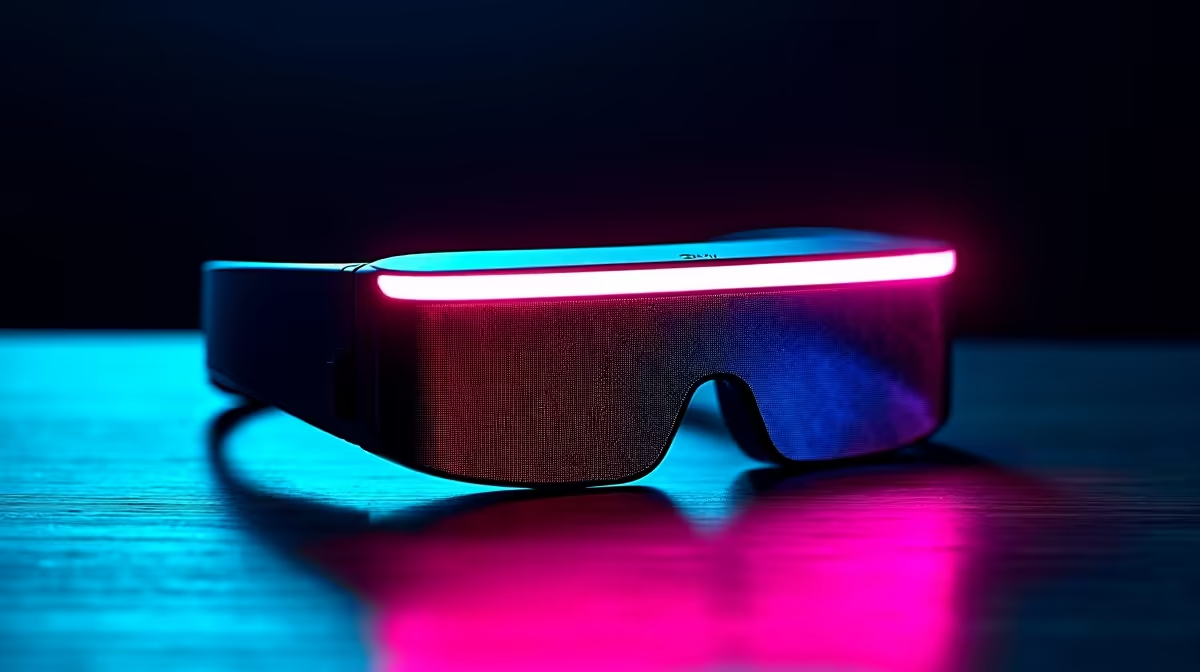
The easiest AR-glasses upgrade for travel gaming is simply pairing a plug-and-play USB-C pair with your existing handheld or phone, no extra hardware needed. A model around R6,000 with a single USB-C cable and auto-detected display is the lowest-effort route to a portable big screen.
Why Plug-And-Play Is The Easy Win
The simplest upgrade is the one that works the moment you connect it. AR glasses that draw power and video from a single USB-C cable, with no separate dongle or app setup, turn any compatible handheld or phone into a private big-screen device in seconds. Look for a pair that the device recognises automatically as an external display, so there is nothing to configure before you start playing on a train or plane.
Keep The Setup Effortless
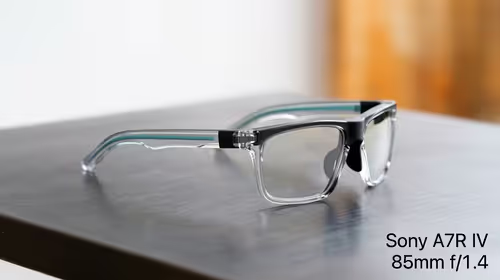
To keep it easy, confirm your device supports DisplayPort Alt Mode over USB-C, since that avoids needing an adapter box. Choose glasses with auto keystone and a clear default focus so you are not fiddling on a cramped seat. A lightweight sub-90g frame and a soft case round it out. Skip models that require a separate beam unit or companion app unless you specifically want their extra features; for the easiest upgrade, fewer parts is better.
FAQ
What makes an AR-glasses upgrade easy?
A single USB-C cable carrying power and video, with the device auto-detecting the glasses as a display. No dongle or app setup means you simply plug in and play.
Do I need an adapter for AR glasses?
Not if your device supports DisplayPort Alt Mode over USB-C; then a direct cable works. Models needing a separate beam unit add parts and effort.
Will any handheld work with plug-and-play AR glasses?
Only those with a video-capable USB-C port. Confirm DisplayPort Alt Mode support on your handheld or phone before buying for a hassle-free connection.
For the easiest upgrade, pick AR glasses that run on a single USB-C cable and check your handheld supports DisplayPort Alt Mode first.