Quick Answer
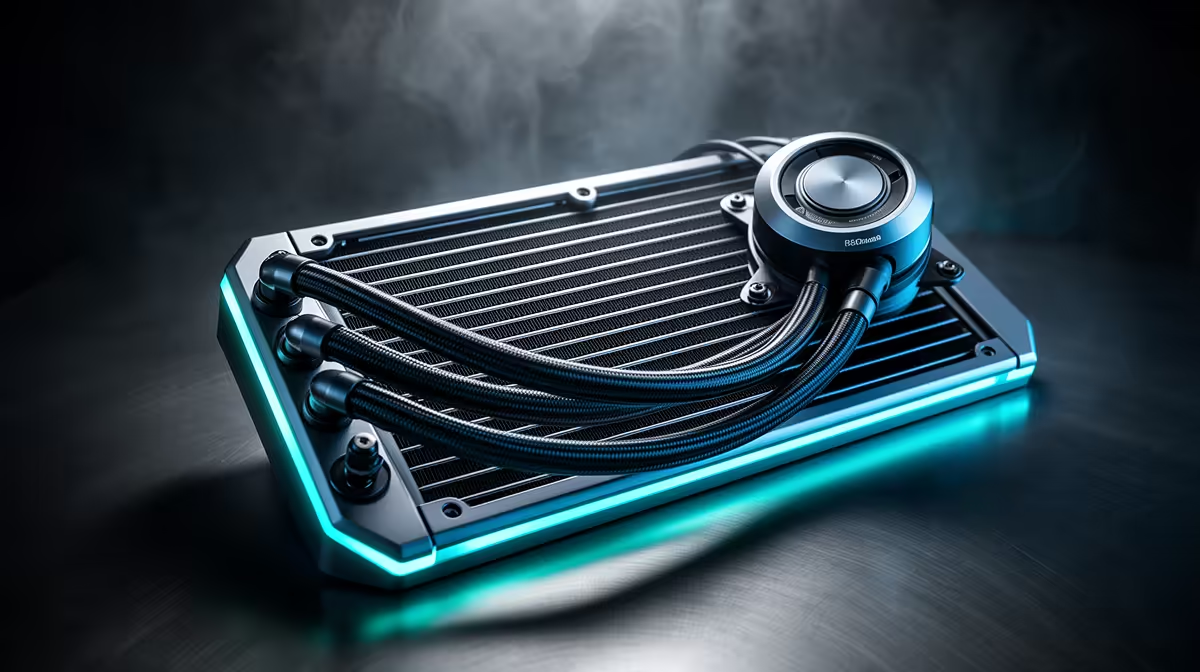
A premium 360mm AIO should offer a high-conductivity copper micro-fin cold plate, a proven pump unit (ASETEK or proprietary 8th-gen equivalent), fan static pressure above 2.5 mm-H2O, full socket support for AM5 and LGA1851, and software-configurable RGB. For South African builds, budget between R2,500 and R4,000 for a unit that delivers all these features without compromise.
Cold Plate and Pump Quality: The Non-Negotiables 🔬
The cold plate is where thermal performance is won or lost. Look for a micro-fin copper base with a high fin density, as this directly determines how efficiently heat passes from the CPU's IHS into the coolant. The pump is equally critical: a pump running at 2,400 to 3,600 RPM with low noise (under 20 dB at moderate load) indicates a well-engineered unit. ASETEK Gen 8 pump platforms and their licensed equivalents from Corsair, ASUS ROG, and other brands are well-regarded benchmarks. A premium AIO should sustain CPU temperatures below 80 degrees Celsius for a Ryzen 9 9950X at default TDP, which is the industry benchmark for this cooler class.
Fan Specifications and Radiator Build Quality 💨
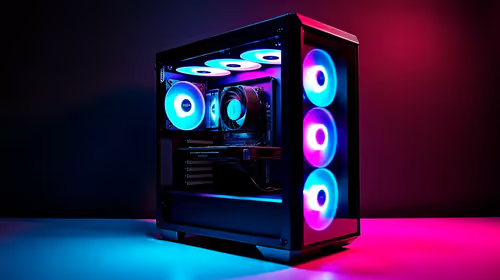
Three 120mm fans with static pressure above 2.5 mm-H2O (water column, the standard pressure metric for radiator fans) ensure adequate airflow through the tightly-spaced aluminium fins. Look for PWM control across the full 0 to 100% range so you can create custom fan curves tied to CPU temperature, and ensure peak fan RPM sits between 1,800 and 2,500 RPM (beyond 2,500 RPM fans become noticeably loud). The radiator itself should be all-aluminium with a thick fin stack; a 27mm or 30mm thick radiator handles more thermal load than a thin 25mm unit at the same fan speed. Daisy-chain ARGB cabling on the fans is a meaningful convenience feature worth looking for in the premium tier.
Software, Aesthetics, and Future-Proofing 🖥️
A premium AIO should include a unified software suite that controls fan curves, pump speed, and lighting from a single interface. ASUS Armoury Crate, Corsair iCUE, and MSI Center are the main ecosystems in this category, each offering per-fan RPM control and temperature-triggered curves. Check whether the AIO ships with mounting hardware for all current sockets: AM5, AM4, LGA1851, and LGA1700. A forward-looking premium unit should ideally commit to mounting kit availability for at least one future socket generation. An AMOLED or LCD pump head display is a premium differentiator but not a core requirement; focus on thermal and acoustic fundamentals first.
Fan Curve Pre-Configuration Tip ⚡
Before your first full gaming session, open the cooler's software and set a custom fan curve that ramps fans from 30% at 50 degrees Celsius to 100% at 85 degrees. This prevents the default "performance" preset from running fans at full speed during desktop use, cutting average noise levels significantly while keeping thermal headroom for gaming spikes.
FAQ
What is a realistic lifespan for a premium 360mm AIO?
Most sealed AIOs from reputable brands last five to seven years before coolant degradation or pump wear becomes noticeable. Some units run well beyond this. The pump is the most likely failure point; a quality pump rated to a high MTBF (mean time between failures) is a meaningful spec to check on the product page.
Does RGB lighting on the fans affect performance?
No, ARGB LEDs on the fan frame draw minimal current and have no measurable effect on fan airflow or motor performance. The LEDs are purely decorative.
Should I prioritise a thicker or larger radiator?
For a 360mm format, radiator thickness matters more than most buyers realise. A 30mm-thick radiator holds significantly more coolant volume and fin surface area than a 25mm unit, translating to 3 to 5 degrees Celsius lower sustained temperatures under heavy multi-thread workloads.
Specing up your next high-performance build?
The full range of premium 360mm AIOs is stocked at Evetech, with detailed specs on cold plate type, pump generation, and socket compatibility for every model listed.