Quick Answer
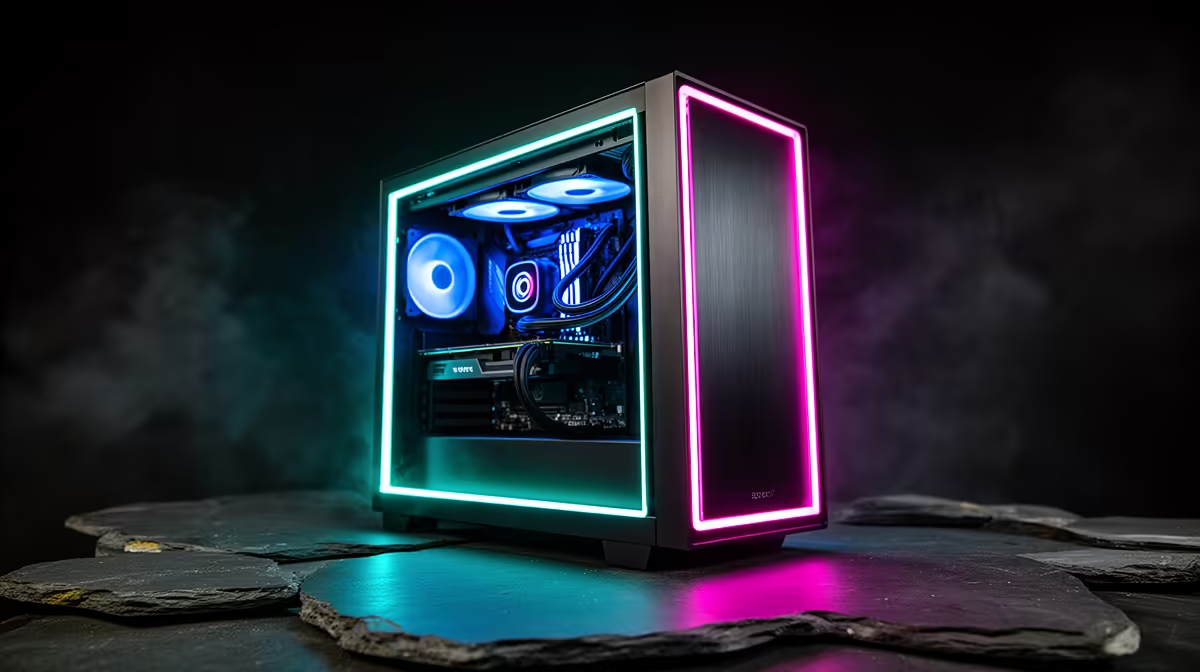
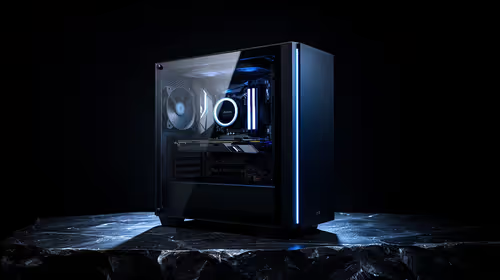
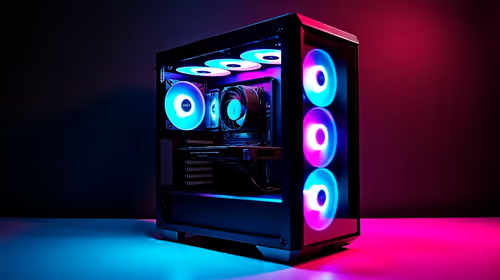
Under a fixed ZAR budget, the graphics card is the spec that matters most in a gaming PC, so it should take the largest slice of your money, usually around 40 to 50 percent. After the GPU, a balanced six-core CPU, 16GB of DDR5 RAM and a 1TB NVMe SSD cover the essentials. Spend on those first, and treat RGB and a flashy case as the last priority.
Put the GPU first 🚀
The graphics card decides your frame rate more than any other part, so it is where a budget build wins or loses. On an entry to mid-range budget, a current card such as an RTX 5060 or an RX 9060 class GPU handles 1080p high settings comfortably and stretches into 1440p in many titles. Resist the urge to drop to a weaker GPU just to afford a fancier case or extra lighting, because nothing else recovers the frames a stronger card would have given you.
Balance the CPU, RAM and storage 🔧
For pure gaming you do not need the most expensive processor. A six-core chip like a Ryzen 5 7600 keeps up with mid-range graphics cards and leaves more budget for the GPU. Pair it with 16GB of DDR5 in dual channel, which is the sensible floor for modern games, and step up to 32GB only if you also stream or edit. A 1TB NVMe SSD is essential, since it loads games and Windows far faster than a hard drive and modern titles take up a lot of space.
Do not skimp on the PSU 💰
The power supply is the one part where cutting corners can put the whole build at risk. Choose a quality unit with an 80 Plus rating and a little wattage headroom, so it runs cool and leaves room for a future GPU upgrade. A reliable PSU also protects the costly components around it. Then match the rest of the spend to your resolution: a 1080p 144Hz monitor suits an entry build, while 1440p pairs better with a stronger card.
Budget Split Tip ⚡
you buy, sketch your budget as percentages: roughly 40 to 50 percent on the GPU, then the CPU, RAM and SSD, and only what is left on the case and lighting. It keeps the money where the frames are.
FAQ
What is the most important part of a gaming PC?
The graphics card. It has the biggest single impact on frame rate, so on a fixed budget it should get the largest share of your spend, with the CPU, RAM and storage balanced around it.
How much RAM do I need for gaming?
16GB of DDR5 in dual channel is the practical minimum for modern games. Move up to 32GB only if you also stream, edit video, or keep many demanding apps open at once.
Should I buy a prebuilt or build it myself?
A prebuilt gaming PC stocked at Evetech is tested, assembled and covered by a local warranty, which removes the risk of part compatibility and the hassle of a faulty component. Building it yourself can save a little, but a prebuilt is the simpler, safer route for most buyers.
Ready to buy smart on a budget?
Compare gaming PCs stocked at Evetech and put your money where the frames are, starting with the graphics card.