


PCIe 5.0 vs PCIe 4.0 for Video editing in 4k in SA
PCIe 5.0 vs PCIe 4.0 for video editing in 4k is mainly about fit, features, compatibility, cost, and upgrade path, not one automatic winner. SA buyers should match the choice to the setup.
Read more240mm AIO and 360mm AIO differences for SA gamers usually come down to radiator space, noise, and CPU heat. A 360mm unit can add headroom, but a quality 240mm cooler may fit more cases and budgets in local builds.
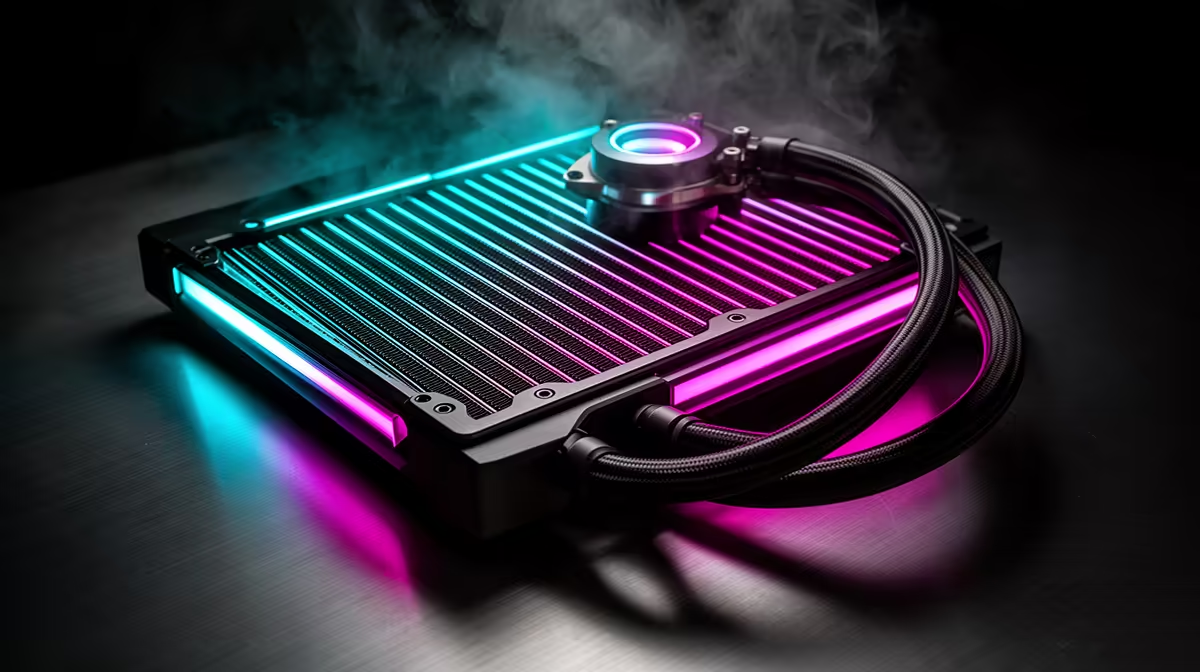
A 240mm AIO and a 360mm AIO chase the same goal, lower CPU temperatures, but they buy different thermal headroom for your workload. Pick the cooler around radiator length and case clearance, then around acoustics.
For SA PC builders, a 240mm AIO holds a mid-range Ryzen or Core CPU comfortably, while a 360mm adds roughly 4-7C of headroom and lets fans spin quieter. Spend the extra R600 to R1,200 on a 360mm only if your case fits a 360 radiator and your CPU pushes past 150W.
Confirm your chassis takes a 360mm radiator in the top or front before you spend. Many compact mid-towers only mount a 240mm or 280mm up top, and a 360 in front can clash with tall RAM. Measure the radiator and fan stack of about 52 to 65mm against your case spec.
Solid 240mm AIOs land around R1,500 to R2,800, while quality 360mm units sit closer to R2,600 to R4,500. For most SA PC builders the money saved on a 240mm is better spent on the GPU or an extra NVMe drive unless thermals are already the limit.
Bigger radiators let you set a gentler fan curve, which matters in a quiet room. Set a flat pump speed and a temperature-based fan curve so the system stays calm at idle and only ramps when the CPU genuinely heats up under your workload.
It does. A warmer room raises coolant temperature, so the larger radiator keeps more buffer on hot days. Strong case intake airflow narrows the gap, so airflow and AIO size work together.
Check the case spec for top and front radiator support before buying; many mid-towers only take 240mm or 280mm in the roof. Allow about 52 to 65mm for the radiator and fan stack so it clears tall RAM and the GPU.
A 360mm earns its price when your CPU runs above roughly 150W or you want quieter fans, giving about 4 to 7C more headroom. Below that, a 240mm handles your workload without throttling, so the saving is better spent elsewhere.
Before checkout, photograph your case interior and note the top and front radiator limits, then match the AIO spec exactly so the fans and radiator clear your RAM and GPU.
PCIe 5.0 vs PCIe 4.0 for video editing in 4k is mainly about fit, features, compatibility, cost, and upgrade path, not one automatic winner. SA buyers should match the choice to the setup.
Read more
Wi-Fi 7 vs Wi-Fi 6e for competitive esports comes down to router support, latency goals, device compatibility, and coverage. SA buyers should match the choice to the real network setup.
Read more
ATX 3.1 vs ATX 3.0 for mMO and live-service games buyers - what changes is mostly about compatibility, budget, upgrade path, and setup fit. SA buyers should check device support and real needs before expecting a clear win from either option.
Read more
LGA 1851 vs LGA 1700 can affect Twitch and YouTube streaming when gaming and encoding share CPU resources. For SA creators, the real-world difference depends on encoder choice, memory support, motherboard cost, thermals, and upgrade plans.
Read more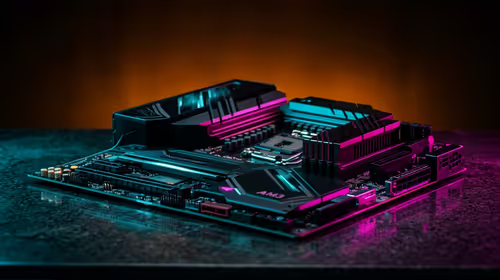
X870E vs X670E for aaa single-player gaming is mainly about fit, features, compatibility, cost, and upgrade path, not one automatic winner. SA buyers should match the choice to the setup.
Read more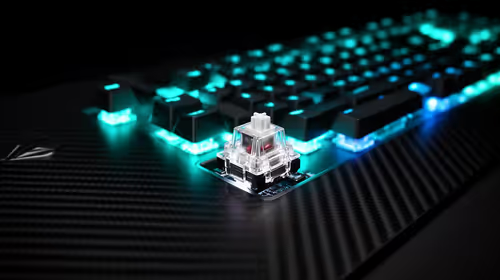
Hall Effect switches vs Mechanical switches for mMO and live-service games is mostly about compatibility, budget, upgrade path, and setup fit. SA buyers should check device support and real needs before expecting a clear win from either option.
Read more
A fake 113GB GTA VI ISO reportedly used empty padding around a small malware payload. SA gamers should delete unofficial builds, keep Windows security active and wait for official channels.

Wi-Fi 6E vs Wi-Fi 6 matters for 4K video editing when files move across a network. The real-world difference between Wi-Fi 6E and Wi-Fi 6 for video editing in 4K depends on NAS access, cloud uploads, router range, and SA creator workflows.

The difference between PCIe 5.0 and PCIe 4.0 for SA gamers is mostly bandwidth headroom. Compare GPU slot needs, NVMe speed, motherboard support, and upgrade timing before paying extra for a newer platform.

Gaming PC stuck pixel checks in South Africa should confirm the monitor fault first. Use colour tests, screenshot comparison, cable swaps, display menu checks, and clear photos before deciding on support.

Shokz OpenFit Air 2 earbuds weigh 7.2g each and use a redesigned dual-driver open-ear layout. SA buyers should choose them for comfort and awareness, not maximum isolation.

AMD's current driver now lists a Radeon RX 9050 4GB, while product coverage details a narrowed memory system. SA buyers should weigh the low VRAM ceiling against current local Radeon options.

Samsung Display has demonstrated a 16-inch 2.5K OLED laptop panel running at 300Hz. SA buyers should wait for a named notebook, full panel specifications and a local price before planning an upgrade.

Microsoft says some Windows 11 game crashes after recent updates are linked to RGB-related drivers. Affected SA gamers should confirm the update and driver before using the published registry workaround.

Minisforum's M2 Pro pairs Core Ultra X7, Arc B390 graphics and 32GB onboard memory in 1.8 litres. SA buyers should weigh its fixed memory and $1,439 launch offer against local mini PCs.

Smart monitors can add apps and convenience, but they also add privacy settings and unwanted-software risk. SA buyers should audit the operating system before paying for extras.

Lenovo says Legion Go failures linked to BIOS N3CN42WW are not user error. Affected SA owners should stop retrying the update, preserve proof and open a support case.
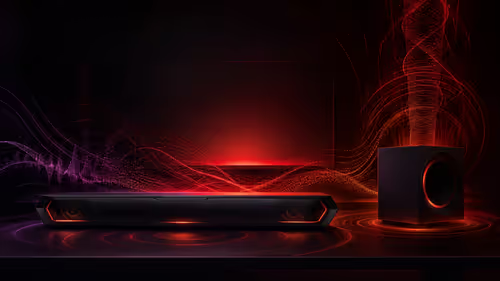
The ROG Gjallar gaming soundbar is now listed in the US at $599.99. SA buyers should compare its 2.1.2 audio, wireless bass and built-in chat controls with simpler local options.