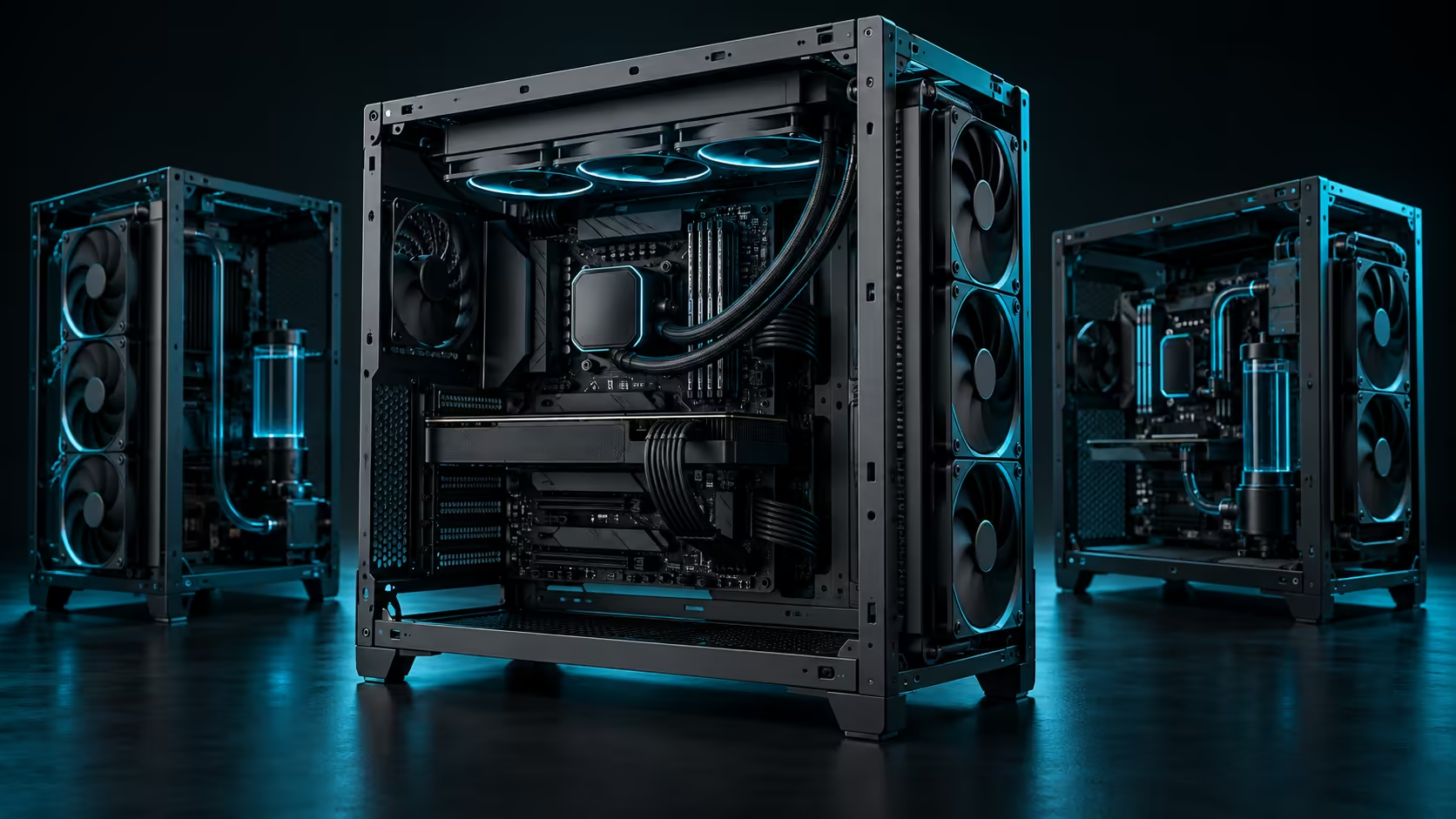
An EATX board is the widest standard size sold, and that extra width changes which 360mm radiator configurations actually work in the space a mid-tower case leaves around it, in ways a smaller ATX build never has to think about. Roof, front and side positions each interact with an EATX layout differently, and the wrong choice on this specific board size causes fitment problems a review written for a smaller board would never mention.
Quick Answer
Roof mounting in push, fans on top of the radiator exhausting upward, is the safest default configuration on an EATX board, because it avoids the memory clearance and front-panel depth conflicts other positions create. Front mounting works well if your case has the depth for it, since EATX boards commonly run to around 330mm deep and eat into the same space a front radiator wants. R15,999 buys the GR20 Edition 20's cooling bay, sized for exactly this size loop, with the choice of position left up to you.
⬆️ Roof mount in push: the configuration that avoids the most conflicts
Mounting the radiator in the roof, with its fans on top pulling air up through the core and exhausting out of the case, is the configuration most builders should default to on an EATX board. It sits above the socket and memory rather than beside them, which sidesteps the clearance conflicts a front or side mount can create with a wide board's layout.
The trade-off is that roof mounting can interfere with tall memory, because on some EATX board layouts the radiator's fan array lands squarely above where the memory sticks live. Memory with a heatspreader over roughly 44mm is where this starts to matter, so check your specific stick's height against the radiator manufacturer's clearance note for a roof position before assuming it clears automatically.
↔️ Front mount: needs real depth to work with an EATX board
Front-mounting a 360mm radiator gives the fans the coolest possible intake air, since they draw straight from outside the case before anything else has warmed it. On a standard ATX board this is often the preferred configuration for exactly that reason.
An EATX board complicates it because the board itself commonly runs deep, often to around 330mm from the front edge to the rear I/O, and a front-mounted radiator plus its fans needs its own depth in front of that board edge. In a case without generous front clearance, an EATX board and a front-mounted 360mm radiator can compete for the same physical space, sometimes to the point where cable routing at the front edge of the board becomes genuinely cramped.
Check your case's specific front clearance figure against the combined depth of the radiator and its fans, not just the radiator's rated size, before choosing this configuration over the roof position.
Side mounting exists on some frames too, and it sidesteps both the memory conflict of a roof mount and the depth competition of a front mount, at the cost of tubing that has to run further to reach the block. It suits a build where the board is already pushed deep with a wide graphics card underneath, since the side position rarely competes with either for the same physical space.
🔀 Push, pull, and push-pull: what changes with configuration
Push, where fans sit on one side of the radiator blowing air through it, is the simplest and most common setup, and it is sufficient for the vast majority of builds regardless of board size. Pull, fans on the far side drawing air through instead of pushing it, performs almost identically in most cases and is chosen more for cable routing convenience than any real thermal advantage.
Push-pull, fans on both sides of the radiator, adds meaningful cooling capacity at higher fan speeds and under sustained heavy load, but it roughly doubles the total depth of the radiator stack, which is exactly the dimension an EATX board's own depth is already competing for. Reserve push-pull for a case you have specifically confirmed has the clearance for it, rather than assuming a 360mm-rated mounting position automatically has room for double the fan stack.
🌡️ Matching the configuration to your actual load
A processor under sustained heavy load, long gaming sessions, rendering, or compiling for hours, benefits most from whichever configuration maximises airflow through the radiator, which usually means push in the roof unless your case specifically supports a deeper front-mounted stack. A processor under lighter, burstier load has more flexibility, since any of the standard configurations will keep it comfortably within range.
Ambient room temperature shifts this calculation too. A 33C afternoon on the Highveld raises every reading regardless of configuration, so a build already running near its thermal ceiling in a mild climate has less margin to spare once summer adds its own baseline to the result.
Browse the liquid cooler range with your board's actual depth in mind rather than assuming a 360mm rating on the case is the only number that matters, and check the cooler best sellers list if you want to see which specific radiators are already proven to fit comfortably in a mid-tower EATX build rather than guessing from spec sheets alone.
Whichever configuration you land on, dry-fit before you commit to final tubing lengths. An EATX layout leaves less spare room around the socket than a smaller board does, and a block or fitting that clears a diagram on paper can still land closer to a memory stick or a VRM heatsink than expected once everything is actually in the case together.
Frequently Asked Questions
Which configuration should I default to on an EATX board?
Roof mount in push, since it avoids the depth conflict a front-mounted radiator can create with a wide board, provided your memory height clears the fan shroud.
Why does front mounting cause problems specifically on EATX boards?
EATX boards commonly run deep, often around 330mm, and a front-mounted radiator plus fans needs its own depth in the same space, which can create cramped cable routing or a tight fit.
Is push-pull worth the extra depth it needs?
Only if your specific case has confirmed clearance for it and your workload genuinely benefits from the extra cooling capacity it provides under sustained heavy load.
Does push or pull perform better on its own?
They perform almost identically in most builds. The choice usually comes down to cable routing convenience rather than a meaningful thermal difference.
Ready to pick a radiator configuration that actually fits your EATX build?
Check your board's depth and memory height before committing to a mounting position.