You wouldn't leave your front door unlocked, right? Yet, for many South Africans, their home Wi-Fi network is wide open. From online banking to private chats, your router is the gateway to your entire digital life. Ensuring top-notch Wi-Fi router privacy in South Africa isn't just for the tech-savvy; it's an essential step to protect your family's data from prying eyes. Let's get your digital fortress secured. 🛡️
Why Router Security is Non-Negotiable in SA
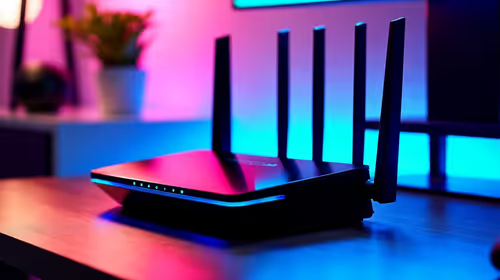
Your router is more than just a box that blinks. It's the central command for every connected device in your home—your PC, phone, smart TV, and even your security cameras. A poorly secured router is a welcome mat for cybercriminals. They can intercept your data, inject malware, or even use your connection for illegal activities.
In South Africa, where online threats are constantly evolving, proactive home network security is your first line of defence. An unsecured network can lead to:
- Data Theft: Hackers can capture passwords, credit card details, and personal information sent over your network.
- Bandwidth Hijacking: Neighbours or strangers could be slowing down your fibre connection, leaving you with lag during a critical Apex Legends match.
- Malware Distribution: An attacker can redirect you to fake websites or infect every device on your network.
Improving your Wi--Fi router privacy is a simple but powerful way to protect what matters most.
Your 5-Step Router Security Checklist
Locking down your network doesn't require a degree in cybersecurity. These five practical steps will dramatically improve your router's security and give you peace of mind.
1. Change the Default Admin Login
Every router comes with a default username and password (often "admin"/"admin"). This is the first thing a hacker will try. Log in to your router’s settings and change both immediately. Think of it as changing the locks on a new house.
2. Use WPA3 Encryption
Encryption scrambles your Wi-Fi signal so only authorised devices can understand it. WPA3 is the latest, most secure standard. Check your router’s settings and enable "WPA3-Personal" if available. If not, "WPA2-AES" is the next best option. Most modern fibre routers support this out of the box, making the upgrade worthwhile for security alone.
Crafting an Unbreakable Password 🔒
Don't use Password123!. A strong password is long and complex. Try a passphrase of four random words like BlueLaptopBatteryRocket. It's easy for you to remember but incredibly difficult for a computer to guess. Use a password manager to keep track of it!
3. Keep Your Firmware Updated
Router manufacturers regularly release firmware updates to patch security holes and improve performance. Most new models update automatically, but it’s wise to log in and check for updates manually every few months. An updated router is a secure router. If your current model no longer receives updates, it might be time to browse for new wireless routers that are actively supported.
4. Set Up a Guest Network
A guest network is a separate, isolated network for visitors. It gives them internet access without letting them see or interact with your primary devices, like your gaming PC or network storage. This simple step adds a powerful layer of protection, ensuring your core devices remain private.
5. Disable Remote Administration & WPS
Remote administration lets you access your router's settings from outside your home network. Unless you absolutely need this feature, turn it off. It closes a potential backdoor for attackers. Similarly, WPS (Wi-Fi Protected Setup) is a convenient but notoriously insecure feature. Disable it to further harden your network's defences.
Does Your Hardware Need an Upgrade?
Sometimes, the best security upgrade is new hardware. Older routers may not support WPA3 or receive critical firmware updates, leaving you permanently vulnerable.
Upgrading your setup doesn't have to be complicated. A new router can provide better speed, coverage, and most importantly, modern security features. If you've got dead spots at home, robust wireless range extenders can blanket your space in a secure signal. For older desktops, a modern USB wireless adapter can unlock faster speeds and support for the latest encryption. Investing in your core wireless networking gear is an investment in your digital safety.