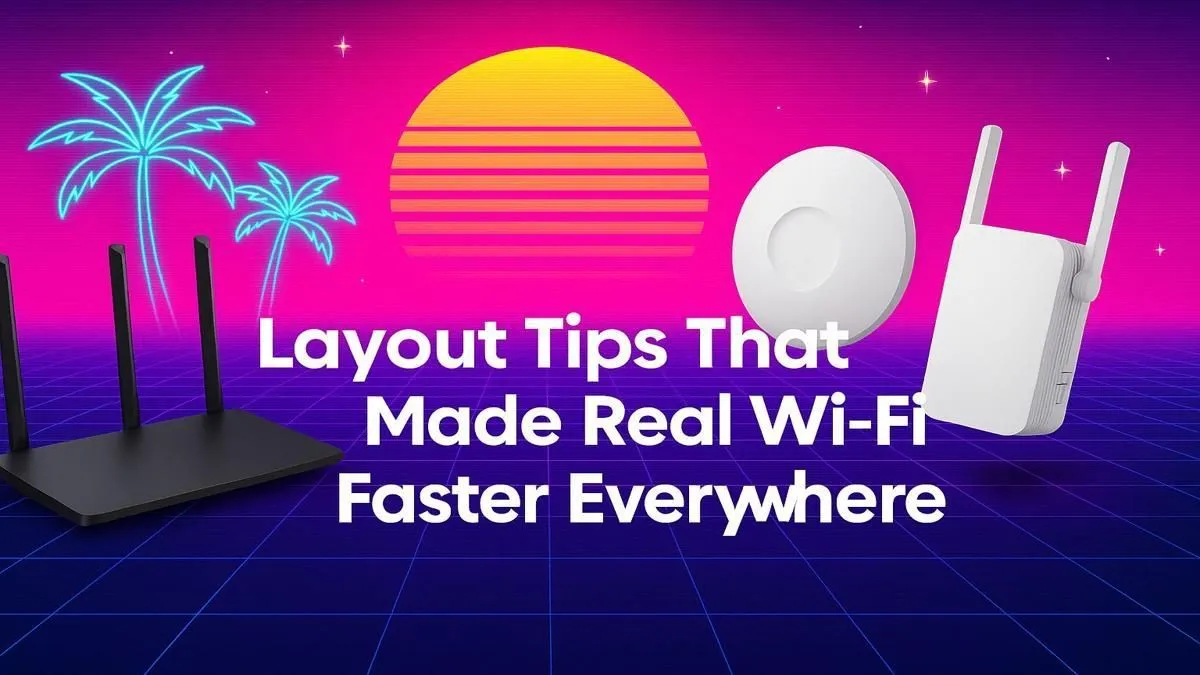
Is there anything more frustrating than your Wi-Fi dropping mid-match? You’ve survived loadshedding, your fibre line is humming, but that dreaded lag spike still costs you the win. The good news is that you don't always need a pricey new package. Proper Wi-Fi signal optimization often comes down to smart, simple layout changes. It’s about working smarter, not just spending more, to get the speed you pay for, everywhere in your home. 🚀
The Core of Wi-Fi Signal Optimization: Router Placement
Before you even think about new hardware, let's talk about location. Your router's position is the single biggest factor affecting your wireless performance. Shoving it in a cupboard or behind the TV is like trying to light up a room with a torch under a blanket. Effective Wi-Fi signal optimization starts with giving your router a little respect.
For the best coverage, place your router:
- Centrally: Find the most central spot in your home. This helps the signal radiate outwards evenly.
- Up High: Wi-Fi signals tend to travel downwards. Placing your router on a high shelf or mounting it on a wall gives it a better line of sight over furniture and other obstacles.
- In the Open: Avoid walls (especially brick and concrete), metal cabinets, and even large fish tanks. Each obstruction weakens the signal.
Getting this basic layout right can dramatically improve Wi-Fi speed and stability. If your current router is struggling no matter where you place it, it might be time to start exploring modern wireless networking solutions that offer more power and better technology.
Battling Interference for a Cleaner Signal 📶
Your home is flooded with signals that can interfere with your Wi-Fi. Microwaves, cordless phones, Bluetooth speakers, and even your neighbour's network can cause congestion and slow you down. Optimizing your Wi-Fi signal means navigating this invisible traffic.
Most modern routers are dual-band, offering both 2.4GHz and 5GHz frequencies. Here’s a quick breakdown:
- 2.4GHz: Travels further and penetrates walls better, but it's slower and more susceptible to interference from other devices.
- 5GHz: Offers much faster speeds and a cleaner signal over shorter distances. It's ideal for gaming consoles, smart TVs, and PCs that are relatively close to the router.
Many high-quality routers from brands like TP-Link allow you to manage these bands effectively, steering devices to the best frequency automatically. If your router is a few years old, upgrading to one of the latest quality TP-Link routers can make a world of difference in managing network congestion.
Quick Tip: Split Your SSIDs
If your router allows it, give your 2.4GHz and 5GHz networks different names (e.g., "MyHomeWiFi_2.4" and "MyHomeWiFi_5G"). This lets you manually connect high-priority devices like your gaming rig to the faster 5GHz band and leave smart plugs or older devices on the 2.4GHz band.
Eliminating Dead Zones in Larger Homes
Do you have that one room where the Wi-Fi signal just dies? Maybe it's the braai area outside or the bedroom at the end of the hall. For larger or multi-story homes, a single router often isn't enough to provide consistent coverage. This is where a mesh Wi-Fi system becomes a powerful tool for comprehensive Wi-Fi signal optimization.
Unlike a simple range extender, which just repeats a weakened signal, a mesh system uses multiple nodes that work together to create a single, seamless network. You can walk from one end of your house to the other, and your device will automatically connect to the strongest node without dropping. Brands like Cudy offer excellent, budget-friendly options that are easy to set up. Exploring Cudy's range of mesh systems is a great starting point for killing dead zones for good. ✨
For Ultimate Performance: Go Wired 🔧
Sometimes, even the best wireless setup can't beat the raw stability of a physical connection. For competitive online gaming, 4K streaming, or large file transfers, an Ethernet cable is your best friend. It eliminates signal interference, latency, and packet loss, giving you the most reliable connection possible.
If your desktop PC or console is your priority, running a cable directly from your router is the ultimate move. It ensures you’re getting every bit of speed from your internet plan. Investing in a stable wired networking setup, including good quality cables and switches if needed, is a small price to pay for zero-lag performance.
Ready to Banish Buffering for Good?
Stop letting poor signal strength dictate your online experience. Explore Evetech's massive range of routers, mesh systems, and networking gear to build a rock-solid connection. Shop now at Evetech for performance that leaves lag in the dust.