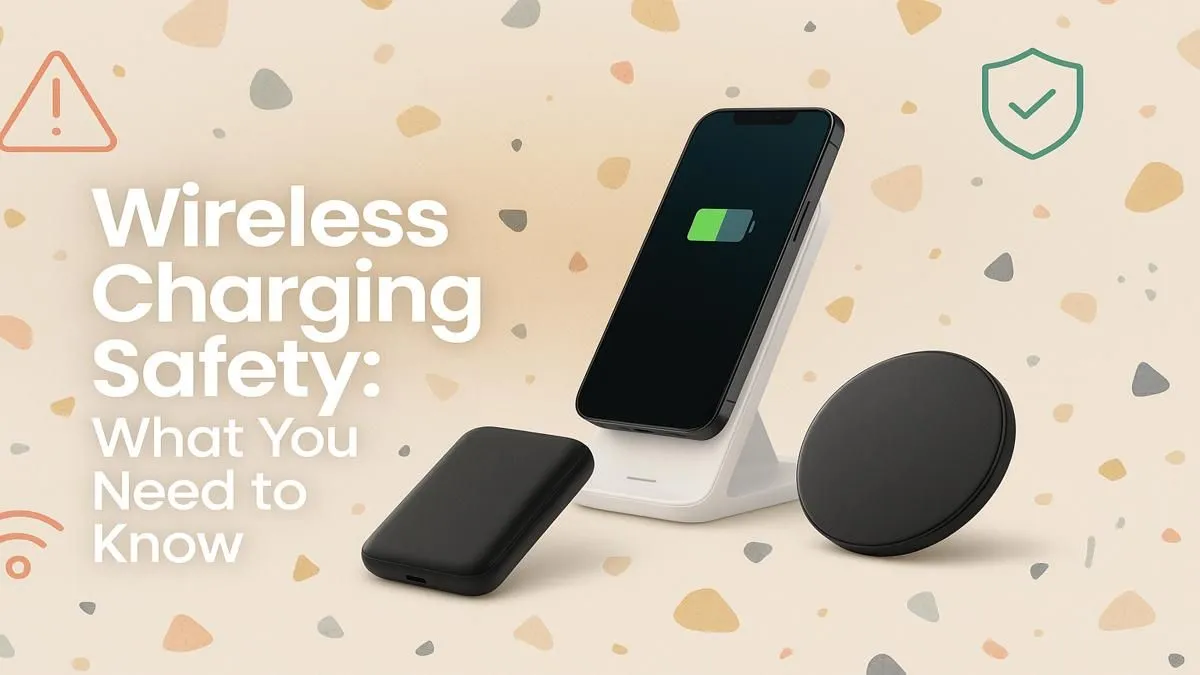
You’ve just dropped your phone onto its wireless charging pad. It’s convenient, sleek, and feels like the future. But a nagging thought pops up… is this thing safe? Could it damage my battery, or worse? Let's be honest, we've all wondered. The good news is that when it comes to wireless charging safety, the reality is far less scary than the myths. With quality gear, you can enjoy the convenience without the worry.
Common Wireless Charging Myths: Busted!
Let's clear the air and tackle the biggest concerns surrounding wireless charging. Most fears are based on outdated tech or low-quality knock-offs. Modern, certified chargers are built with multiple safety features.
Myth 1: It will overcharge and destroy my battery
This is probably the most common fear, but it’s unfounded with today's technology. Your smartphone and a Qi-certified wireless charger are… well, smart. They communicate with each other. Once your phone’s battery hits 100%, the charger receives a signal to stop sending power or switch to a very low-power trickle mode. This prevents overcharging and protects your battery’s long-term health. The intelligence built into all modern chargers makes this a non-issue.
Myth 2: The charger gets hot, so it must be dangerous
It's true that wireless charging generates some heat—it’s a natural byproduct of inductive power transfer. However, it should only ever feel slightly warm to the touch. If your phone or charger gets uncomfortably hot, that’s a red flag. 🚩 It usually points to one of two things: poor alignment on the pad or a cheap, uncertified charger. High-quality chargers from quality brands like Promate are designed with thermal management systems to operate efficiently and safely within a specific temperature range.
Myth 3: It emits harmful radiation
The term "radiation" sounds alarming, but the type used in wireless charging is harmless. Qi chargers use non-ionizing radiation, which is the same kind found in Wi-Fi and Bluetooth signals. It's extremely low-power and has a very short range (a few centimetres at most). There is no scientific evidence to suggest it poses any health risks. Ensuring proper wireless charging safety is a core part of the technology's design.
Practical Tips for Safe Wireless Charging
While the technology itself is safe, you can optimise your setup to ensure maximum efficiency and peace of mind. Following these simple guidelines guarantees a great experience.
- Always Use Certified Gear: This is the most important rule. Look for the "Qi" logo. This certification means the product has passed rigorous, independent lab tests for safety, interoperability, and energy efficiency. Investing in certified chargers from trusted names is the best way to ensure safety.
- Keep the Pad Clear: Don't place anything between your phone and the charging pad, especially metal objects like keys, coins, or credit cards. This can interfere with the charging process and cause the charger to heat up unnecessarily.
- Check Your Phone Case: Most standard plastic or silicone cases under 3mm thick are fine. However, thick rugged cases, metal cases, or those with pop sockets or credit card holders on the back can block the connection and should be removed before charging.
Check for the Qi Logo 🛡️
The 'Qi' logo isn't just a brand name; it's a certification from the Wireless Power Consortium (WPC). It guarantees that the charger has been tested for safety protocols like temperature control and foreign object detection. If it doesn't have the logo, you can't be sure of its safety or performance. Always prioritise certified gear for a worry-free charge.
Is Wireless Charging Right for Your Gaming Setup? 🎮
For South African gamers, convenience is key. When you're in the middle of a marathon session on your PC, the last thing you want is a dead phone and a hunt for a charging cable. A wireless charging stand on your desk keeps your phone topped up and visible for notifications, all without adding to your cable clutter. It's one of those small quality-of-life upgrades that quickly become essential gaming accessories.
Ultimately, wireless charging safety comes down to using certified, quality products from reputable brands. The technology has matured immensely, and the myths just don't hold up anymore. Go ahead and enjoy the cable-free convenience!
Ready to Cut the Cord Safely?
The myths are busted, and the convenience is undeniable. For maximum safety and performance, always choose certified gear. Explore our massive range of wireless chargers and find the perfect power solution for your setup.