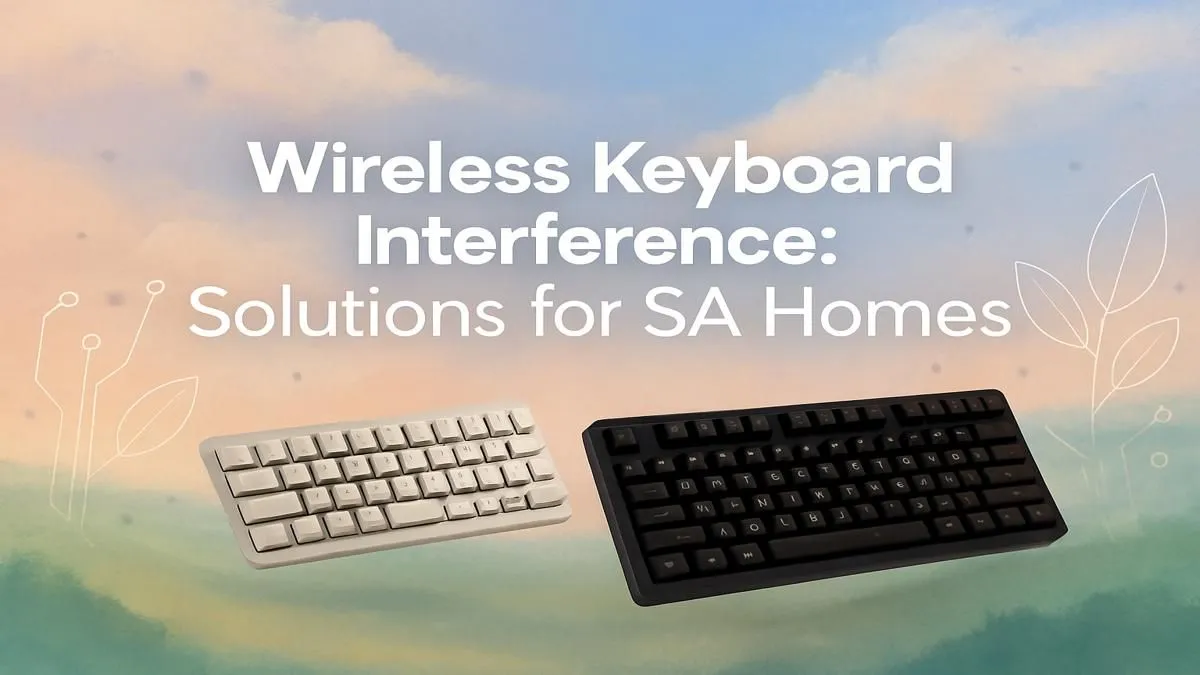
You’re lining up the perfect shot, your squad is counting on you… and suddenly your character is stuck, running into a wall. Your keyboard just went on an unscheduled smoke break. Sound familiar? That infuriating lag or complete signal dropout is often due to wireless keyboard interference, a common headache for South African gamers. But don't rage-quit just yet. Most connection issues are surprisingly easy to fix, getting you back in the game without missing a beat.
What Causes Wireless Keyboard Interference?
Before you can fix the problem, you need to understand the enemy. Wireless keyboard interference happens when the radio signal between your keyboard and its receiver gets disrupted. Think of it like trying to have a conversation in a loud, crowded room.
Here are the most common culprits in a typical SA home setup:
- Signal Crowding: Most wireless peripherals use the 2.4GHz frequency band. This is the same frequency used by your Wi-Fi router, Bluetooth speakers, smartphones, and even your microwave oven. Too many devices shouting at once can drown out your keyboard's signal.
- Physical Obstacles: That thick wooden desk, a metal PC case, or even a wall between your keyboard and its dongle can weaken the signal significantly.
- Low Battery Power: A dying battery is one of the top reasons for a weak or unstable signal. Your keyboard simply doesn't have enough juice to send a strong, clear command.
- USB Port Issues: Not all USB ports are created equal. Sometimes, high-speed USB 3.0 ports (the blue ones) can generate radio frequency interference that messes with 2.4GHz dongles plugged in right next to them.
Your Quick-Fix Checklist for Lag & Dropouts 🔧
Work through these simple steps first. More often than not, one of these will solve your wireless keyboard interference and get you back to buttery-smooth performance.
1. Check Batteries or Charge Up
This is the easiest fix. If your keyboard uses replaceable batteries, swap them for a fresh set. If it’s rechargeable, plug it in for a solid hour. A low battery often causes intermittent dropouts that feel like lag before the device dies completely.
2. Move the Receiver (Dongle) Closer
Distance is the enemy of a clean signal. If your PC is under your desk and the dongle is plugged into a rear port, you're making it work extra hard.
- Use a Front USB Port: This is the quickest way to reduce distance and bypass the signal-blocking bulk of your PC case.
- Use a USB Extension Cable: For a rock-solid connection, plug your dongle into a short USB extension cable and place it on your desk, in direct line of sight with your keyboard.
Optimising your physical desk layout is key. While you're at it, consider your posture and comfort for those long gaming sessions by adding a comfortable wrist rest to your setup.
Pro Tip: The USB 3.0 Interference Problem ⚡
If your keyboard dongle is plugged into a USB 2.0 port right next to an active USB 3.0 port (like one for an external hard drive), try moving it. The radio noise from USB 3.0 can directly interfere with 2.4GHz receivers. Give your keyboard's dongle some breathing room!
3. Clear the Path
Remove any large metal objects, speakers, or even a stack of books from between your keyboard and the receiver. Also, try moving your Wi-Fi router a little further away from your PC setup if possible. Many gamers find that a simple desk reorganisation completely eliminates their signal dropouts. Sometimes, investing in reliable keyboard and mouse combos can help, as they often use a single, powerful dongle designed to work together flawlessly.
When It's Time for an Upgrade 🚀
If you've tried everything and are still suffering from lag, your gear might be the problem. Older or budget wireless keyboards often have less sophisticated technology that's more susceptible to interference. Modern gaming keyboards from reputable brands invest heavily in stable, low-latency wireless tech.
You don't need to break the bank, either. There are many excellent and affordable gaming keyboards in South Africa that offer a massive leap in performance. Upgrading to a mechanical keyboard also opens up a world of customisation, from the tactile feel of customising your keyboard switches to the aesthetic appeal of swapping out your keycaps.
If you're serious about competitive gaming, a modern wireless keyboard isn't a luxury... it's a necessity. Check out the latest best gaming keyboard deals to find a model with the lag-free connection you deserve.
Ready to End the Lag for Good?
Wireless keyboard interference can be a nightmare, but the right gear makes all the difference. For a flawless connection and peak performance, a modern gaming keyboard is your best bet. Explore our massive range of keyboards for sale and find the perfect weapon for your setup.