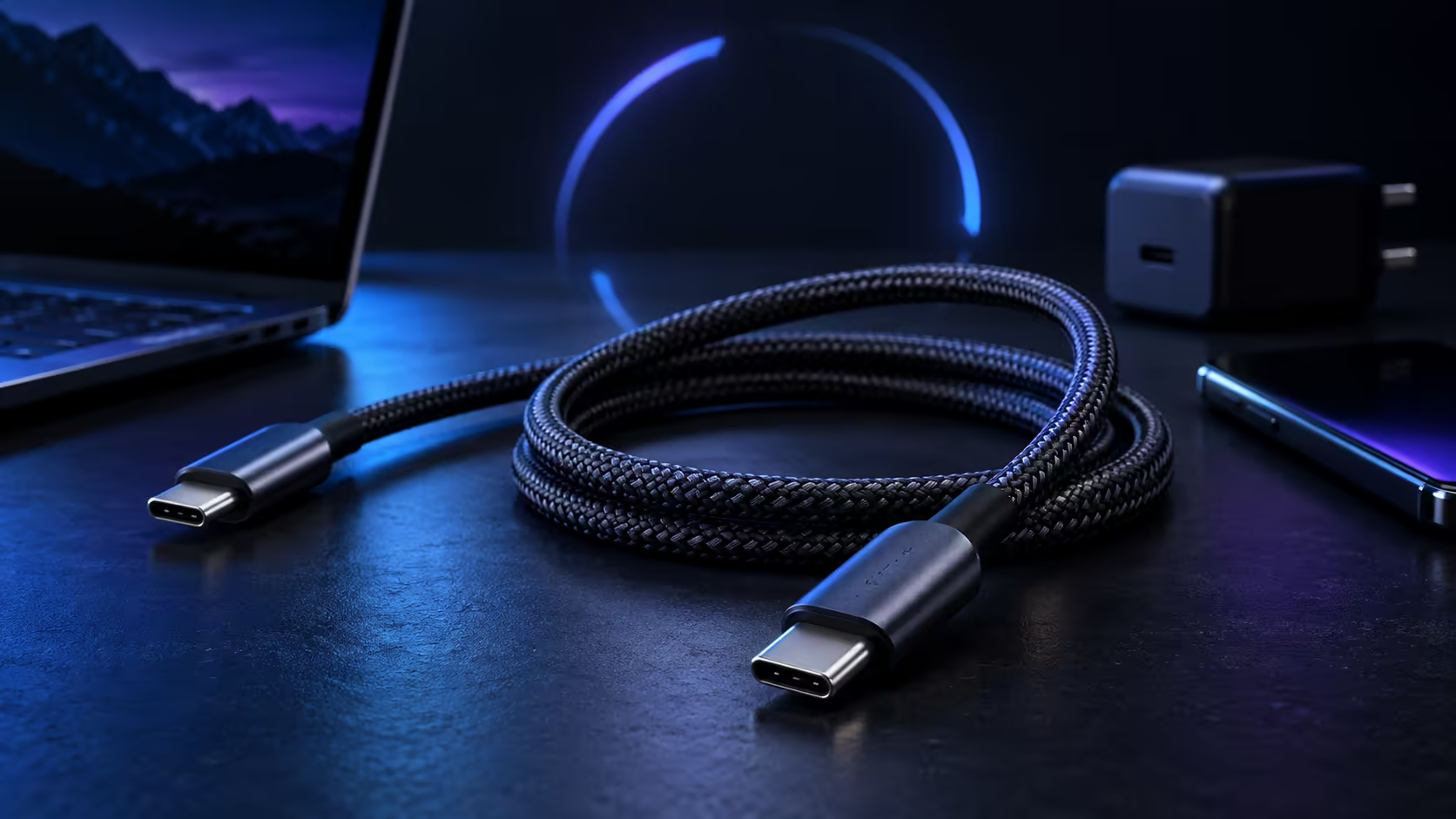
A premium braided USB-C cable looks like the more expensive choice sitting at the till, and it usually is, until you divide that price by how many years it actually lasts compared with the cheaper alternative sitting right next to it on the same shelf.
Quick Answer
Divide the price by the years it survives and the sums change. R399 across four years of a 30,000-bend cable is under R100 a year, while three unrated cables at R150 each land in the same place with more downtime, and local warranty cover never shows on a shelf price.
🛍️ Why the till comparison is the wrong comparison
A shopper standing at a shelf comparing R399 against R150 is answering the wrong question entirely, since the honest comparison is never one cable against one cable, it is one cable against however many cheaper ones actually get bought and discarded across the years the premium option would have lasted on its own. Retailers rarely frame it this way for you, because a single till receipt only ever captures the cost of today's one purchase, never the whole pattern of repeated purchases a cheaper choice quietly sets in motion over the years that follow.
🧮 The maths that a shelf price hides
A R399 cable that lasts four years works out to roughly R100 a year. Three unrated cables at R150 each, replaced as they fail over that same period, add up to R450, already more than the premium option, before counting the time spent noticing a fault, sourcing a replacement and reconnecting everything. The sticker price comparison at the till tells you nothing about this, since it only ever shows the cost of the next purchase, not the total cost across the years a cable actually needs to serve.
🔁 Why cheap cables end up replaced repeatedly
An unrated USB-C cable without a published bend cycle figure is not built with a specific lifespan target in mind, so its actual survival varies widely and tends to fail earlier under the exact daily handling, bag carrying and coiling that a bend-rated cable is specifically engineered to withstand. Each replacement also carries a small hidden cost beyond the purchase price itself: the interruption of a charge failing partway, or a laptop battery draining during a call because the cable chosen that morning turned out to be a dying one.
🇿🇦 Local warranty is value that never appears on a price tag
A USB-C cable purchased locally with warranty cover handled here, rather than through an overseas seller, adds real value the moment something actually goes wrong, since a faulty unit becomes a straightforward local exchange rather than a shipment sent abroad and a wait for a response. This value is invisible on the shelf price entirely, only becoming apparent the day a cable fails, which is precisely why it rarely factors into a quick price comparison at the point of purchase.
🛒 Buying for the lowest total cost, not the lowest sticker price
Sitting in the comprehensive cable range at R399, the Anker 544 pairs a 30,000-bend rating with USB-IF certification and local warranty cover, which together make the case for treating it as the cheaper option over any reasonable multi-year period despite the higher number on the box. Where several ageing peripherals need swapping out together rather than one this month and another next year, the accessories best sellers page and the gaming accessories section both help fill in whatever else made that list.
📐 Applying the same maths to your own situation
The exact break-even point shifts depending on how a cable is actually used, but the method stays the same regardless: take the R399 price, divide by a realistic number of years the cable is likely to survive given how it gets handled, and compare that figure against however many cheaper cables would need replacing over the same stretch of time. Run that sum honestly, including the small cost of the inconvenience each replacement brings, and the premium option wins out in most realistic household scenarios stretched across more than a single year of ordinary use.
Frequently Asked Questions
Does the same value argument apply to phone cables as much as laptop ones?
Yes, the underlying logic is identical regardless of which device the cable serves, though a phone cable often sees more daily handling relative to its lower price, which if anything strengthens the case for the durable option there too.
How long does a 30,000-bend cable actually last in practice?
It depends heavily on how often it is flexed, but a cable used daily for commuting typically reaches several years before approaching that cycle count, well beyond what most unrated cables survive.
Does the same value logic apply outside of USB-C cables specifically?
The general principle applies broadly to most electronics accessories bought repeatedly over time, though this particular comparison, with its exact figures, is specific to USB-C charging cables and their published bend ratings.
Should the value calculation change for a household with several cables in daily use?
The core maths stays the same per cable, though a household running five or six cables daily multiplies both the potential savings and the inconvenience of repeated failures, making the case for durable options proportionally stronger across the household rather than weaker in any way.
Is it possible for a premium cable to still fail quickly?
Rare manufacturing defects can affect any product, which is exactly why local warranty cover matters, turning an early failure into a quick exchange rather than a total loss to absorb alone.
Does buying three cheap cables at once save money compared with one premium one?
Rarely, once the total spend and the ongoing inconvenience of managing multiple failures over time are both properly counted, rather than only the upfront price tag on each individual cable in isolation.
Does the four-year lifespan estimate hold for every household equally?
Not exactly, since a cable handled gently and left permanently at a fixed desk will likely exceed four years comfortably, while one carried daily inside a bag may fall a little short of it, but the underlying comparison against repeated cheaper replacements still favours the rated option in either situation.
Does this value argument still hold for a cable that never leaves its socket?
Yes, somewhat. A cable that never moves accumulates far fewer bend cycles over its life, so the durability argument matters noticeably less there than it does for one carried daily inside a bag.
Ready to buy the cable that actually costs less over time?
Divide the price by the years it is likely to last, not just by what is on the shelf tag.