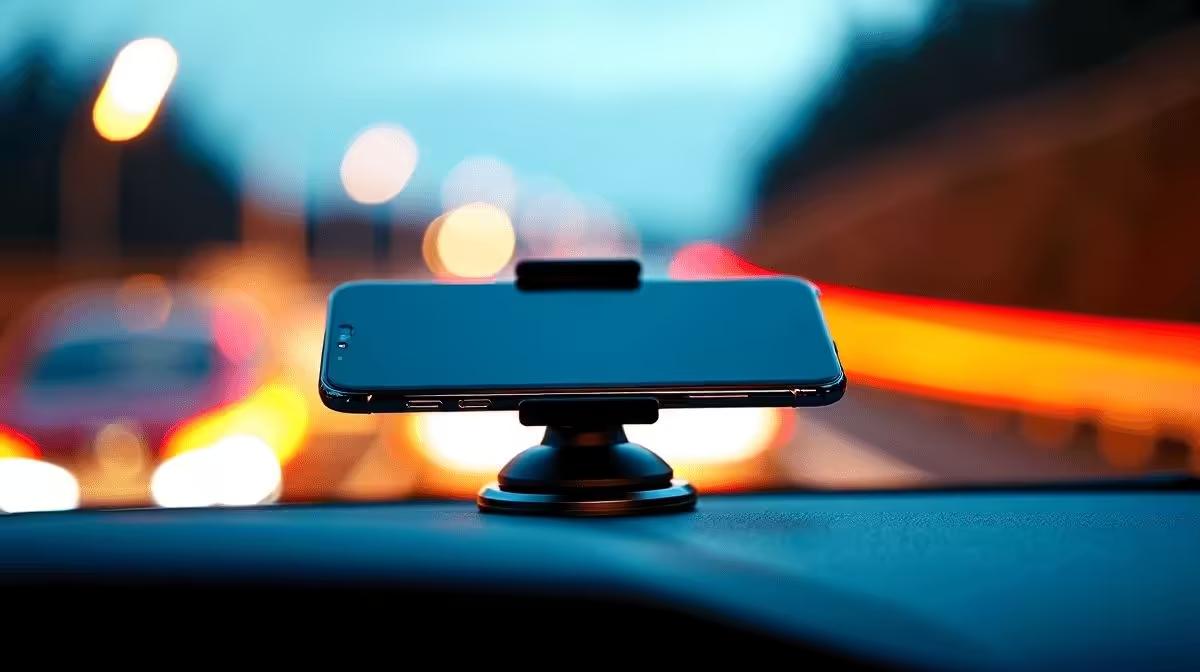
Spend any time on South African roads and you quickly find out which accessories are built for them. Joburg's potholed surfaces, Cape Town's mountain pass corners, and the long straight N3 to Durban all test a car phone mount in different ways. The question of whether a magnetic phone mount is strong enough for your specific smartphone deserves a concrete answer rather than reassuring generalities.
Quick Answer
Yes, for the vast majority of smartphones, a quality magnetic mount is strong enough for everyday SA driving. A mount with a rated pull force above 1,500 gram-force holds most phones through typical road conditions with room to spare. The conditions where magnetic may not be enough are heavy phones in thick armoured cases on severely degraded roads, where a mechanical cradle offers more security.
📱 Real-World Stress: What Your Phone Actually Experiences
During a normal drive, braking and cornering apply lateral loads across the mount face. A moderate brake at 0.5G multiplies a 200-gram phone to 100 grams sideways, well within what a 1,500 gram-force mount resists. The harder test is repeated vibration from rough surfaces: a pothole at 80 km/h sends a sharp jolt through the mount, momentarily spiking the load. A two- or three-magnet mount rated below 800 gram-force can be nudged off-axis by a severe impact; a six-magnet array at 2,000 gram-force or above distributes that spike and holds.
⚖️ Heavy Phones and Bulky Cases: When to Reconsider
Standard flagship phones weigh between 180 and 220 grams, and a good magnetic mount handles this range without stress. The situation becomes tighter at the extreme end: phones like the Samsung Galaxy S25 Ultra (around 218 grams) inside a heavy-duty armoured case can bring total mass to 290 to 320 grams. A thick case also pushes the metal disc further from the magnets, and that extra distance bleeds off grip well below the rated maximum.
For phones in this weight class with thick cases, two choices improve reliability. First, position the steel plate inside the case rather than on its exterior, bringing the plate as close as possible to the mount magnet face. Second, choose a mount rated at 2,500 gram-force or higher with a wide-face array. Together these two adjustments restore the grip margin lost from the case's extra mass and gap.
Truly armoured cases, the type used in mining or construction environments with reinforced corners and 10 mm overall depth, are the edge case where magnetic may genuinely underperform. The air gap from 10 mm of case material drops effective holding force sharply. For a driver whose job requires that level of protection, a mechanical cradle with clamping arms delivers unconditional grip regardless of case thickness.
🛣️ When Magnetic Is Enough vs When to Go Mechanical
Magnetic mounts suit most SA drivers: commuters, students using campus navigation, professionals with Google Maps running continuously. The one-hand snap-on experience is faster than any cradle, and holding force is adequate for normal road conditions including many suburban routes with intermittent rough patches.
A mechanical spring cradle becomes the better answer when vibration is sustained rather than occasional, specifically for off-road tracks or severely degraded roads with a heavy phone in a thick case. The cradle's arms maintain grip independent of magnet ratings and plate alignment.
Frequently Asked Questions
My phone sometimes shifts slightly on the mount going over bumps. Is that a grip failure?
A small shift without the phone leaving the mount is usually a plate alignment issue. If the plate is even 4 to 5 mm off-centre over the magnet array, shear resistance drops and the phone can pivot slightly under load. Recentre the plate and the wobble typically stops.
How do I test whether my current mount is strong enough before I rely on it daily?
Install the phone and deliberately drive a rough stretch of road at your typical speed. Monitor whether the phone shifts position at all. If it stays firmly in place through the worst surfaces on your regular route, it is adequate. If it slides, upgrade the mount or recheck the plate position.
Do budget magnetic mounts fail sooner on SA roads than premium ones?
Budget mounts often use lower magnet grades and cheaper base clamps or suction cups that fatigue under temperature cycling. SA cabin temperatures can reach 70 to 80 degrees Celsius in summer sun, which accelerates degradation of adhesive pads and suction membranes. Spending R150 to R350 on a reputable brand significantly improves longevity on local roads.
Is a heavier phone at greater risk of dropping from a magnetic mount?
Yes, proportionally. A heavier phone applies more shear load under the same road conditions. Compensate by upgrading to a mount with a higher pull-force rating rather than relying on the same mount that handled a lighter previous phone adequately.
Can a magnetic mount handle a phone with a PopSocket or ring holder attached?
A PopSocket or ring on the phone back prevents the steel plate from sitting flush against the mount magnet face, creating a significant gap and reducing grip sharply. Remove the PopSocket or reposition the plate to a section of the back that is clear of the attachment point before relying on the mount.
Want a mount that earns its keep on real SA roads?
Browse Evetech's car phone mount selection and match the pull-force rating and array size to your phone's weight and case type.