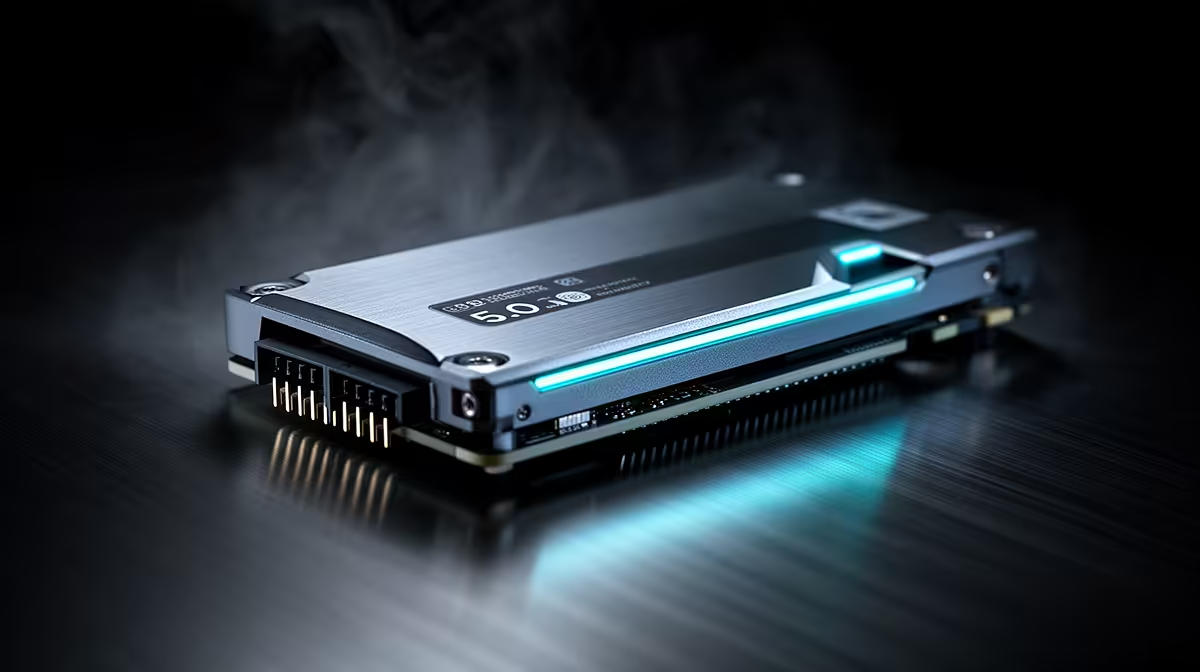
You’ve seen the headlines… SSD speeds hitting a jaw-dropping 12,000MB/s. That’s the promise of the new PCIe 5.0 standard, and it sounds incredible. But let’s get real for a moment. For your gaming rig here in South Africa, is this a necessary leap forward, or just expensive hype? We’re cutting through the marketing noise to see if the actual PCIe 5.0 SSD gaming performance justifies the upgrade cost right now.
What's the Big Deal with PCIe 5.0 Anyway?
Think of your PC's data pathways like a highway. PCIe 4.0 was a fast, modern highway. PCIe 5.0 is that same highway, but with double the lanes. This means it has twice the theoretical bandwidth, allowing for blistering sequential read and write speeds that can exceed 10GB/s. This is a massive leap for data-heavy tasks, creating a new ceiling for what storage can do. But does your game's data need that much road? For context, even the most advanced NVMe SSDs are already incredibly fast.
The Real-World PCIe 5.0 SSD Gaming Performance Test ⚡
Here’s the part that matters most. When you pit a top-tier Gen 4 SSD against a new Gen 5 drive in today's biggest titles, what happens?
In terms of game loading times, the difference is… minimal. We’re often talking about a second, or even fractions of a second, of improvement. While technically faster, it’s not a perceptible leap that will change your experience. Your PC's CPU and GPU are still the primary drivers of in-game performance, and most games simply aren't designed to take advantage of Gen 5's massive bandwidth yet.
The technology that will change this is Microsoft’s DirectStorage API, which allows the GPU to load game assets directly from the SSD. While this is the future, its adoption is still in the early stages. For now, high-quality Gen 4 NVMe SSDs remain the undisputed sweet spot for performance and price, delivering a premium gaming experience without the premium cost.
Check Your Rig First! 🔧
Before you even think about a Gen 5 drive, check your motherboard and CPU. You'll need a modern platform (like AMD's AM5 or Intel's 12th Gen and newer with a compatible board) to unlock those top speeds. Plugging a Gen 5 SSD into an older PCIe 4.0 slot will limit its performance, effectively making it an expensive Gen 4 drive.
So, Who Should Actually Consider a Gen 5 Upgrade?
While the current PCIe 5.0 SSD gaming performance might not be a must-have for everyone, there are a few groups who could justify the investment:
- The Future-Proofer: If you're building a brand-new, top-of-the-line PC and want it to be ready for the next five years of gaming evolution, a Gen 5 drive makes sense. You're buying into tomorrow's standard.
- The Creative Professional: Are you editing 8K video, working with massive 3D models, or compiling huge code projects? For you, time is money. The dramatic reduction in file transfer and project load times offered by Gen 5 NVMe SSDs is a genuine productivity booster.
- The Ultimate Enthusiast: You simply want the fastest, most powerful components on the market. We get it. 🚀
The Verdict: Is a PCIe 5.0 SSD Worth It for Your Gaming?
For the vast majority of South African gamers in 2024, the answer is no... not yet. The value just isn't there for gaming alone. The real-world performance gains are too small to notice, while the price difference is significant.
Your money is far better spent on a larger, high-quality Gen 4 SSD or put towards a more powerful graphics card or CPU. The smartest move is to find a drive that offers the best performance for your budget. By keeping an eye out for the best SSD deals, you can get a massive performance uplift over older drives without overspending on technology you can't fully use. ✨
Ready to Find Your Perfect Speed? Whether you're future-proofing with Gen 5 or grabbing amazing value with Gen 4, the right SSD is waiting. Explore our massive range of SSDs and find the perfect drive to supercharge your PC today.