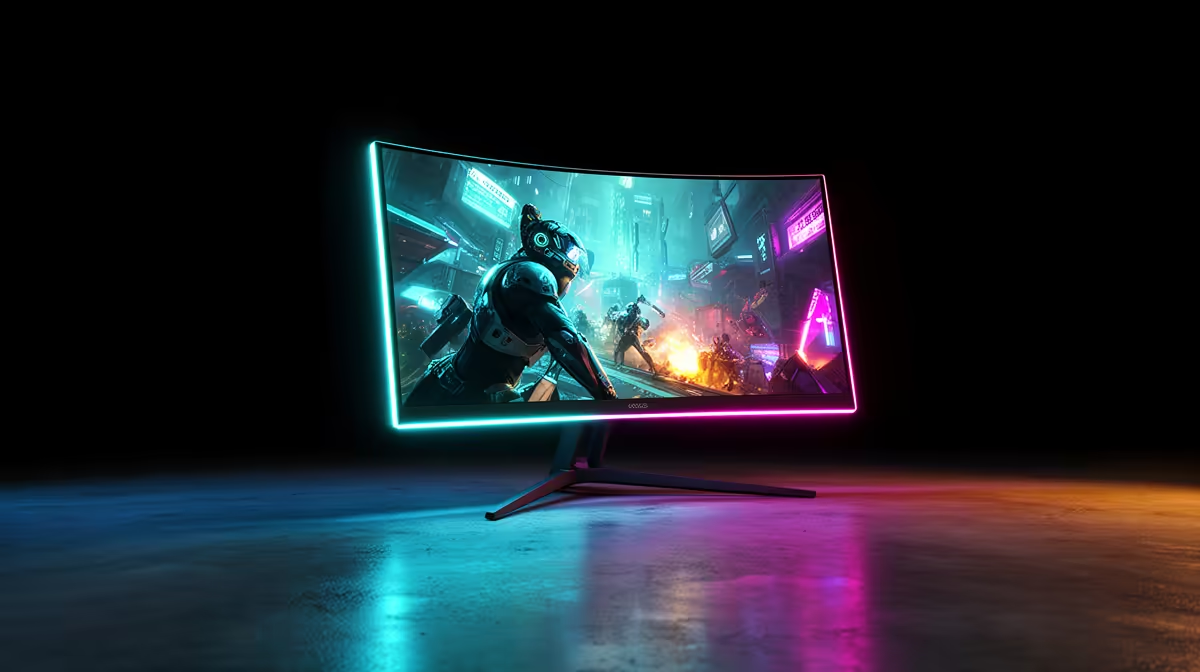
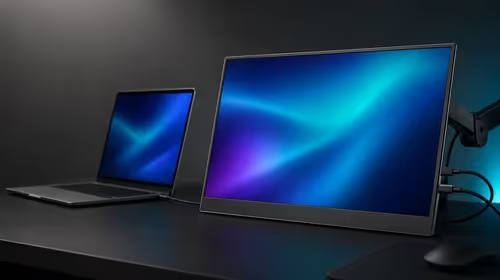
A 1440p 180Hz monitor asks for enough GPU power to look sharp and feel fast, without the heavy 4K bill. That balance makes it a strong default for a mid-range gaming PC in 2026.
Quick Answer
Choose 1440p at 180Hz when you play a mix of competitive and single-player games, sit at a normal desk distance and own a graphics card capable of high frame rates at that resolution. Choose 1080p for the strictest esports performance or 4K when image detail matters more than reaching the refresh ceiling.
Why the pairing works
At common desktop sizes, 1440p gives text, game detail and interface elements a visible step up from 1080p. The 180Hz refresh rate makes cursor movement, camera pans and aiming feel smoother than a 60Hz panel. You can enjoy both benefits without needing every game to run at 180fps.
Competitive titles can approach the ceiling with tuned settings. Demanding story games may run lower, where adaptive sync helps the monitor follow the GPU. Confirm the screen's supported sync range and the connections required for full resolution and refresh.
Compare sizes and panels across the display catalogue, then check screens buyers favour. The July 2026 entry baseline is the named Dahua 24-inch LM24-A201X 100Hz at R1,599, not a quote for 1440p at 180Hz.
Check the panel behind the numbers
Refresh rate cannot rescue slow pixel transitions. Look for response testing, overshoot behaviour and useful overdrive modes across the refresh range. Colour accuracy, contrast and viewing angles decide how the monitor feels outside a benchmark.
Measure the desk. A stand with weak height adjustment can force poor posture, while a VESA arm adds to the cost. Check port selection, cable support and whether your laptop or GPU can output 1440p at 180Hz.
Give the GPU a target
Choose one competitive game and one demanding story game. Check whether your card can keep the first near 180fps and the second inside a comfortable adaptive-sync range at 1440p. If it cannot, decide which settings you will lower before buying the screen.
The monitor can outlast the current GPU. Some unused refresh headroom is fine when a planned card upgrade will grow into it.
Use the first week to test every refresh mode you need. Watch a dark scene for smearing, a bright scene for uniformity and a fast pan for overshoot. Keep the packaging until those checks and a dead-pixel inspection are complete.
Frequently Asked Questions
Do I need to reach 180fps all the time?
No. Lower frame rates can still feel smooth with adaptive sync, while lighter games can use the full refresh rate.
Is 1440p demanding on the graphics card?
It needs more GPU power than 1080p and less than 4K. Settings and upscaling can tune the load.
Is 180Hz useful outside esports?
Yes. Desktop motion and camera movement feel cleaner, though competitive play gains the clearest benefit.
Compare 1440p monitors by tested response, adaptive sync and stand quality before choosing the 180Hz screen for your build.