A cable and a radio link solve different room problems. The wired versus wireless controller latency debate begins with path design, but real response also includes game processing and display output, so no universal millisecond promise belongs here.
Quick Answer
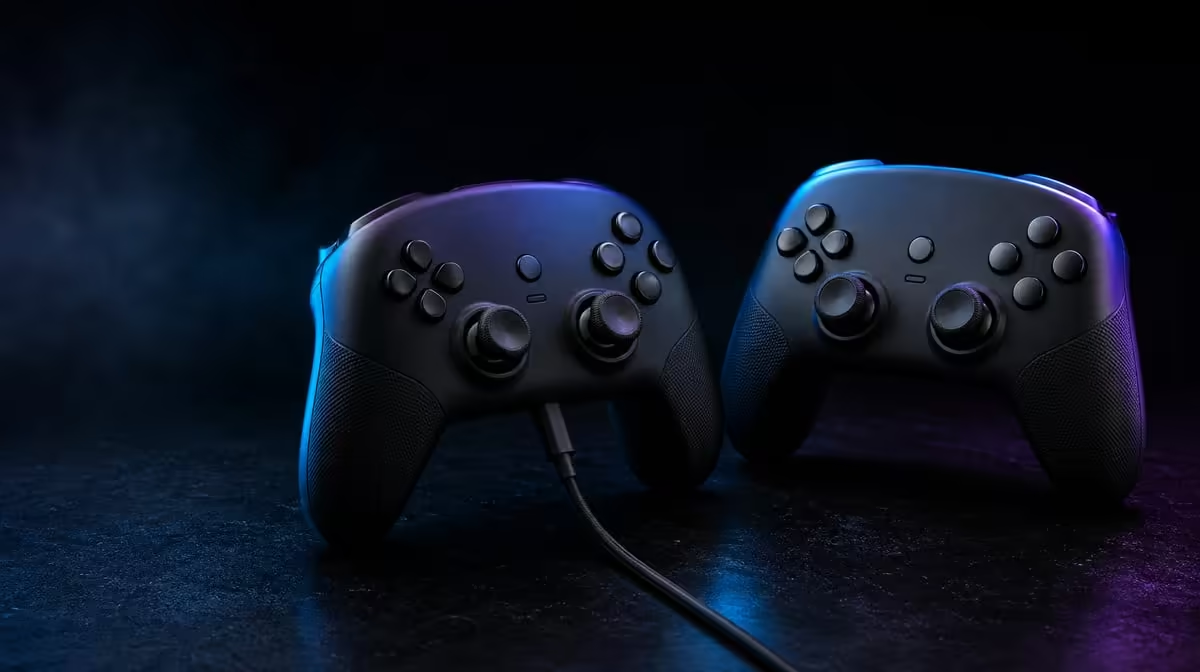
A wired pad removes radio transmission and charging from the input path, while wireless controllers provide movement without a lead. The R899 GameSir G7 HE uses a wired Xbox connection, but the complete game-and-display chain still determines experienced latency.
🔌 Wired play defines the route
The G7 HE connects by cable. Measure reach from the seated position and leave safe slack.
Keep the lead away from feet, chair wheels and sharp edges. Physical pull can harm comfort even if input remains connected.
Compare wired and wireless formats through Evetech's gaming controller selection.
📡 Wireless prioritises freedom
A wireless design removes the cable across the room but introduces power and radio considerations.
That trade-off can suit a lounge where unrestricted seating matters more than a fixed wire.
🧪 Test the complete response chain
Use the same game, display mode and repeatable action. Avoid comparing different titles or screens.
Record consistency and comfort rather than inventing a latency figure. Display processing can dominate what the player sees.
🎮 Choose for the room
The R899 G7 HE adds Hall sticks, magnetic triggers and rear buttons within its wired format.
Compare Evetech's room-and-play accessories with the current best-seller page when the connection choice needs setup support.
The best connection is the one that remains safe, comfortable and repeatable in the actual room.
Draw the route on a room sketch. Mark the Xbox, seat, display, walkway and moving furniture. The exercise makes cable risk visible before the controller is connected.
For response testing, fix the display mode and game scene. Use a repeated menu action or training command and film at ordinary settings if a visual record helps, without turning the result into an unsupported millisecond claim.
Check comfort during a full session. A wire that feels fine for five minutes may begin pulling when the player changes posture, while wireless freedom may matter more in a shared lounge.
Consider charging habits fairly. A wireless pad adds battery management; the G7 HE removes that routine but cannot move beyond its lead. Both are ownership trade-offs.
Keep Hall sticks, rear buttons and audio outside the connection-only result. They strengthen the R899 package but do not prove wired latency by themselves.
Review the decision after real use. Choose wired when the stable route remains invisible during play, and choose cable freedom when the room cannot support that path safely.
Run the same test after changing seating distance. Wired comfort may deteriorate as soon as the player moves beyond the planned slack.
Include headset routing if chat is used. A second lead can reduce the practical freedom of either connection type.
Check charging habits on the wireless alternative over a normal week. Compare actual inconvenience, not a theoretical concern.
Keep Hall sensing and rear inputs on a separate feature score. They explain why someone may choose this wired controller, not the latency of the wire.
Use a consistent display mode throughout. A television setting change can overwhelm small controller-path differences.
Write the final room reason beside R899: fixed desk, safe lead and no charging, or choose another connection because cable freedom carries more value.
Include reconnect behaviour in the practical comparison. Start the Xbox session from the normal seat, confirm the pad is recognised and note whether the cable can remain in place between play sessions. This describes routine rather than making a speed claim.
For a shared room, ask whether another person must step over the route or move the chair. A link that works perfectly for the player can still be the wrong choice for everyone using the space.
Keep the R899 decision centred on the complete ownership pattern: a fixed wired path, magnetic analog controls and no controller-charging task. Wireless freedom should receive equal credit when its mobility genuinely solves the room.
Frequently Asked Questions
Is wired always faster by a fixed amount?
No universal figure applies across every controller, game and display chain.
What does wired remove?
It removes radio transmission and battery charging from the controller path.
What does wireless improve?
It allows cable-free movement and more flexible seating.
Can display processing affect response?
Yes. The screen and game are part of experienced latency.
How much is the wired G7 HE?
The controller costs R899.
Ready to choose the connection that fits the room?
Compare Evetech's gaming controllers, map the G7 HE cable path and test response on the display you actually use.