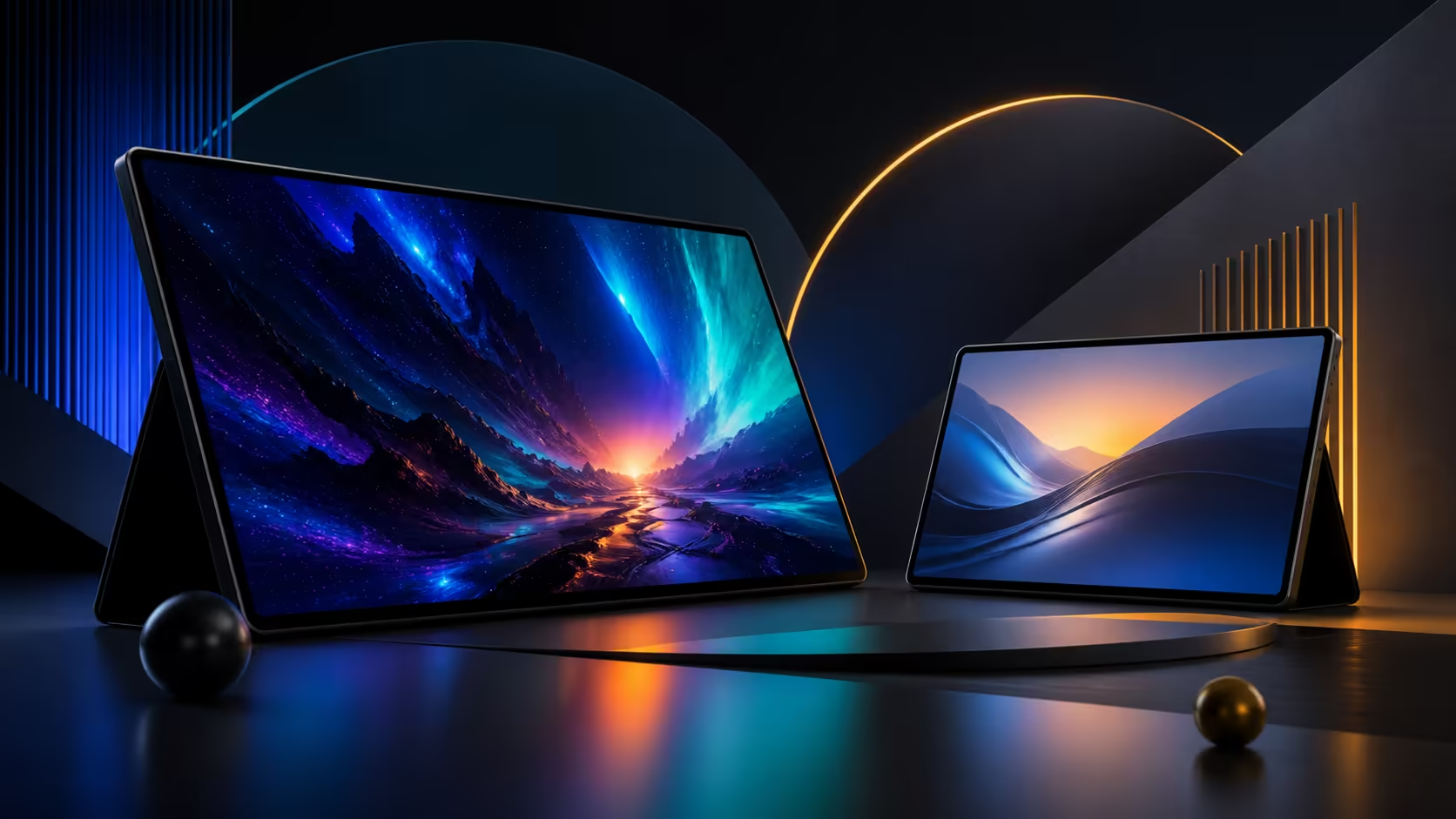
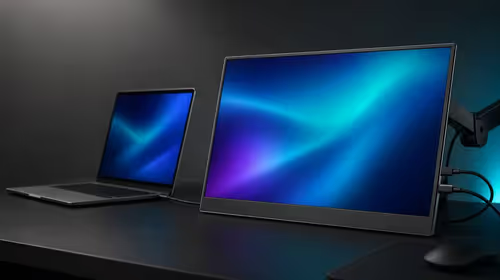
A 16-inch 3K OLED and a 13.3-inch FHD IPS monitor represent different workspace, image and travel choices, not simple upgrade levels. A 16-inch 3K OLED versus 13.3-inch FHD IPS portable monitor comparison needs exact models. The UPERFECT UColor O2 is R7,199.
Quick Answer
The 16-inch 3K OLED offers far more workspace, colour range, contrast and refresh than a 13.3-inch FHD IPS, while the smaller screen may be easier to carry and drive.
Choose the 16-inch UColor O2 when its 2880x1800 workspace, OLED image and 120Hz motion serve the task. Choose a 13.3-inch FHD IPS alternative only after testing an exact candidate for readable space, connection and travel fit. At R7,199, the UColor O2 also brings 10-bit colour, 500-nit HDR and a 1ms response to that comparison.
🧭 Compare readable workspace
Open the same documents and tools on both displays. Use comfortable scaling and equal viewing distance. The larger 16-inch area and 3K grid may hold more useful panes, while an exact smaller screen may occupy less bag space.
Build the comparison from Evetech's portable-monitor range, selecting a real 13.3-inch FHD IPS candidate.
🧭 Test panel behaviour directly
Use dark scenes, neutral pages and a trusted creative file. OLED and IPS describe panel methods, while gamut, calibration, contrast and brightness require exact measurements or observations.
Ten-bit output and a 500-nit HDR specification belong to the UColor O2; do not assign opposite results to the IPS model without its own evidence and test.
🧭 Separate motion specifications
The UColor O2 carries 120Hz and a 1ms response figure. Test the exact IPS candidate's refresh and response independently. Keep source game, resolution strategy and connection stable, and avoid converting either label into total input latency.
🧭 Pack both complete systems
Compare monitor, protection, cables and source equipment in the actual bag. The UColor O2 is 6.5mm thick, but its weight and durability are separate. A smaller diagonal does not automatically guarantee a better journey.
Use Evetech's PC-monitor selection if neither portable format is needed at a permanent desk.
Compare an identified IPS alternative
Choose a real 13.3-inch FHD IPS model before assigning price, refresh, brightness, colour or weight. Record only its own specifications and tests. A useful comparison begins when a specific IPS monitor can complete the same checks.
This discipline prevents an unnamed alternative from being treated as lighter, cheaper and better in categories that have not been tested.
Score the use locations separately
Test the 16-inch OLED at the desk, in the normal bag and at the destination surface. Repeat with the exact smaller IPS alternative. A model may win workspace while losing packing comfort, or travel easily while providing insufficient application room.
Preserve those trade-offs instead of forcing one universal winner. South African buyers can then apply the profile matching their own route.
Compare cable routes without assumptions
Test the UColor O2's USB-C path with its intended host, then document the exact connection used by the 13.3-inch IPS candidate. Do not award the smaller monitor one-cable convenience unless its own equipment proves it. Repeat detection, image and audio checks after sleep.
Connection reliability can outweigh a small packing advantage when the screen is used for work away from support.
Review long-session comfort
Use each display for the same reading, creative or gaming block. Record text comfort, head movement, reflections and how often scaling changes. First impressions of size and contrast may shift after an hour of actual work.
Keep the results separate by task. The larger OLED can win one role while the smaller IPS remains easier for another route.
Run both exact monitors at their comfortable scale, because comparing native pixel counts with unreadable interface text produces a false workspace winner.
The UColor O2 side is specific: 2880x1800, 120Hz, 1ms, 100% DCI-P3, 10-bit colour and 100,000:1 contrast. Its 16:10 shape helps documents and creative tools. A named 13.3-inch rival still needs its own weight, brightness, gamut and inputs. Choose the larger OLED when its visual and productivity gains justify bag space, GPU load and R7,199 cost.
Frequently Asked Questions
Does 3K always provide more usable space than FHD?
It supplies more pixels, while scaling and screen size decide how much comfortable workspace remains.
Is OLED always more colour accurate than IPS?
No. Measure the exact panels for gamut, error and calibration rather than ranking technology labels alone.
Does 13.3 inches automatically travel better?
No. Pack each complete kit and compare dimensions, weight, protection and bag fit directly.
Can the UColor O2 run over one USB-C cable?
It supports power, audio and video on one lead, subject to a suitable host port and cable.
Ready to compare exact portable sizes and panel types?
Browse Evetech displays with matched applications, files, source devices and travel bags.