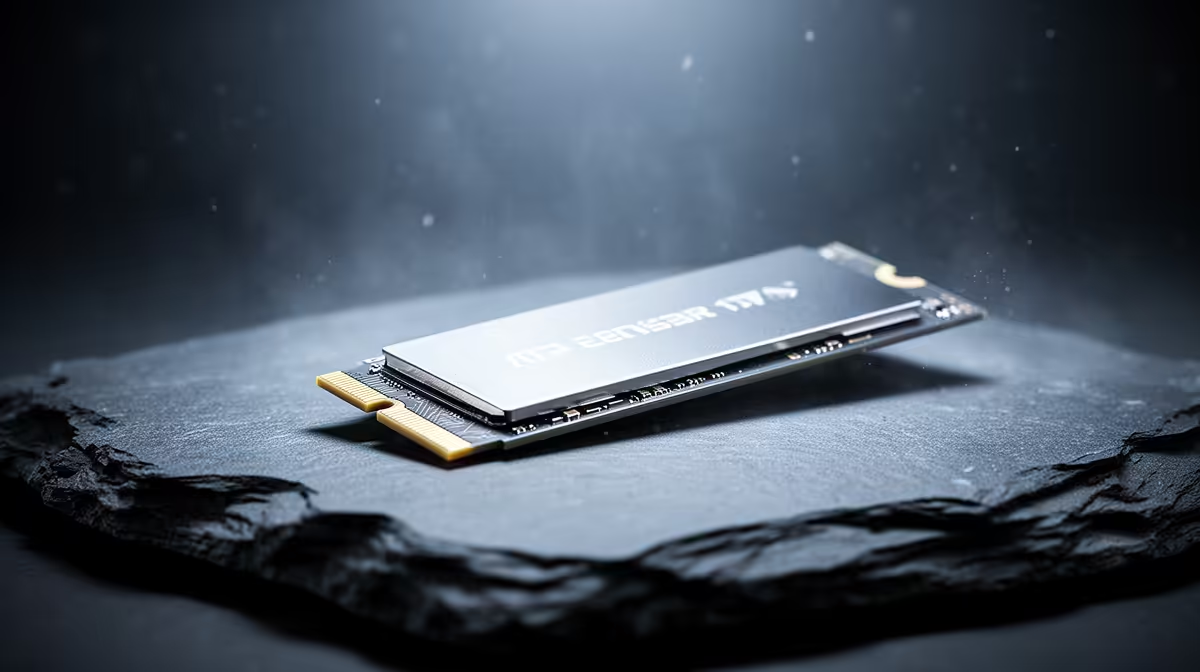
A 500GB SSD can cover Windows, everyday files and a hand-picked game library. It stops feeling generous once two huge games, capture footage and project files share the drive. The sensible question is how many active files you need locally, and whether the motherboard leaves you a clean expansion path.
Quick Answer
Choose 500GB for office work, study, light creation or gaming with a small rotating library. Keep at least 15 to 20 per cent free so updates, temporary files and the SSD controller have room. Step up when you use large modern games, raw media or a laptop with one fixed storage slot. Cloud backup can protect files, but it does not replace fast local space for applications.
Evetech's SSD range lets you compare capacities and interfaces, while the SSD best sellers provide a shortlist for the actual drive decision.
Work With Usable Space
A drive sold as 500GB appears smaller in Windows because manufacturers and the operating system count capacity differently. Windows, recovery data, applications and updates take another share.
Budget from the space left after setup. If your active games total 330GB and you want 80GB free, the drive is already close to its practical limit.
Do not fill an SSD to the last gigabyte. Performance and update behaviour can suffer when free space disappears.
Count the Active Library
List the games you play each week and their installed sizes. Include texture packs, workshop content and shader caches.
Uninstalling an inactive game is easy when your internet connection and data arrangement make a later download practical. A slow or capped connection can make that rotation frustrating.
Back up save data before removing a game. Cloud save support varies, and local mods or settings may live outside the main install folder.
Separate Backup From Expansion
Cloud storage is useful for documents, photos and off-site backup. It depends on internet access and can involve sync conflicts. It is not a substitute for the drive space a game needs to launch.
An external drive can hold archives and installers. For active games, check interface speed and platform support. A second internal NVMe SSD gives the cleanest desktop expansion when the board has a suitable slot.
Check laptop slots before purchase. Replacing its only SSD means moving the operating system or reinstalling it.
Buy the Right 500GB Drive
Check NVMe or SATA support, M.2 length, PCIe generation, NAND type, controller design, warranty and rated endurance. A fast label cannot overcome an incompatible slot.
For gaming, capacity often changes daily life more than peak sequential speed. A good 1TB Gen3 or Gen4 drive can serve you better than a 500GB flagship that stays full.
Use a named drive from the approved July 2026 price source if you quote rand. Do not treat the cheapest category listing as the cost of the model you mean.
FAQ
Is 500GB enough for gaming in 2026?
Yes for a selected library. Add the installed sizes and keep healthy free space before deciding.
Can I buy 500GB now and expand later?
Yes when the desktop or laptop has another compatible slot. Confirm that path before relying on it.
Should cloud storage manage the shortage?
Use it for backup and synced files. Games and active applications still need enough local SSD capacity.
Add the installed size of your active games and files, reserve free space and choose 500GB only when the confirmed expansion path keeps it comfortable.