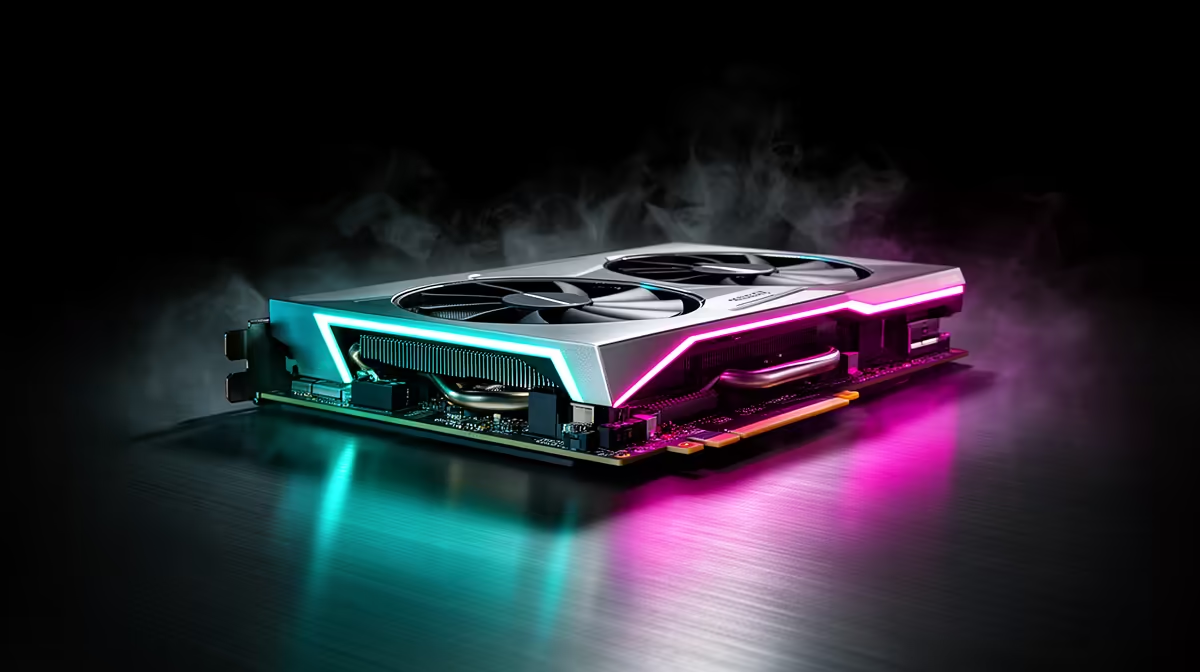
An 8GB graphics card can still be a good 1080p choice when its processor is fast enough and you tune memory-heavy settings. The awkward cases are newer games with large texture packs, ray tracing and weak memory management. One capacity verdict cannot cover every engine.
Quick Answer
Check benchmarks for your games at 1080p, then focus on frame-time consistency and texture behaviour. If an 8GB card meets your performance target, use High textures where Ultra causes streaming hitches. Buy more VRAM when your library, modding plans or next monitor give it a clear job.
Browse the current GeForce card range for NVIDIA options and compare them with popular GPUs across the catalogue. Capacity is one line on the specification sheet; price, GPU speed, memory bandwidth and features still shape the result.
Why 8GB Results Vary
Output resolution affects render targets, but textures often dominate memory use. Two 1080p games can have different asset sizes, caching systems and ray-tracing demands. A well-tuned title may run cleanly at High while another stutters after its working set spills beyond local memory.
Average FPS hides this. A card can post a good average while one-per-cent lows fall during camera turns or area transitions. Texture pop-in, muddy assets and repeated frame-time spikes are better clues than a full allocation meter by itself. Test after several minutes, once the memory cache has filled and play has settled.
Use the Settings That Protect Quality
Start with the game's recommended preset, then watch a demanding route. If memory pressure appears, lower texture quality one step before cutting every setting. High often looks close to Ultra during play while using less VRAM.
Ray-traced reflections, high-resolution shadow maps and large texture mods can add pressure. Close hardware-accelerated background apps during the test. Upscaling may reduce some buffers, though it does not make an oversized texture pack disappear.
When More VRAM Earns Its Cost
A 1440p upgrade, high-resolution texture mods or keeping the card for several demanding release cycles strengthens the case for 12GB or 16GB. More capacity also helps some creation workloads, provided the application supports the card.
Do not trade away a large amount of GPU performance for unused memory. Compare cards in complete game benchmarks at the settings you will use. A slower card with more VRAM can still lose while both stay within capacity.
FAQ
Is 8GB enough for every 1080p game on Ultra?
No. Some newer titles and texture-heavy configurations exceed it or show poor frame pacing.
Does a full VRAM meter prove the card is short of memory?
No. Games reserve memory for caches. Look for repeatable symptoms and test a lower texture setting.
Should I choose 16GB over a faster 8GB GPU?
Compare your games and planned resolution. Capacity helps only when the workload uses it, while GPU speed affects every rendered frame.
Test the games and resolution you plan to keep, compare High with Ultra textures and pay for extra VRAM when the frame-time evidence supports it.