When low FPS shows up on a fresh OLED gaming monitor, the instinct is to blame the new part. In practice the cause sits in drivers, sync settings, or the display path - all things you can rule out in minutes.
Quick Answer
After a OLED gaming monitor upgrade, low FPS almost always means the new part isn't actually doing the work yet: the wrong GPU is selected, Resizable BAR is off, or a power plan is throttling clocks. Fixing those usually restores the 20-40% gain you paid for. That distinction saves South African gamers real money - it separates a free fix from a genuine upgrade you'd buy at Evetech.
Isolating Low Fps Before You Spend
Confirm the OLED gaming monitor is actually doing the work: in the game's GPU/CPU overlay, check which part is at 95-100% load. If neither is, a power plan or frame cap is throttling you. If the GPU sits idle while frames stay low, the wrong GPU is selected or Resizable BAR is off. Each is a free fix worth real frames.
OLED gaming monitor Settings That Actually Matter
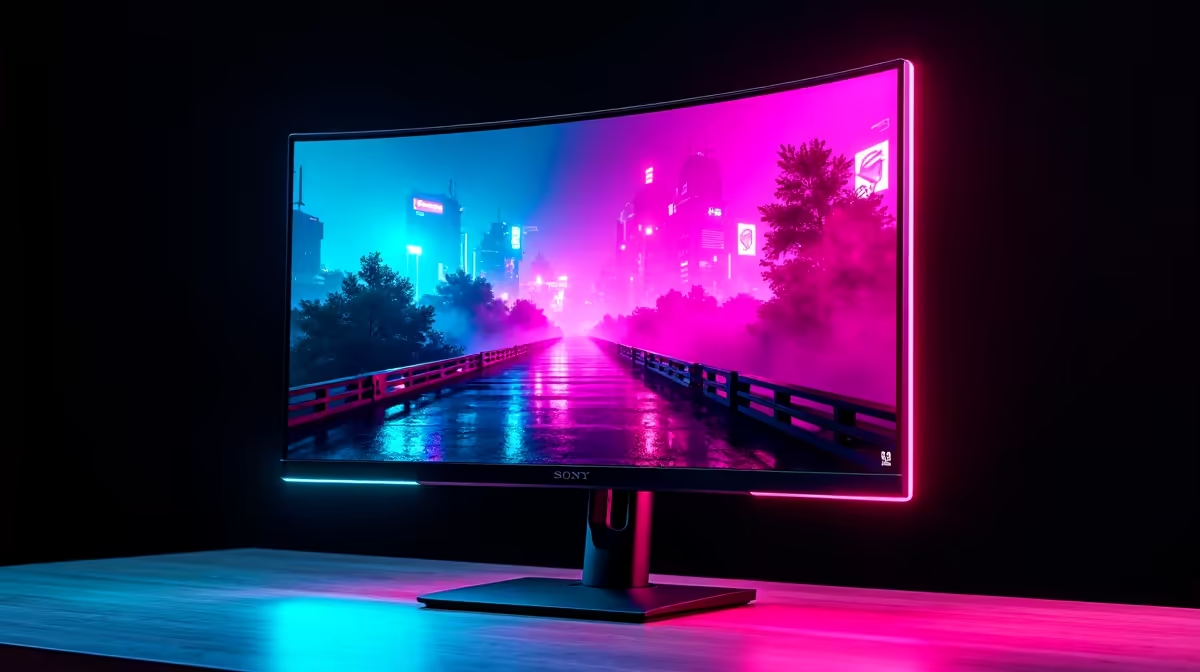
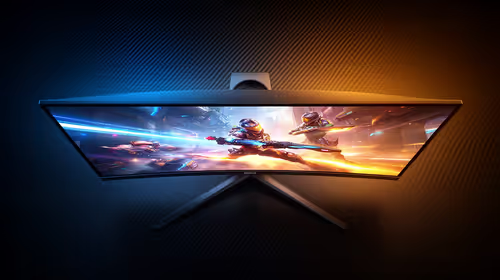
OLED panels have near-instant pixel response (~0.03ms), so any lag you feel is upstream - in V-Sync, frame caps, or HDR processing. Turn off any extra processing or overlay; OLED is fast enough that software in the path is the only thing adding delay. Use a DisplayPort 2.1 or certified HDMI 2.1 cable; HDR plus high refresh needs the bandwidth or the panel drops modes. As a yardstick, run the OLED at its native refresh (often 240Hz) and cap frames a few below it so VRR stays in its working window, so use that as your pass/fail line rather than chasing a perfect number.
When a Fix Becomes an Upgrade
Treat the result as a buying guide. A problem that vanishes with a different cable, port, or sync setting costs nothing to fix. A problem that only shifts with more capable hardware tells you exactly what to budget for. That keeps SA spending sensible - you upgrade the oled gaming monitors or supporting part the test pointed at, instead of guessing and over-buying.
FAQ
How do I know if it's a network problem causing low FPS?
Run a wired Ethernet test against your Wi-Fi: if the cable removes the issue, it was the wireless link. Watch ping and packet loss during play - under 30ms ping and well under 1% loss is the target for online gaming.
Does storage speed matter for low FPS?
For loading and streaming hitches, yes. OLED panels have near-instant pixel response (~0.03ms), so any lag you feel is upstream - in V-Sync, frame caps, or HDR processing. Keeping the game on your fastest NVMe drive with 15-20% free space removes a lot of avoidable stutter.
Does my display cable affect low FPS?
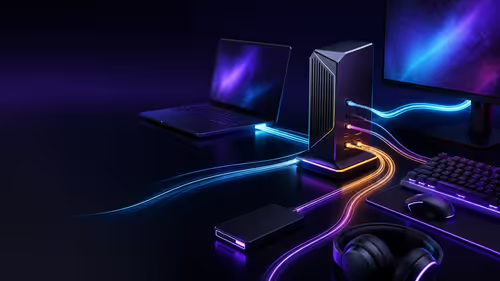
It can. Use a DisplayPort 2.1 or certified HDMI 2.1 cable; HDR plus high refresh needs the bandwidth or the panel drops modes. A cable that can't carry your panel's full refresh quietly caps performance and makes motion feel worse than the hardware should.
Worked through every free fix and the low FPS is still there? That's the point to look at the right part - browse current OLED Gaming Monitors stocked at Evetech and match the upgrade to the exact bottleneck your test exposed.