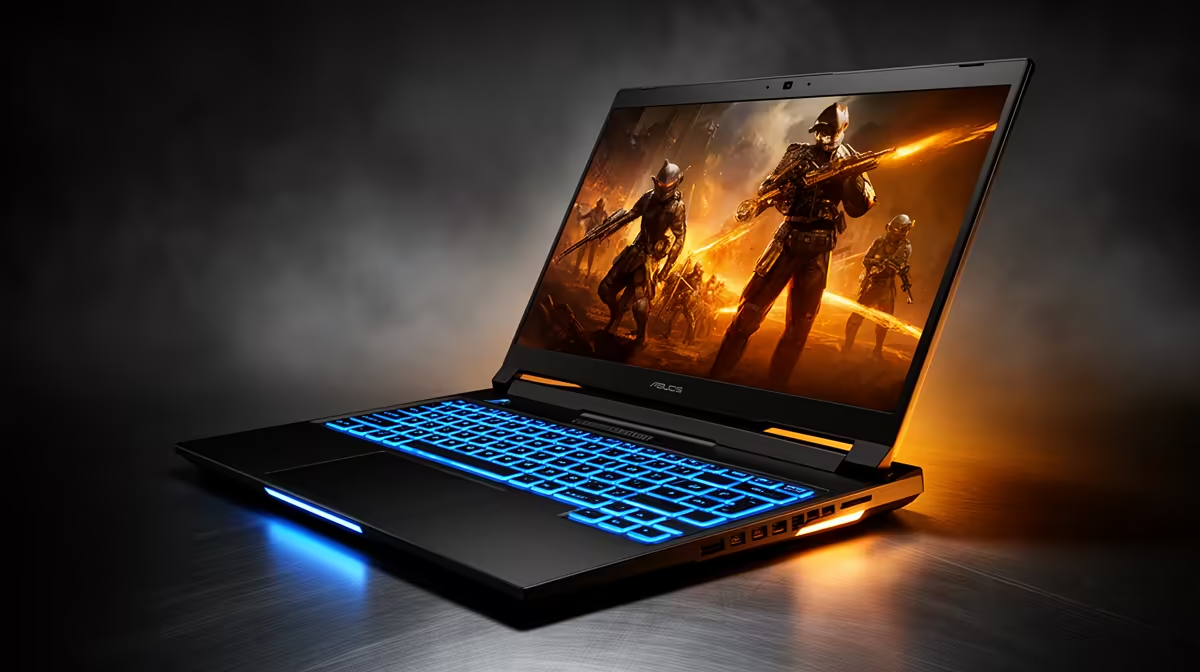
When FPS drops creeps into a gaming laptop, the smart move is to isolate the cause before spending a cent.
Quick Answer
The fix for FPS drops on a gaming laptop is a short checklist: stable drivers, correct frame cap, cool components, and one repeatable benchmark. Capable gaming laptops start near R18,000, with RTX-class machines crossing R28,000. Numbers beat guesses every time.
Watch Thermals And Power Behaviour
Log temperatures during your scene and confirm the system is on a high-performance power profile, not a battery-saver or eco mode. Heat throttling and conservative power limits make frame rate sag on an otherwise healthy gaming laptop. Targeting 1 TB NVMe as a reference keeps your expectations grounded while you tune airflow and limits.
Tune One Setting At A Time
Change a single option, re-run the identical scene, and write down the frame rate result before touching the next one. Bundling changes hides which one helped and which hurt. This disciplined loop turns FPS drops on a gaming laptop from a guessing game into a short, repeatable diagnosis.
Fix the cause, then shop smart.
When your before-and-after numbers point to a clear limit on your gaming laptop, the right Evetech gaming laptop pick becomes obvious.
Recreate FPS drops With One Repeatable Scene
Pick a single in-game area you can reload on demand and run it the same way each time. Note whether FPS drops arrives during loading, busy fights, online play, or only after the gaming laptop warms up. A capable setup can still feel rough when 144 Hz panel settings or background tasks are unsettled, so a fixed scene gives you comparable frame rate readings instead of vague impressions.
FAQ
How much should I budget to properly address this on a gaming laptop?
Often nothing, since most fixes are configuration changes. Capable gaming laptops start near R18,000, with RTX-class machines crossing R28,000. If a measured bottleneck remains after tuning, spend on the single part your data points to rather than a full rebuild.
Is FPS drops on a gaming laptop a hardware fault or a settings problem?
Most of the time it is settings, drivers, or background load rather than a broken part. Run one repeatable scene, change a single variable, and watch frame rate. Only consider a replacement once a clean configuration still shows the issue.
Could a cable or port be causing FPS drops on my gaming laptop?
It can. A marginal or wrong-spec cable produces drops and hitches that mimic deeper faults. Swap to a certified cable, try another port, and re-run the same scene to rule it out in minutes.
Save Time
Lock the in-game preset and resolution first; only then touch one tuning option so you can attribute any gain correctly.