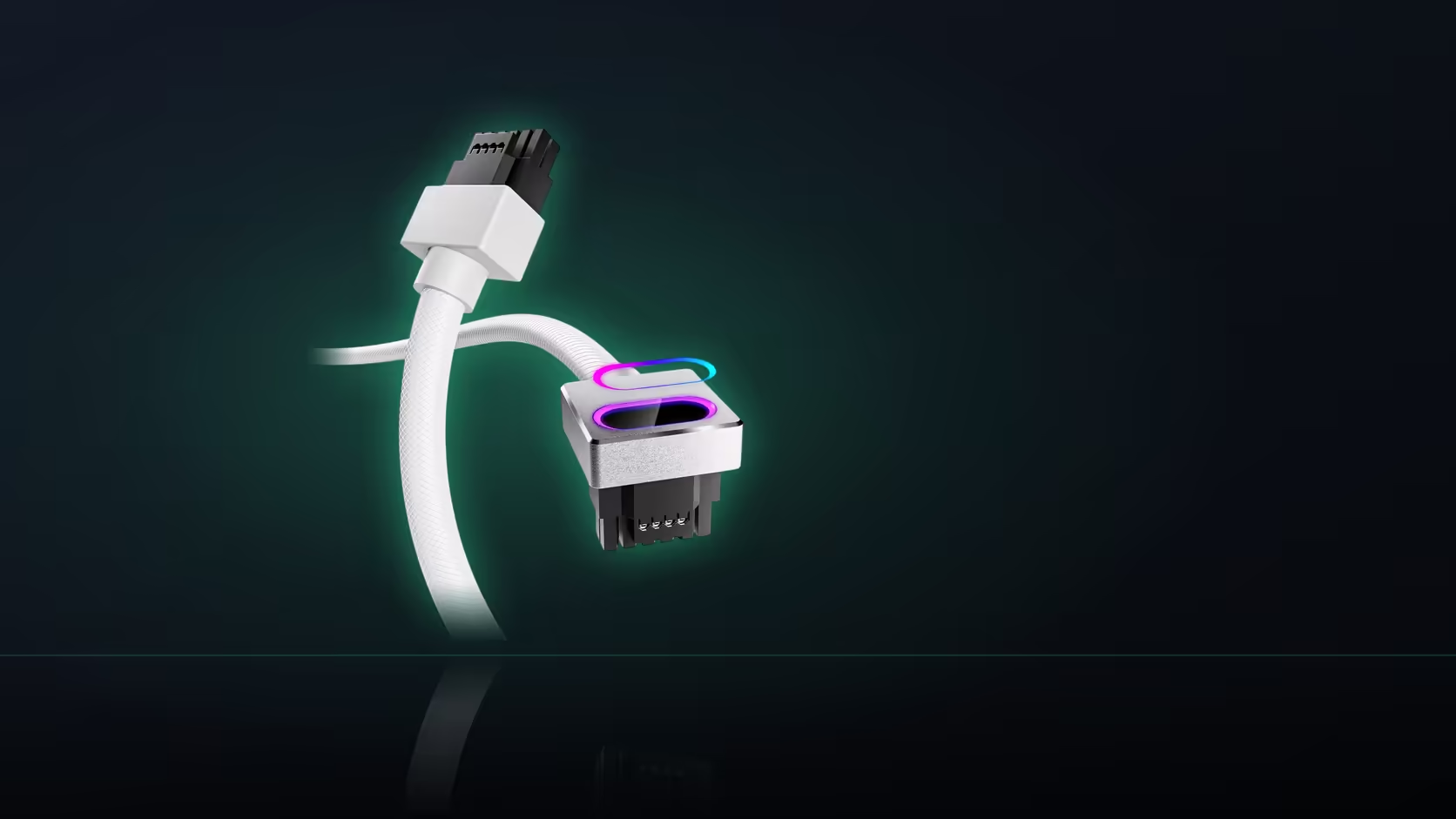
A graphics card that draws through a single 16-pin connector has no use for the two 8-pin PCIe leads sitting in a four-piece sleeved kit. That mismatch is easy to miss when you order a kit expecting it to dress the whole build, and it changes what you should actually be pairing it with.
Quick Answer
A 16-pin (12VHPWR) card leaves both 6+2 PCIe extensions in a four-piece kit unused, since it draws through a single native port rather than the older eight-pin sockets. Pair the kit with the AsiaHorse Hydrus 16-pin modular cable instead - R549 for the kit plus R699 for the Hydrus cable, around R1,250 for both, and the card is properly covered.
🔍 Which pieces go unused
The four-piece sleeved kit contains one 24-pin ATX extension, one 4+4 EPS extension and two 6+2 PCIe extensions - four pieces built for the four cables a typical eight-pin-fed card and processor need. A card with a single 16-pin socket has no eight-pin inputs at all, so both graphics extensions have nothing to plug into. The board and processor extensions still do their job regardless of which card is fitted, which means half the kit works as intended and half sits in the box.
🔌 Why the Hydrus 16-pin cable is the real match
The AsiaHorse Hydrus 16-pin cable is not an extension the way the kit pieces are - it plugs directly into a native 16-pin port on the power supply and runs straight to the card, replacing rather than extending anything. It carries a lit right-angle connector at the GPU end and a 50cm length, and AsiaHorse rates it at 480W. The compatibility list covers the RTX 40-series cards through the RTX 5080 and 5070; the RTX 5090 is not on that list, so check the card before ordering. AsiaHorse has also flagged Lian Li and Sharkoon power supplies as showing more damage reports with this cable than other brands, worth checking against whatever supply is in the build.
💰 What the pairing costs, and what it leaves spare
Buying the four-piece kit at R549 alongside the Hydrus 16-pin cable at R699 comes to roughly R1,250, and between them they dress the board lead, the processor lead and the card lead with nothing missing. The two spare PCIe extensions from the kit are worth keeping rather than binning, since a future card change back to an eight-pin design - or a second build - would put them straight to use without another purchase, and pairing the pack with a fresh set from the case fan range finishes the rest of the interior.
A six-piece kit is not the fix here either. It simply adds a third graphics extension to the two already spare, which is more unused stock rather than less, so the four-piece kit paired with a dedicated 16-pin cable remains the cleaner route for this particular card.
Frequently Asked Questions
Which kit pieces go unused with a 16-pin card?
Both 6+2 graphics extensions, since a card with a single 16-pin connector has no eight-pin sockets for them to plug into.
What still gets used from the kit?
The 24-pin board extension and the 4+4 processor extension, since those two connections exist regardless of which graphics card is fitted.
Does the Hydrus 16-pin cable extend an existing lead or replace it?
It replaces. The cable plugs directly into a native 16-pin port on the supply rather than adding length to an existing eight-pin run.
What does the full pairing cost?
R549 for the four-piece kit and R699 for the Hydrus 16-pin cable, so roughly R1,250 to cover the board, processor and card leads together.
Are there conditions attached to the Hydrus 16-pin cable?
It needs a native 16-pin port on the supply, it is rated at 480W, and it is not listed for the RTX 5090.
Should the spare graphics extensions be kept anyway?
Yes. A later card with eight-pin sockets, or a second build, would put them straight to use rather than needing a fresh order.
Would a six-piece kit solve the mismatch?
No. It adds a third graphics extension, which is even less relevant to a card that only has one native power connector.
Building around a 16-pin graphics card?
Check Evetech's case accessory range to see which AsiaHorse cable actually matches your card's power connector.