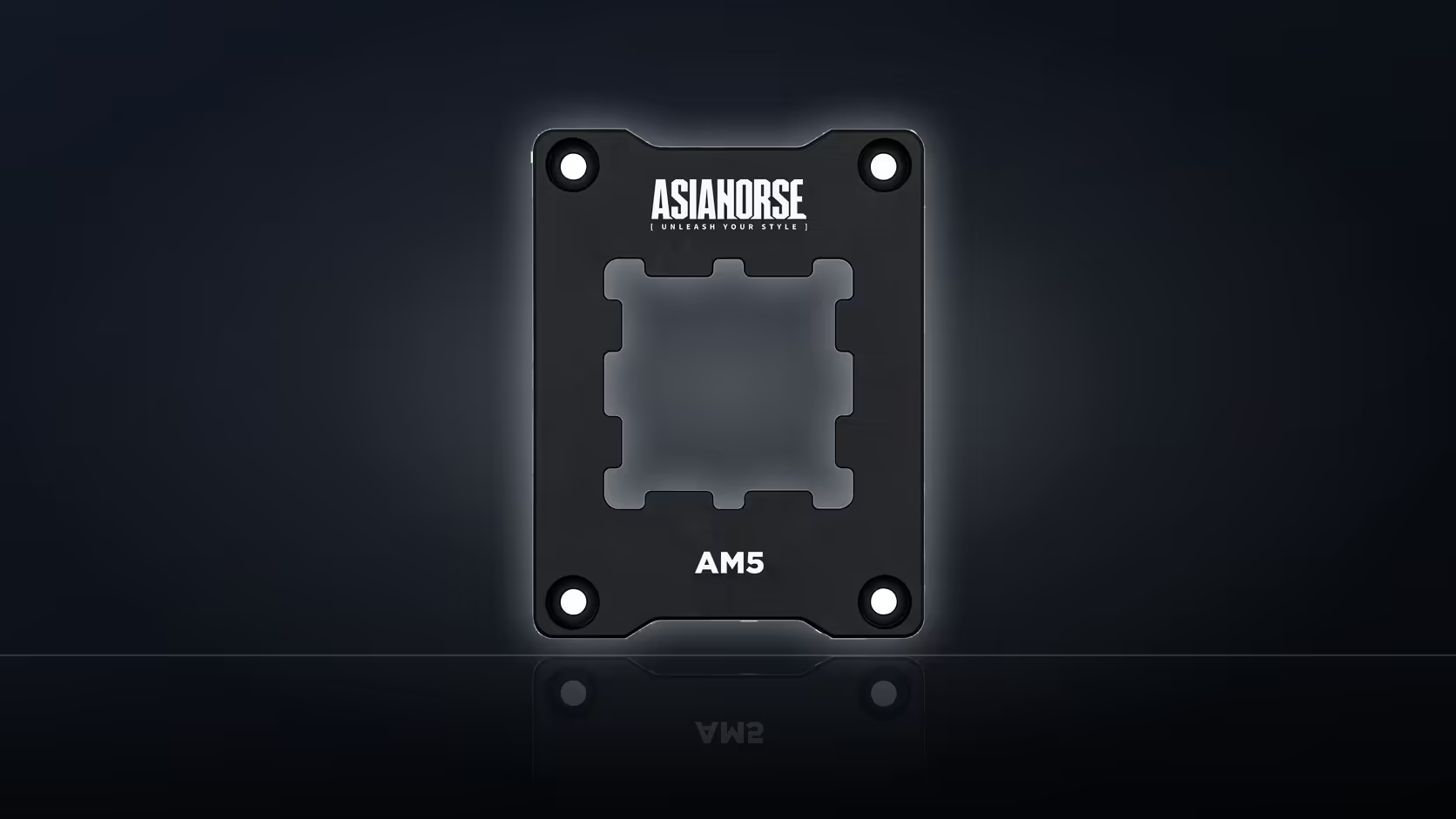
A R299 price tag makes a part feel like a minor add-on, the kind of thing that slots into a build without disrupting much else. The Pulsar contact frame does not work that way in practice - fitting it means the cooler comes fully off the board, which is exactly the same amount of effort as swapping the cooler itself.
Quick Answer
Despite costing only R299, fitting the AsiaHorse Pulsar frame requires the same steps as a full cooler swap: removing the cooler, cleaning the old thermal paste, fitting the frame, and reassembling with fresh compound. Budget the time for a cooler-off job, not a quick five-minute accessory install.
🔧 What the job actually involves
Fitting Pulsar starts with removing whatever cooler is currently mounted, since the stock AM5 retention arms sit directly beneath it and have to come out before the frame goes on. Once the cooler is off, those stock arms come out and the frame goes on in their place - an anodised aluminium piece secured with four included screws, tightened using the hex wrench in the box. Only then does the cooler go back on, and only after the old thermal paste has been cleaned off both surfaces and a fresh application put down. That is four distinct steps, not one quick swap of a single component.
⏱️ How long that actually takes
For someone who has removed and remounted a cooler before, an hour is a reasonable allowance for the whole job - cooler off, arms out, frame in, surfaces cleaned, cooler back on with new paste, cables reconnected and checked. That is comparable to swapping one cooler for another entirely, which is worth knowing before starting, since a R299 part can create the expectation of a much shorter interruption than it actually delivers.
🧰 Tools and access
The hex wrench needed to fit the frame is included in the box, so the only additions worth having on hand are cleaning materials - isopropyl alcohol and a lint-free cloth work well for stripping old paste - and fresh thermal compound, since the frame itself does not include any. Whether the motherboard needs to come out of the case entirely depends on the board and case combination; some cases give clear enough access to the socket area without a full board removal, others do not.
⚠️ What can go wrong along the way
The usual risks of working directly around a processor apply here: a dropped screw finding its way somewhere awkward, a cable disturbed and not reconnected properly, or a cooler that goes back on slightly misaligned and does not seat evenly. None of these are unique to fitting this frame, but they are the same risks present in any cooler-off job, which reinforces that this is not a lighter-touch task than a full cooler replacement. Keeping the original retention arms aside rather than discarding them means the board can be returned to stock configuration later if needed.
🗓️ Timing the job sensibly
Because the machine is unusable for the duration, a job like this is worth scheduling for a stretch of uninterrupted time rather than squeezing it in around other commitments. Mid-week, with a deadline looming, is rarely the right moment. A weekend session, with time to double-check each step and let fresh paste cure before the first stress test, tends to go more smoothly than a rushed attempt.
Frequently Asked Questions
What does fitting actually involve?
Removing the cooler, taking off the stock retention arms, fitting the frame with its four screws, then cleaning and re-pasting.
How long does that take?
Comparable to a cooler swap, so an hour is a reasonable allowance for someone who has done it before.
Is the board removed too?
Not necessarily, though access to the screws behind the socket area is easier with the board out in some cases.
Does it need special tools?
The hex wrench is supplied, so the only additions are cleaning materials and thermal paste.
What is the risk of the job?
The usual risks of working around a processor: dropped screws, disturbed cables and an improperly seated cooler afterwards.
Can it be done mid-week?
It is a job that leaves the machine unusable until finished, so allowing an uninterrupted session is sensible.
Is it reversible?
The original retention arms can go back, which is why keeping them together during the job matters.
Before starting, it is worth having replacement thermal compound ready from Evetech's thermal solutions range, and checking the cooler itself against the cpu coolers listings if a like-for-like mounting standard needs confirming.
Setting aside time for a cooler-off job?
Stock up on thermal paste and browse cooler options on Evetech before the build comes apart.