The space behind the motherboard tray is where a build's cabling actually lives, and it is also the part almost nobody plans on paper before ordering accessories. A rough rear-chamber sketch, done before anything is bought, is a cheap way to catch a conflict that would otherwise only show up once the side panel refuses to close.
Quick Answer
Sketch what will end up living behind the tray - controllers, cable junctions and surplus lead - before ordering any accessories. A build adding a hub, a controller and six extensions in one go can genuinely run out of depth back there without anyone noticing until the panel meets resistance during final assembly.
🗂️ What actually accumulates back there
The rear chamber collects several things at once: the junction point where each sleeved or lit extension meets the factory cable it is extending, the ASH-S1 hub itself if that is where it gets mounted, any controller box such as the Aurora Learn's remote receiver, and the surplus length of every factory cable that was already longer than it needed to be before any extensions were added. None of these are individually large, but they compete for the same limited depth, and a sketch is the easiest way to see all of them at once rather than discovering the total only once everything is physically installed.
📦 The two biggest space users
The ASH-S1 hub and an Aurora Learn controller are the two heaviest space users in this list, since both are physical boxes rather than just cable junctions - a hub with cables running to all sides needs real depth, and a controller with its own SATA lead and remote receiver adds a second box of similar size if both are fitted in the same build.
📏 How much extra length the extensions actually add
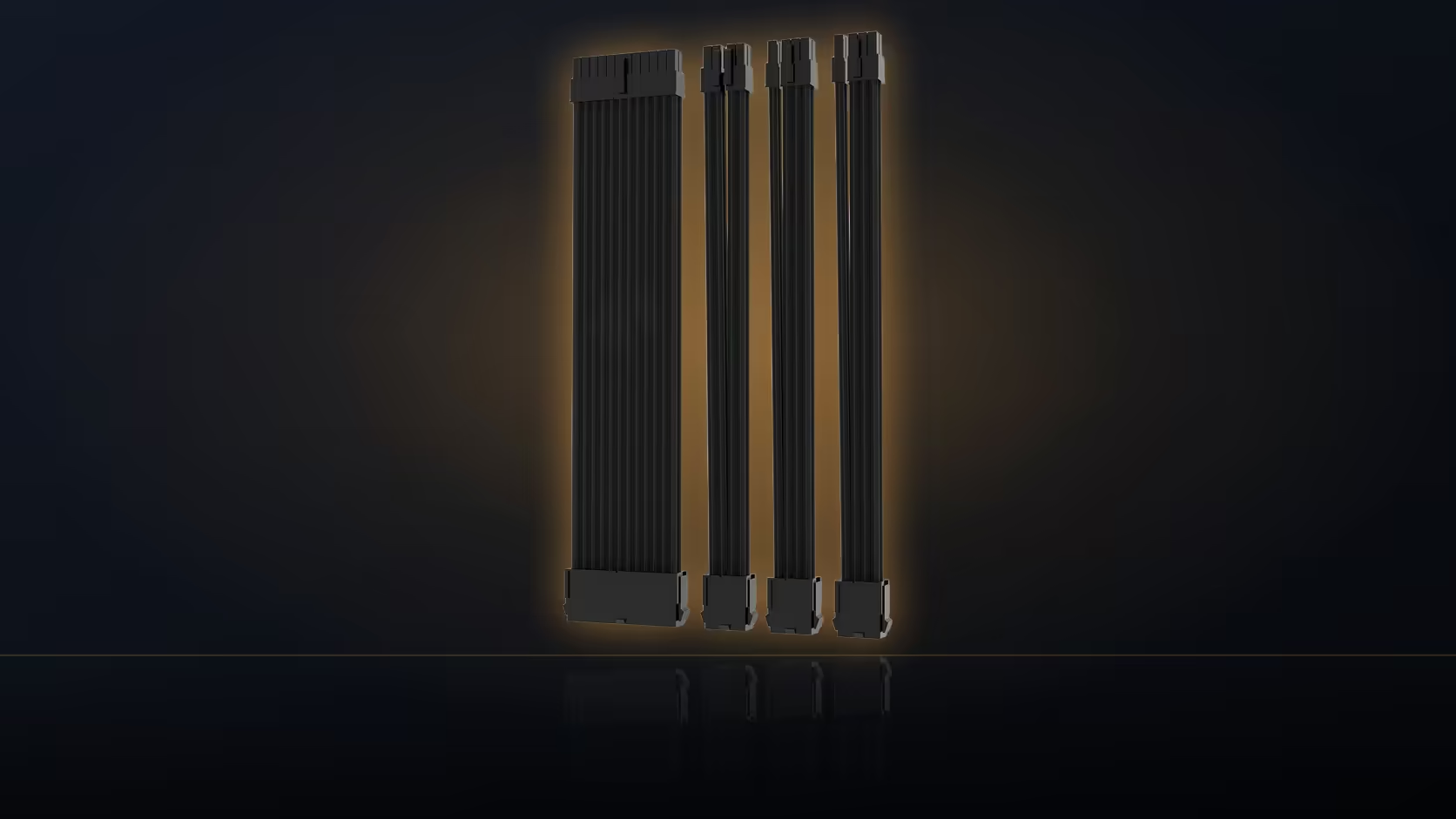
Each sleeved or lit extension adds 30cm on top of whatever factory lead is already staying in place, so a build adding six extensions at once is genuinely introducing 180cm of extra cable that has to be coiled, folded or routed somewhere - most of it ending up behind the tray if the front-facing routing channels are already full. That is a meaningful amount of extra material to plan for, not a rounding error, and fan cables from the case fan range add further length once daisy-chained back to the tray.
🚪 What tells you the space has actually run out
A side panel that meets resistance closing is the clearest sign the rear chamber has run out of room, and the fix at that point is to redistribute how the cable is packed rather than forcing the panel shut against the extra bulk. Pressing a resisting panel closed can bow it permanently or strain the hinge, so treat that resistance as a signal to open the panel back up and repack rather than something to push through.
🏠 Which cases feel this most
Compact and slim-profile cases are where this problem shows up fastest, since the channel behind the tray in those designs is typically shallower to begin with, and there is often no lower basement compartment to absorb whatever does not fit in the main channel. A larger case with a dedicated cable basement gives considerably more forgiveness for a build carrying a hub, a controller and several extensions all at once.
✏️ Keeping the sketch rough and useful
The sketch itself does not need precision to be worth doing - a rough outline is enough, provided every item expected to live back there appears on it at something close to its real size. Doing this before ordering, rather than after the parts have already arrived, is what actually saves the trouble: discovering a conflict on paper costs nothing, while discovering it after assembly usually means returning something or improvising a workaround. A quick check against the case accessories range for actual product dimensions makes the sketch considerably more accurate.
Frequently Asked Questions
What actually ends up behind the tray in a lit build?
Cable junctions from extensions, the hub if it is mounted there, any controller box, and all the surplus factory cable left over.
Which parts take up the most space back there?
The ASH-S1 hub and an Aurora Learn controller, both physical boxes rather than simple cable junctions competing for the same depth.
How much slack do the extensions actually add?
Each one adds 30cm on top of a lead that is already staying in place, so six extensions can introduce a considerable amount of extra cable.
What signals that the rear chamber has run out of room?
A side panel meeting resistance while closing, which means the cable packing needs redistributing rather than forcing the panel shut.
Which cases struggle with this the most?
Compact and slim-profile designs, where the channel behind the tray is shallower and there is often no basement to absorb the extra.
Does the sketch need to be precise?
Rough is enough, provided every item expected to live back there appears on it with a realistic sense of its size.
When should the sketch actually be drawn?
Before ordering anything, since finding a conflict on paper costs nothing while finding it after assembly usually means returning parts.
Planning a rear-chamber cable layout?
Browse Evetech's case accessories to check real dimensions before sketching out where everything will end up.