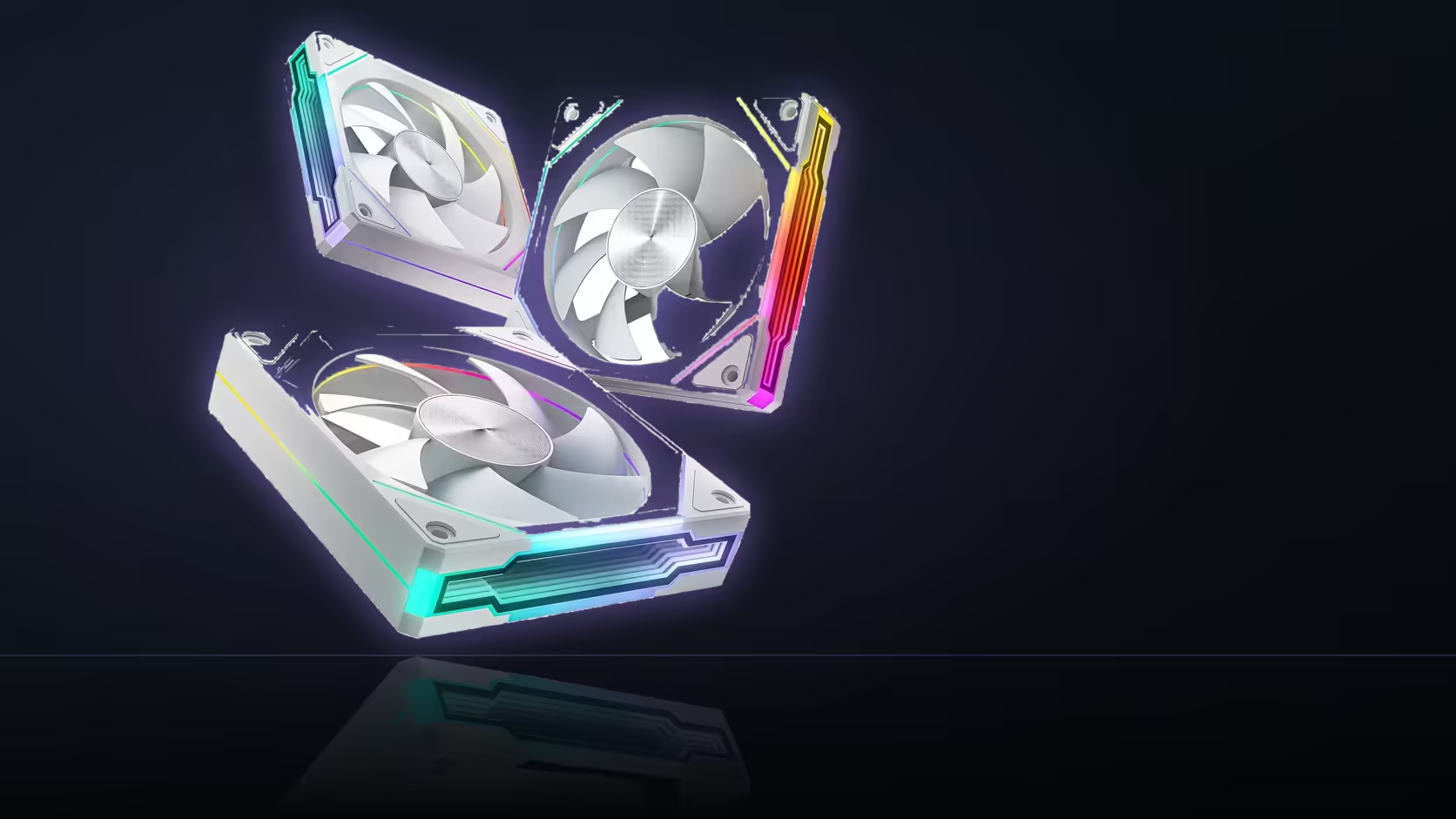
Restrained styling changes nothing about the job a fan is actually there to do. The Amici Pro still has to move air properly wherever it ends up mounted, and a subtler visual look never excuses skipping the basic placement decisions that any case fan needs.
Quick Answer
The Amici Pro still moves up to 61.5 CFM at up to 1800 RPM regardless of its restrained styling; the 3-pack costs R399 with VAT accounted for, though that price is not fixed and can shift over time. Placement follows the same airflow logic as any other case fan, restrained look or not.
🎯 Cooling comes first regardless of appearance
A ring-only design does not change what the fan physically does once it is spinning - it still moves the same volume of air, still has the same job of drawing heat away from components, and still needs to be positioned according to the case's overall airflow plan rather than purely for where it looks best. Restraint in lighting is a visual choice, not a cooling shortcut.
What it actually moves
Up to 61.5 CFM at under 30 dBA, spinning up to 1800 RPM under PWM control - identical performance figures to what you would expect from any fan in this class, lit blades or otherwise. The lighting design and the cooling capability are entirely separate specifications, and one tells you nothing about the other.
📍 Where these fans typically belong
Wherever the case design intends fans to sit - commonly a front intake row, a top exhaust row, or a single rear exhaust position, following whatever layout the case manufacturer built the chassis around. There is nothing specific to the Amici Pro that changes this basic placement logic versus any other 120mm case fan.
Should visible positions get priority?
The ring lighting only shows where someone can actually see it, so placing the Amici Pro in a genuinely visible position - front row behind glass, or a top row seen from above - makes more of the lighting investment than tucking it somewhere hidden. That said, cooling need should still come first; a hidden position that genuinely needs airflow should still get a fan, even if the lighting goes unseen there.
🔧 Does the forward blade limit where it can go?
It limits which face is visible from a given angle, not where the fan can physically be mounted. Orientation still sets airflow direction independently of blade type, so the Amici Pro fits standard intake or exhaust roles the same as any forward-blade fan would. No static pressure figure is published for this specific model, so radiator suitability is not something the listing directly addresses - worth checking a dedicated radiator fan if that is the intended use.
For most mid-tower cases, three fans is a sensible cooling set, covering either a full intake row or a split between intake and exhaust positions. Browse the case fans range to plan your layout, and case accessories for mounting hardware and cabling to finish the install.
Frequently Asked Questions
Does the Amici Pro's restrained look change how it should be placed?
Not at all - the fan moves air the same way regardless of lighting design, so placement follows the same airflow logic as any other fan.
What does it actually move in terms of airflow?
Up to 61.5 CFM at under 30 dBA, spinning up to 1800 RPM under PWM control, matching typical 120mm case fan performance.
Where do these fans usually get mounted?
Wherever the case design intends fans to sit - typically a front intake row, a top row, or a rear exhaust position.
Should visible positions get priority for this fan?
The ring only shows where visible, so a visible position makes more of the lighting - though cooling need should still come first.
Does the forward blade design limit where it can be mounted?
It limits which face is visible rather than where the fan can go, since orientation sets airflow direction independently.
Can this fan be used on a radiator?
No static pressure figure is published for this model, so radiator suitability is not something the listing directly addresses.
Ready to plan a properly cooled case layout?
Browse Evetech's case fan range to build out intake and exhaust positions that work.