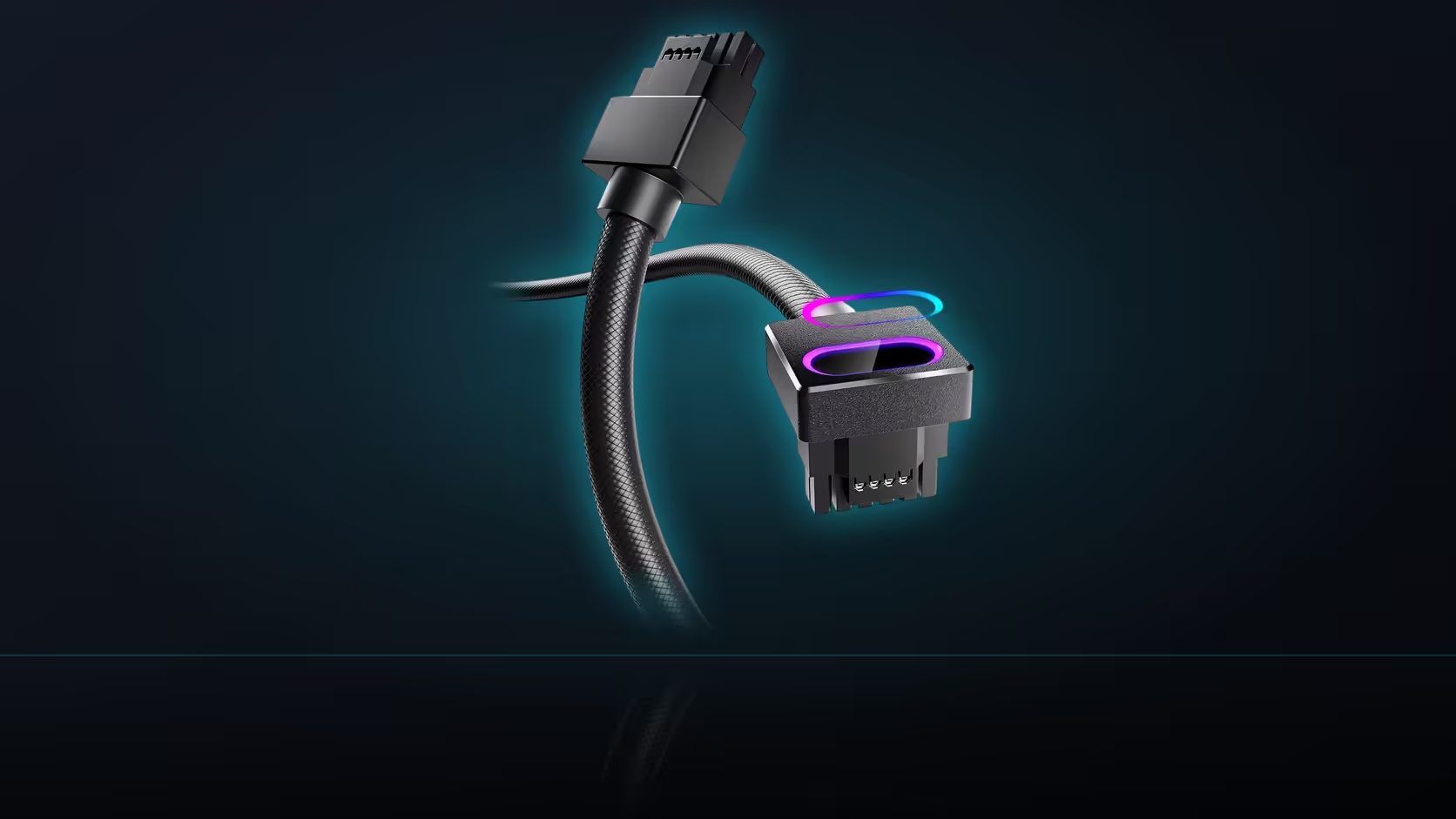
Price tells you nothing about clearance. The Hydrus 16-pin cable sits comfortably under R800, but at the card end it turns through a fixed 90-degree angle, and that turn needs actual physical space to exist in - space that a case's price tag, size class, or reputation says nothing about.
Quick Answer
The AsiaHorse Hydrus 16-pin (12VHPWR) cable costs R699 in black or white and ends in a right-angle ARGB head at the graphics card. That head needs clearance in the direction it turns, between the card's power socket and the side panel. Cost and fit are unrelated questions, and a cheap cable can still fail to close a tight case.
Where the clearance question actually sits
The head sits immediately beside the card's power socket, and it needs room in whichever direction it turns to. That is not the same measurement as the card's overall length - a compact card in a spacious case can still have a cramped socket area if the card sits close to the panel, and a long card in a deep case can have plenty of room around the connector. The two dimensions are independent, which is exactly why length alone will not answer the fit question.
How to actually measure it
With the card fitted, check the gap between its power socket and the side panel, and separately check the open space in the direction the head faces once connected. A tape measure gives a straight-line answer where the cable will not travel in a straight line, so eyeballing the physical gap with the card installed is more reliable than working from spec-sheet numbers alone.
Does the angle help or hurt
It depends entirely on the direction of the constraint. A right-angle head genuinely helps depth, because the connector turns immediately rather than standing straight out from the card the way a conventional plug does - in a shallow case, that can be the difference between the panel closing cleanly and not closing at all. What it costs is space in whatever direction it turns toward, so a head angled toward a tight corner can be worse than a straight connector in that specific layout. Check the product photos against your own card's orientation before assuming the angle works in your favour.
What happens if the panel presses on it
If the only way the side panel closes is by pushing against the head, that fit is wrong and should not be forced. Sustained pressure on a power connector is exactly the kind of thing worth avoiding, both for the connector's own sake and because a stressed connection is harder to trust over time. Resolve the clearance problem - a different route, a repositioned card, or simply the factory cable instead - rather than closing the case anyway.
The rest of the checklist still applies
Clearance is one item on a longer list this cable needs ticked off: a native 16-pin socket on the power supply, a card on AsiaHorse's named list (RTX 40-series plus RTX 5080/5070, not the RTX 5090), and a 50cm run that actually reaches. None of those checks substitute for the others, so working through all of them before ordering is the only way to be confident the R699 price tag is the last number that matters. Browse comprehensive cable solutions for the cable alongside its siblings, and see what else is on offer under graphics card accessories.
Frequently Asked Questions
Where specifically does the head need clearance?
Immediately beside the card's power socket, in the direction the connector turns, with enough depth for the cable to leave without pressing on the panel.
Does a right-angle head make clearance easier or harder?
Both, depending on direction. It saves depth compared with a straight plug but costs space wherever it turns toward.
What is the reliable way to check the gap?
With the card physically fitted, measure the space between the socket and the side panel rather than relying on published card length alone.
What if the panel only closes by pressing on the connector?
That fit is not acceptable. Change the route, reposition the card, or use the factory cable instead of forcing pressure on a power connector.
Does card length decide the fit on its own?
No. Length affects where the socket sits, but clearance is a separate measurement of depth and the space beside it.
Does the cable's length affect head clearance?
Not directly. The 50cm figure governs reach along the route, while head clearance is about space right at the connector.
Can the head's orientation be adjusted at install?
No. The angle is fixed by the cable's design, so checking product photos against your card layout is the only way to know it in advance.
Checking whether a right-angle head clears your case?
Fit the card first and measure the gap, then browse Evetech's cable range once you know the space you're working with.