


1000W PSU Planning for RTX 5090 Builds in SA
1000W for RTX 5090 needs a full-build check, not a simple yes. Review GPU guidance, CPU draw, transient load, connectors, PSU quality, and upgrade plans before deciding.
Read moreMid-range and high-end CPUs both cool well under a 240mm liquid cooler priced sensibly in Rand. The MasterLiquid 240 Atmos costs R1,399 and covers mainstream Ryzen and Core chips up through most high-end options.
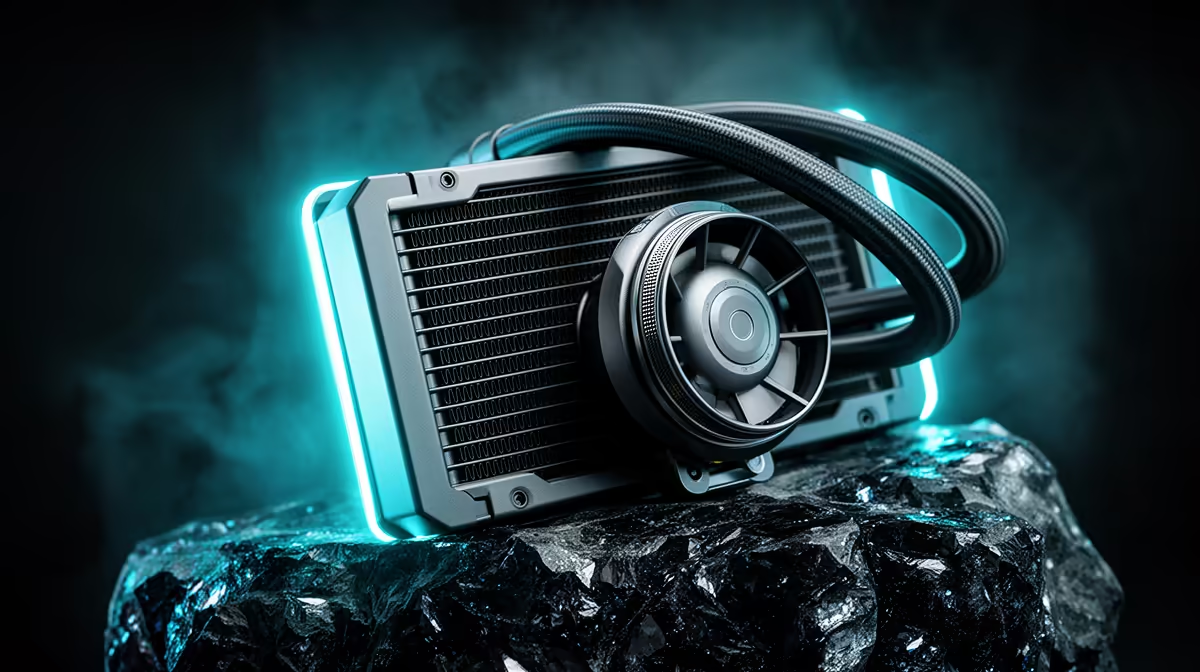
Rand pricing on cooling gear rarely gets its own explanation, and most buyers just compare rands per box without understanding what changes between tiers. A 240mm liquid cooler priced sensibly, rather than at the premium end, still delivers the cooling headroom most builds actually need.
In Rand terms, a solid 240mm unit lands between roughly R1,300 and R2,200 depending on fans and pump design. The MasterLiquid 240 Atmos sits at R1,399, covering mainstream Ryzen and Intel chips through to most high-end options without needing a pricier radiator size.
Rand pricing on PC parts fluctuates with import costs and exchange rates more than most buyers realise, so a cooler that held its price bracket over time is often a safer bet than one that jumped recently. At R1,399, the Atmos sits solidly in the mid-tier bracket rather than at either extreme, giving builders full 240mm-class cooling without paying premium pricing for RGB or software extras that add little practical benefit.
A 120mm single-fan loop typically costs less but cannot match the sustained cooling capacity of a 240mm radiator, while 280mm and 360mm options usually add a meaningful jump in Rand cost for headroom most gaming builds never use. Sitting in the middle, 240mm remains the sweet spot for value relative to actual cooling need.
Mainstream chips, the kind found in most gaming and everyday builds, run comfortably under a 240mm radiator without hitting thermal limits during normal use. Higher-end chips pushed under sustained full load, such as extended rendering or heavy multitasking, benefit more from the extra surface area of a larger radiator, but that is a smaller slice of buyers than the mainstream gaming market.
For most shoppers weighing up rand-for-rand value, the Atmos covers that mainstream-to-high-end range without forcing an upgrade to a pricier radiator size just for headroom that goes unused.
Cheaper 240mm coolers sometimes cut corners on fan quality or pump complexity rather than radiator size, so a low sticker price can still mean a noisier or less refined unit. The Atmos includes PWM SickleFlow Edge fans and a customisable pump cap at R1,399, both details that separate a properly specified mid-tier cooler from a stripped-down budget option at a similar price point.
Buyers wanting the full spec sheet alongside current Rand pricing can check this 240mm Atmos cooler directly, while South Africa's CPU liquid cooler range gives a wider view of pricing across radiator sizes. Those weighing liquid against air cooling entirely can browse the complete CPU cooler lineup for a side by side comparison.
Import costs and exchange rate movement affect PC component pricing generally, so prices can shift even when the underlying product has not changed.
Yes, that price sits within the normal mid-tier bracket for a 240mm radiator with PWM fans and broad socket support.
Only if your CPU runs sustained heavy loads regularly. For most gaming use, a 240mm radiator already covers the thermal need without the extra spend.
Not always, but it often means simpler fans or pump design, so checking the actual spec sheet rather than price alone gives a clearer picture.
It comes down to preference. The cap does not change cooling performance, but it does let builders tailor the look of the pump block, which some buyers value enough to pay slightly more for.
A cooler that covers both current and older sockets, like AM5 and AM4 together, tends to remain useful for longer, which stretches the value of the initial Rand spend across more than one build.
Ready to shop 240mm liquid cooling with Rand prices sorted? Start with Evetech's Cooler Master 240 Atmos AIO priced at R1,399 at Evetech, as your baseline for a 240mm AIO upgrade.
Import costs and exchange rate movement affect PC component pricing generally, so prices can shift even when the underlying product has not changed.
Yes, that price sits within the normal mid-tier bracket for a 240mm radiator with PWM fans and broad socket support.
Only if your CPU runs sustained heavy loads regularly. For most gaming use, a 240mm radiator already covers the thermal need without the extra spend.
Not always, but it often means simpler fans or pump design, so checking the actual spec sheet rather than price alone gives a clearer picture.
It comes down to preference. The cap does not change cooling performance, but it does let builders tailor the look of the pump block, which some buyers value enough to pay slightly more for.
A cooler that covers both current and older sockets, like AM5 and AM4 together, tends to remain useful for longer, which stretches the value of the initial Rand spend across more than one build.
1000W for RTX 5090 needs a full-build check, not a simple yes. Review GPU guidance, CPU draw, transient load, connectors, PSU quality, and upgrade plans before deciding.
Read more
RTX 5080 Super with a 750W PSU is more comfortable than lower wattage if the unit is quality. SA builders should still confirm GPU guidance, CPU draw, connector type, airflow, and upgrade room.
Read more
How to fix FPS drops after a RX 9070 XT starts with driver cleanup, chipset updates, thermals, and power checks. For SA gaming PCs, confirm PCIe seating, monitor refresh, frame caps, and per-game graphics settings before replacing parts.
Read more
How to fix low FPS Windows 11 Wi-Fi 7 issues starts by checking whether the problem is frame rate or network lag. Test ping, drivers, power settings, Ethernet, and game FPS before adjusting visuals.
Read more
AM5 is smart for SA builders because it supports newer Ryzen CPUs, DDR5 memory, and a longer upgrade path. Compare board cost, cooling, gaming needs, and local part availability before choosing your next PC platform.
Read more
AM5 gives Randburg gaming builders a longer upgrade path. For SA buyers, DDR5 support, newer board features, and future CPU options can justify the platform. Weigh board cost, cooler support, BIOS maturity, and upgrade timing before choosing.
Read more
RTX 5090 on a 550W PSU leaves almost no practical room for OC plans. Treat the setup as constrained, with CPU draw, power spikes, cable quality, thermals, and stability checks more important than chasing extra clocks.
FPS drops on a Ryzen 9 9950X3D build often have a fixable cause. Check settings, drivers, thermals, background tasks, network conditions, and bottlenecks before assuming a part must be replaced.

The difference between PCIe 5.0 and PCIe 4.0 for SA gamers is mostly bandwidth headroom. Compare GPU slot needs, NVMe speed, motherboard support, and upgrade timing before paying extra for a newer platform.

Gaming PC stuck pixel checks in South Africa should confirm the monitor fault first. Use colour tests, screenshot comparison, cable swaps, display menu checks, and clear photos before deciding on support.

AMD's current driver now lists a Radeon RX 9050 4GB, while product coverage details a narrowed memory system. SA buyers should weigh the low VRAM ceiling against current local Radeon options.

Samsung Display has demonstrated a 16-inch 2.5K OLED laptop panel running at 300Hz. SA buyers should wait for a named notebook, full panel specifications and a local price before planning an upgrade.

Microsoft says some Windows 11 game crashes after recent updates are linked to RGB-related drivers. Affected SA gamers should confirm the update and driver before using the published registry workaround.
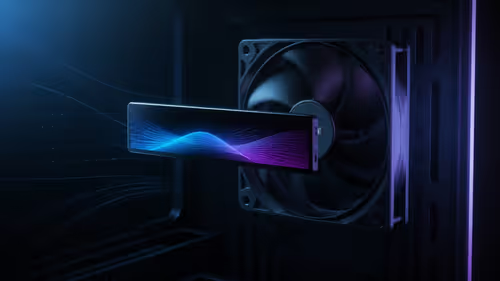
Thermalright's Fan Frame Vision-1 adds a 640x172 status screen to a standard 120mm fan. SA builders should check clearance, USB routing and local support before treating it as an easy upgrade.
1000W for RTX 5090 needs a full-build check, not a simple yes. Review GPU guidance, CPU draw, transient load, connectors, PSU quality, and upgrade plans before deciding.

Wi-Fi 6E vs Wi-Fi 6 matters for 4K video editing when files move across a network. The real-world difference between Wi-Fi 6E and Wi-Fi 6 for video editing in 4K depends on NAS access, cloud uploads, router range, and SA creator workflows.
RTX 5080 Super with a 750W PSU is more comfortable than lower wattage if the unit is quality. SA builders should still confirm GPU guidance, CPU draw, connector type, airflow, and upgrade room.
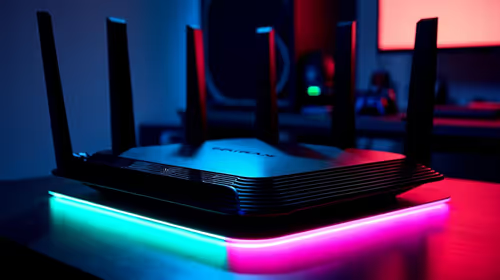
Wi-Fi 6E vs Wi-Fi 6 for Video Editing in 4K comes down to router support, latency, client devices, band support, and home network layout. SA buyers should match the choice to their setup instead of assuming one option always wins.