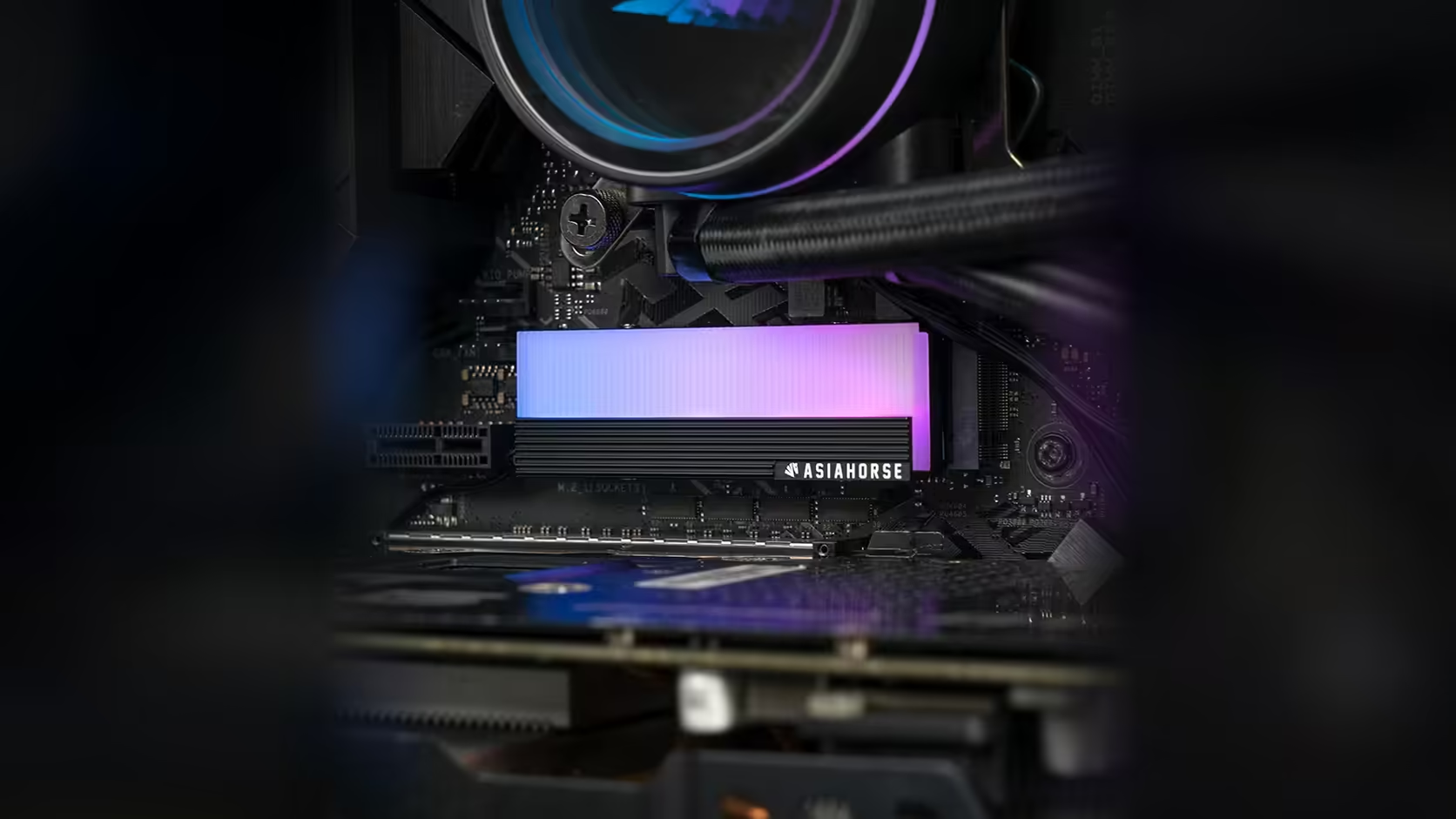
Metal feels like cooling, even when nobody has actually measured anything. The AsiaHorse M.2 heatsink has an aluminium body, and that word alone tends to do a lot of unearned work in how buyers judge what the cover will do for their drive's temperature.
Quick Answer
This AsiaHorse M.2 heatsink, sold at R199 with VAT folded into that price and no promise it stays there, is described as an aluminium body built for 2280 drives, which states the material and shape but does not prove a specific temperature reduction. No measured thermal figure is published for it, so whatever cooling effect it delivers depends on the pad, the contact quality, and how the drive was already performing before it was fitted.
🔩 What the listing actually claims
The product description tells you what the cover is made of and how it attaches, an aluminium body secured with four screws around a 2280 drive. It does not include a before-and-after temperature comparison, a stated thermal resistance figure, or any other quantified claim about cooling performance. That is a meaningful gap between what the material suggests and what the listing actually promises.
Why aluminium alone is not a guarantee
Metal conducts heat away from a source it is in good contact with, which is the basic physics behind any heatsink. Whether that translates into a meaningful drop for a specific drive depends on several things this listing does not quantify: how well the internal thermal pad bridges the gap to the chips, how firmly the cover clamps down once screwed in place, and how the drive was performing before the cover was ever fitted.
🌡️ How you would actually measure the difference
The only reliable way to know what this cover does for your specific drive is to record its temperature under a sustained transfer before fitting the cover, then repeat the same test afterwards with nothing else in the build changed. That comparison, done properly, tells you far more than any material description on a product page ever could.
💾 Do NVMe drives even need this kind of cooling?
Some drives throttle their write speeds under sustained heavy load once internal temperatures climb high enough, which is exactly the scenario where a heatsink can matter. Light, everyday use rarely pushes a drive into that territory, so the practical benefit varies considerably depending on what you actually do with the drive day to day.
The board's own heatsink as a comparison point
Many current motherboards already include their own M.2 heatsink covering at least the primary slot. Comparing that included cover against this aftermarket one would need the same before-and-after measurement approach to mean anything, rather than assuming one is automatically better because it looks different or costs money separately.
✨ The lighting is the part that is actually confirmed
Where the thermal effect is unquantified, the infinity ARGB panel is a stated, visible feature that does exactly what it says: it lights up, syncs with board software, and gives the build a distinguishing visual detail. If appearance is the main draw for you, that is a perfectly reasonable basis for the purchase, separate from any assumption about cooling. Worth a look either way: the solid state drive range for the drive itself, and case accessories for anything else rounding out the build.
Frequently Asked Questions
What material claim does the listing make?
That the cover is an aluminium body built for 2280 drives, which describes composition and compatible drive length.
Does the listing state a temperature reduction figure?
No. No measured thermal drop appears in the product data, so any cooling effect is unquantified in the listing itself.
Could the cover still help with drive temperature?
It is plausible, since metal in good contact with a heat source can conduct heat away, but the actual result depends on pad quality, contact and airflow.
How would I properly test the effect on my own drive?
Record drive temperature under a sustained transfer before fitting the cover, then repeat the test afterwards with nothing else changed.
Is the lighting a more reliable reason to buy this cover?
The infinity ARGB panel is a confirmed, visible feature, which makes appearance a more concrete basis for the purchase than an unquantified thermal claim.
Weighing looks against unproven thermal claims?
Explore Evetech's solid state drive range and decide what actually matters for your build.