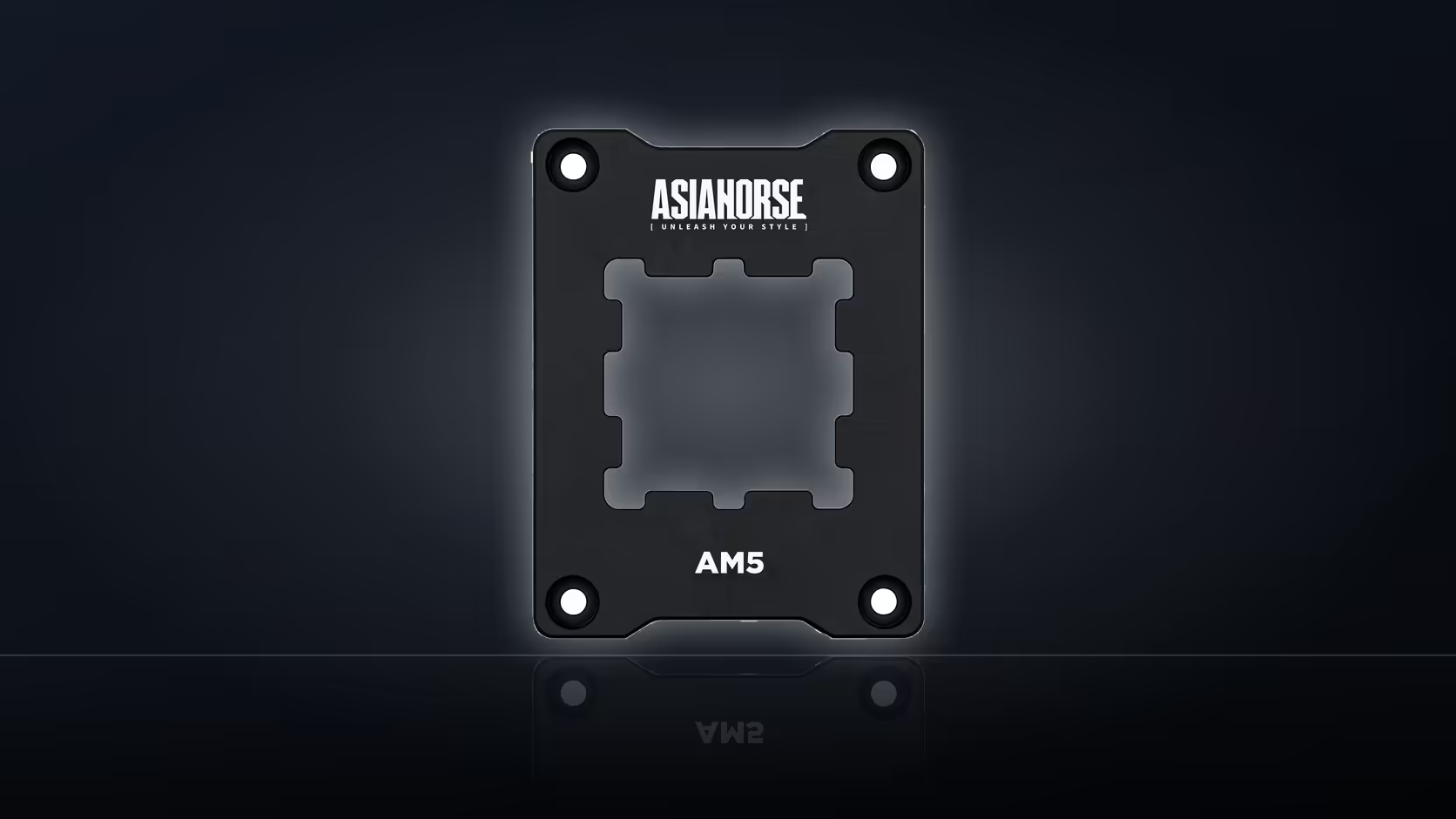
Strip away the marketing language and a CPU contact frame is really just a small, precisely machined bracket sitting between your motherboard socket and your cooler. The AsiaHorse Pulsar is exactly that: a block of anodised aluminium with no electronics, no firmware, and no moving parts, doing a purely mechanical job.
Quick Answer
The Pulsar is an all-aluminium bracket with an anodised surface finish, priced at R299, that replaces the stock AM5 retention arms. It has no sensors, no circuitry and no thermal function of its own - it is a structural part whose only job is holding the cooler down evenly across the chip.
🔩 Reading a spec sheet like a machinist would
"All-aluminium, anodised" sounds like a marketing phrase until you unpack what each half means separately. Aluminium is the base material - light, machinable to tight tolerances, and forgiving enough to produce a flat mounting surface without excessive cost. Anodising is a separate step applied afterwards: an electrochemical process that thickens and hardens the natural oxide layer on the metal's surface, making it more resistant to scratching and corrosion than raw aluminium would be sitting under a case's worth of dust and humidity for years.
Neither term describes performance. They describe manufacturing choices. A machinist looking at this frame would note the material for its dimensional stability under clamping load, not for any thermal property, because the frame is not designed to move heat anywhere.
⚙️ What "mechanical, not thermal" actually means here
It is worth being blunt about what this bracket is not. It does not touch the processor die directly, it carries no thermal interface material of its own, and it plays no part in conducting heat away from the chip. That job belongs entirely to the cooler sitting on top of it and the thermal solutions applied between the two surfaces.
What the frame does instead is apply even clamping pressure around the socket area, replacing the stock AM5 retention arms with a design intended to spread that pressure more consistently. Think of it as the difference between a wobbly table leg and a stable one - the leg itself does not make the table colder, but a wobbly one can throw everything resting on it out of true. This frame occupies the same kind of supporting role for your cpu cooler.
Why the distinction matters when shopping
Buyers occasionally expect a frame like this to behave like a cooling upgrade in its own right, and the description does not support that reading. It is compatible with X670, B650 and A620 boards, fits AM5 sockets only, and comes with four screws and a hex wrench for fitting - all details about mechanical fitment, none about thermal performance figures.
🧰 Living with a bare aluminium part inside a build
Because it sits exposed around the socket rather than hidden under a shroud, a bit of care during fitting pays off. Wipe the surface clean before installation, since any residue trapped under the cooler's contact points can interfere with an even seat. There is no stated tightening torque for this frame, so a measured, even hand rather than maximum force is the safer approach when bringing the screws down.
Once fitted, it is a static part. There is nothing to maintain, no cleaning cycle required beyond normal case dusting, and the only real point of long-term attention is the screws holding it in place rather than the bracket itself.
Frequently Asked Questions
What does anodised mean here?
A surface treatment applied to the aluminium, which hardens the finish and improves its resistance to corrosion on a machined part like this.
Does it conduct heat away?
No. It is not a thermal part - its job is clamping the cooler evenly, rather than carrying heat away from the processor.
Is it electrically involved?
No. It is a purely mechanical bracket sitting around the socket area, with no connection to anything else on the board.
Why aluminium rather than steel?
Aluminium is light and machines precisely, which suits a part whose value lies mainly in its flatness and its exact dimensions.
Does the finish matter visually?
It sits under the cooler in most builds, so the anodised finish serves durability first, with appearance a secondary benefit.
Can it be cleaned?
As with any bare metal part sitting near a processor, wiping it clean before fitting is a sensible precaution.
Does it wear over time?
It is a static bracket once fitted, so the main long-term consideration is the screws rather than the frame material itself.
Fitting a new mounting bracket or a full cooler?
Explore Evetech's cooling range to find the parts that pair properly with your AM5 build.