


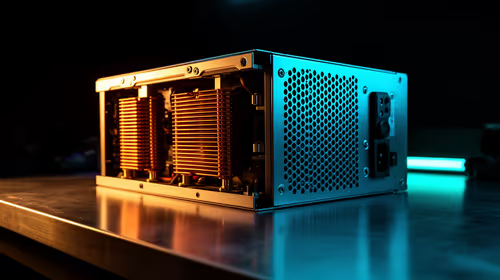
1000W PSU Planning for RTX 5090 Builds in SA
1000W for RTX 5090 needs a full-build check, not a simple yes. Review GPU guidance, CPU draw, transient load, connectors, PSU quality, and upgrade plans before deciding.
Read moreTMR keyboards edge out Hall effect on raw sensing precision through directional field detection, though most 2026 gamers will not feel a real match-day difference. Evetech stocks both, and either delivers accurate rapid trigger.
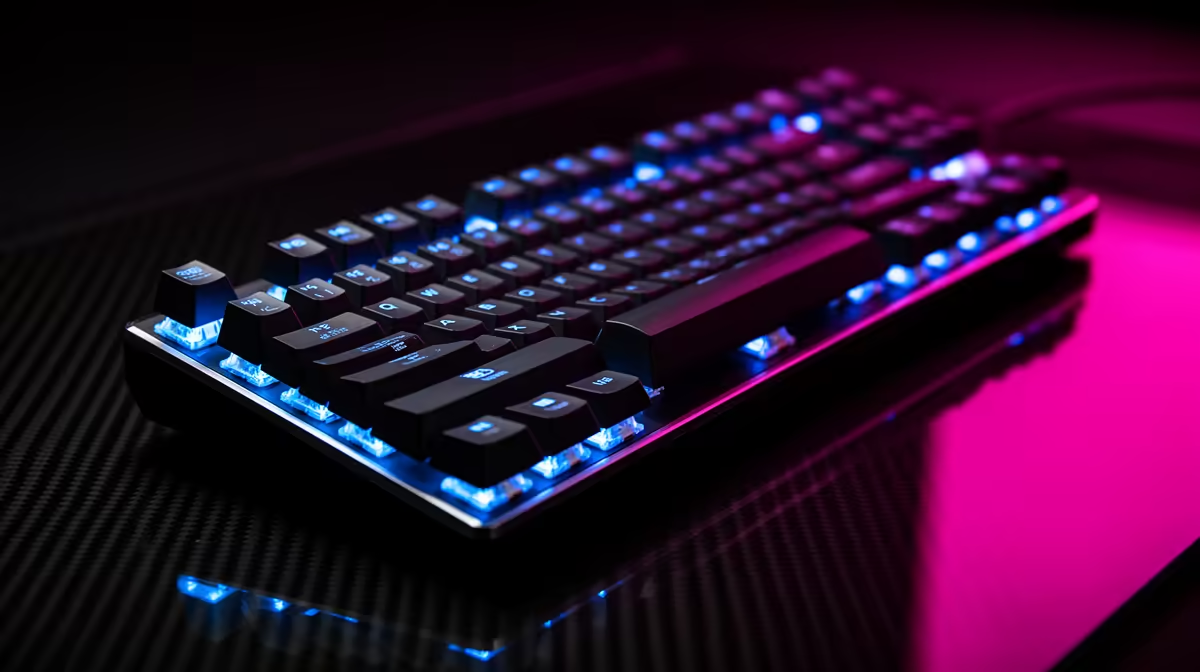
TMR can beat Hall Effect on raw magnetic sensitivity and power use. At the keyboard level, the gap can disappear behind calibration, filtering, scan design and firmware. Most players will feel the rapid-trigger setup before they feel the sensor family.
Choose TMR when a well-reviewed model gives you the layout, wireless efficiency and fine control you want. Choose Hall Effect when the board has proven firmware, consistent rapid trigger and a better switch feel. Either can provide excellent adjustable actuation.
Compare complete products through the gaming keyboard range, then use the best-selling keyboard list to check popular layouts and feature combinations.
A TMR sensor responds through a resistance change in a magnetic tunnel junction. It can deliver high sensitivity while drawing little power. That is useful in wireless keyboards and can support fine position readings.
Some board layouts use the sensor's packaging and placement to support flexible socket designs. Treat hybrid switch compatibility as a model-specific feature. It does not come with every TMR board.
Hall keyboards have a mature ecosystem of switches, firmware and configuration tools. A good model can offer adjustable actuation, rapid trigger, onboard profiles and high polling rates with stable behaviour.
Maturity varies by brand and product generation. Check recent tests and update history for the exact board. A new firmware release can improve calibration or change how a sensitive profile behaves.
Switch spring weight, travel, bottom-out, case construction and keycaps dominate the physical feel. Rapid-trigger distance and actuation depth change how movement responds. Those settings can be matched on capable TMR and Hall boards.
Begin around a moderate actuation point, then reduce it on movement keys in small steps. Test typing, menus and the games you play. The fastest setting on paper can create stray inputs when your fingers rest on the keys.
Use the same computer, USB port, game and movement drill. Match the actuation and rapid-trigger distances as close as the software allows. A TMR board set to a hair trigger will feel different from a Hall board left at a deep factory default, but that test says more about profiles than sensors.
Spend time with ordinary tasks. Type a page, use shortcuts and navigate menus. Note missed resets and accidental presses. Then check wireless battery behaviour, profile switching and whether the configuration survives a restart. The better daily result is more valuable than a resolution figure you cannot reproduce.
It can provide a strong sensor signal, but total latency includes scanning, processing, USB reporting and the computer. Compare measured finished products.
Both sense without an electrical contact at the actuation point. Springs, stems, stabilisers, sockets and electronics still wear, so model quality and warranty matter.
Upgrade for a feature or experience you can name, such as wireless battery life, layout or better software. The sensor change alone may be hard to feel.
Compare the settings and feel you will use, then pick the TMR or Hall Effect keyboard that performs as a complete product.
It can provide a strong sensor signal, but total latency includes scanning, processing, USB reporting and the computer. Compare measured finished products.
Both sense without an electrical contact at the actuation point. Springs, stems, stabilisers, sockets and electronics still wear, so model quality and warranty matter.
Upgrade for a feature or experience you can name, such as wireless battery life, layout or better software. The sensor change alone may be hard to feel. {{PRODUCTS: { facets: { query: "keyboard" }, limit: 12, title: "Gaming Keyboards", style: "4" } }}
1000W for RTX 5090 needs a full-build check, not a simple yes. Review GPU guidance, CPU draw, transient load, connectors, PSU quality, and upgrade plans before deciding.
Read more
RTX 5080 Super with a 750W PSU is more comfortable than lower wattage if the unit is quality. SA builders should still confirm GPU guidance, CPU draw, connector type, airflow, and upgrade room.
Read more
How to fix FPS drops after a RX 9070 XT starts with driver cleanup, chipset updates, thermals, and power checks. For SA gaming PCs, confirm PCIe seating, monitor refresh, frame caps, and per-game graphics settings before replacing parts.
Read more
How to fix low FPS Windows 11 Wi-Fi 7 issues starts by checking whether the problem is frame rate or network lag. Test ping, drivers, power settings, Ethernet, and game FPS before adjusting visuals.
Read more
AM5 is smart for SA builders because it supports newer Ryzen CPUs, DDR5 memory, and a longer upgrade path. Compare board cost, cooling, gaming needs, and local part availability before choosing your next PC platform.
Read more
AM5 gives Randburg gaming builders a longer upgrade path. For SA buyers, DDR5 support, newer board features, and future CPU options can justify the platform. Weigh board cost, cooler support, BIOS maturity, and upgrade timing before choosing.
Read more
RTX 5090 on a 550W PSU leaves almost no practical room for OC plans. Treat the setup as constrained, with CPU draw, power spikes, cable quality, thermals, and stability checks more important than chasing extra clocks.
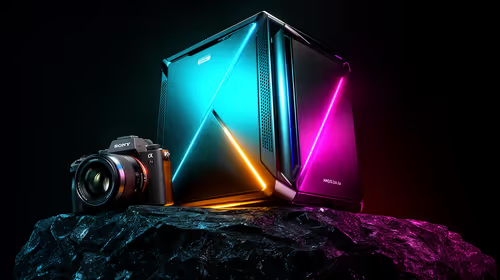
FPS drops on a Ryzen 9 9950X3D build often have a fixable cause. Check settings, drivers, thermals, background tasks, network conditions, and bottlenecks before assuming a part must be replaced.

The difference between PCIe 5.0 and PCIe 4.0 for SA gamers is mostly bandwidth headroom. Compare GPU slot needs, NVMe speed, motherboard support, and upgrade timing before paying extra for a newer platform.

Gaming PC stuck pixel checks in South Africa should confirm the monitor fault first. Use colour tests, screenshot comparison, cable swaps, display menu checks, and clear photos before deciding on support.

AMD's current driver now lists a Radeon RX 9050 4GB, while product coverage details a narrowed memory system. SA buyers should weigh the low VRAM ceiling against current local Radeon options.

Samsung Display has demonstrated a 16-inch 2.5K OLED laptop panel running at 300Hz. SA buyers should wait for a named notebook, full panel specifications and a local price before planning an upgrade.

Microsoft says some Windows 11 game crashes after recent updates are linked to RGB-related drivers. Affected SA gamers should confirm the update and driver before using the published registry workaround.
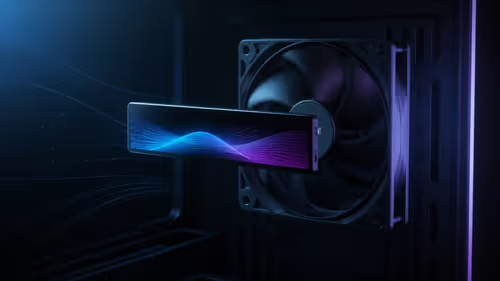
Thermalright's Fan Frame Vision-1 adds a 640x172 status screen to a standard 120mm fan. SA builders should check clearance, USB routing and local support before treating it as an easy upgrade.
1000W for RTX 5090 needs a full-build check, not a simple yes. Review GPU guidance, CPU draw, transient load, connectors, PSU quality, and upgrade plans before deciding.

Wi-Fi 6E vs Wi-Fi 6 matters for 4K video editing when files move across a network. The real-world difference between Wi-Fi 6E and Wi-Fi 6 for video editing in 4K depends on NAS access, cloud uploads, router range, and SA creator workflows.
RTX 5080 Super with a 750W PSU is more comfortable than lower wattage if the unit is quality. SA builders should still confirm GPU guidance, CPU draw, connector type, airflow, and upgrade room.
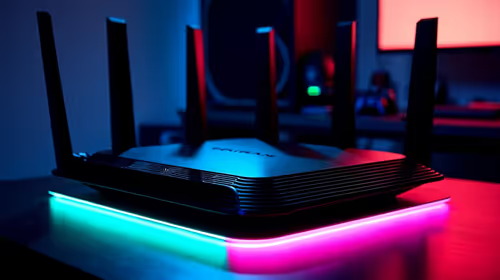
Wi-Fi 6E vs Wi-Fi 6 for Video Editing in 4K comes down to router support, latency, client devices, band support, and home network layout. SA buyers should match the choice to their setup instead of assuming one option always wins.