An ASUS ProArt badge is a useful signal that a laptop or display is aimed at creative work, but it is not a substitute for checking the panel in front of you. Colour-critical work depends on the exact gamut, calibration approach, connections and working environment. Build the setup around the files you deliver, the devices you already use and the level of consistency your work requires.
Quick Answer
ASUS ProArt covers creator-focused laptops and monitors, each with its own display, ports and performance level. Choose by the exact panel specifications and calibration needs, then decide whether a portable laptop screen, a larger external monitor or both fits your workflow. Office monitor options begin at R1,269, but panel suitability matters more than treating that entry figure as a measure of colour accuracy.
🧩 Define what accurate means for your work
Editing a social clip, preparing a print proof and grading video are not the same colour task. Before comparing displays, identify the colour space used by your applications and clients, whether you need a supplied calibration report, and how important uniformity across the whole panel is. A wide gamut is useful only when the software, operating system and output workflow handle it correctly.
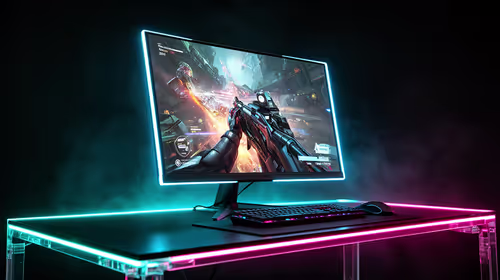
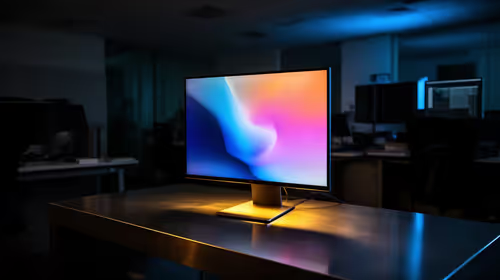
Look beyond a nameplate to resolution, brightness, contrast behaviour, connectivity and the stated colour coverage. An external display may make a large workspace easier to manage, while a laptop screen has obvious advantages when you move between locations. The ASUS laptop range can help frame the portable side of that decision without assuming every laptop offers the same creative display characteristics.
✅ Build a screen path, not a single purchase
Many creators work comfortably with a laptop for capture, travel and rough edits, then use a larger monitor for longer sessions at a desk. That split can improve ergonomics and give timelines, tool panels and reference material more space. It also means the cable and port arrangement needs attention before the monitor arrives.
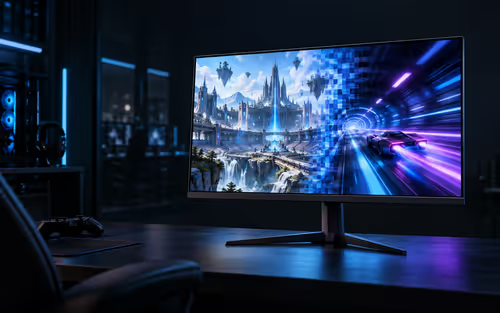
Check which ports carry video, which support the resolution and refresh rate you need, and whether a dock could introduce a limitation. The office monitor selection is a starting point for comparing sizes and panel types. For a multi-screen desk, monitor accessories may solve positioning or connection needs, but choose them after confirming the main display's requirements.
📶 Protect consistency in a warm workspace
Long renders, exports and high-resolution previews keep a laptop working steadily. In a hot South African room, clear vents and a firm surface help preserve cooling headroom. Keep the rear and side exhaust areas open, and do not bury the computer under papers or soft furniture while it is exporting a project.
Light is part of the display environment too. A bright window, changing room lighting and reflections can make a panel appear different even if its calibration has not moved. Use a repeatable desk position for colour-sensitive work, and recheck a display before an important delivery instead of trusting a profile indefinitely.
🛡 Treat support and calibration as ongoing work
No badge guarantees that every unit will look identical out of the box. Assess a new display with the images and software you genuinely use, then make calibration decisions that match the work. If an external monitor is the reference screen, give it a stable position and avoid changing image settings casually between projects.
Confirm South African warranty support for both the laptop and monitor. A display fault can halt creative work even while the computer is still capable, so the service route belongs in the purchase decision. Keep the documentation and proof of purchase together once the setup is complete.
Frequently Asked Questions
What does ASUS ProArt cover?
It includes creator-oriented laptops and displays, but individual products differ in panels, connections, performance and calibration features. Read the specifications for the exact unit instead of relying on the family name.
Does a ProArt badge guarantee colour accuracy?
No. Gamut, calibration, panel consistency and the workflow around the screen all influence the result. The badge is a starting point for investigation, not the final proof.
Should I use a laptop or an external monitor?
A laptop helps when mobility is important, while an external display can create more room for detailed work. Many setups use both, with each serving a different location or task.
How often should a creator display be checked?
The interval depends on the device and the consequence of colour drift. Recheck before colour-critical delivery rather than assuming an older calibration remains suitable.
Ready to make your creative desk easier to trust?
Explore ASUS laptops, monitors and the accessories that connect a colour-conscious workspace.