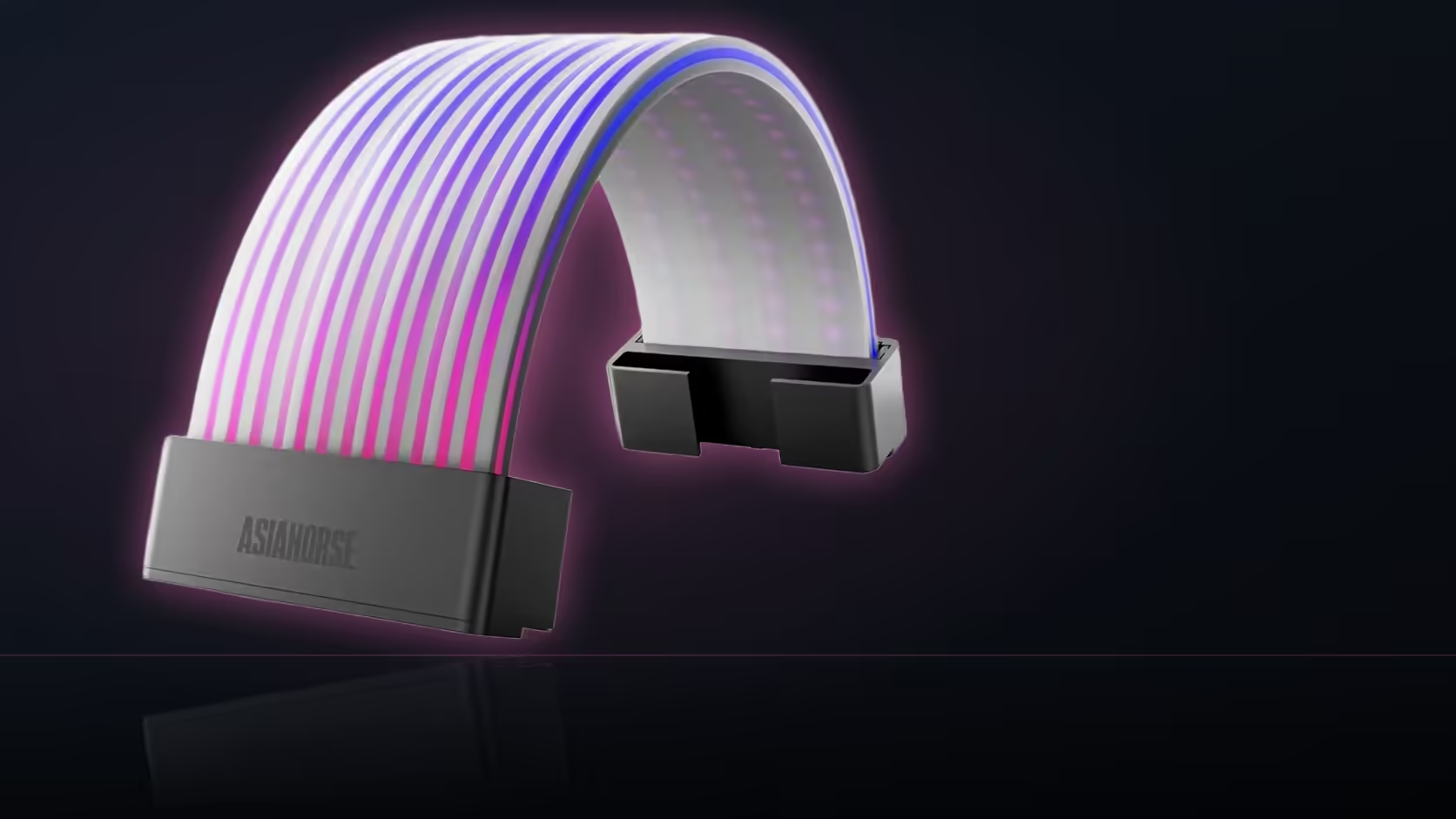
Two numbers can look interchangeable on a parts list and mean entirely different things once you actually try to fit them. Cable lengths and shell lengths are measured from different reference points in this range, and treating them the same is a quiet, easy way for a carefully drawn plan to stop fitting.
Quick Answer
A cable extension's stated length adds onto a lead that stays exactly where it already is, while a cable cover's stated length is the physical shell itself. AsiaHorse's 30cm sleeved extensions, from around R549, and its 205mm or 260mm Aurora cover shells, from around R699, are measuring genuinely different things, and confusing the two is exactly how a parts plan ends up not fitting the case it was drawn up for.
➕ What an extension's length actually means
When an extension is listed at 30cm, that figure is the amount it adds on top of whatever factory lead it plugs into, not the total length of the run afterward. The full reach of the cable is the original lead plus 30cm, so the extension's own number tells you nothing about the total distance it can cover without also knowing how long the factory cable underneath it already is.
📏 What a cover's length actually means
A cable cover's stated length, by contrast, is the physical dimension of the shell itself. The board cover in AsiaHorse's standard Aurora kit measures 205mm, and the graphics cover measures 260mm, and both figures describe the actual piece of hardware you are fitting, not an addition to something else already in place.
⚠️ Why mixing the two causes real trouble
A shell needs a genuinely straight section of exactly its own length to sit on; there is no "shell plus whatever's already there" the way an extension works. An extension needs a route within its added reach, factoring in the existing lead it extends. Treat a 205mm shell measurement the same way as a 30cm extension figure and the plan for one of them will be wrong, because the two numbers answer different questions about the build.
🔒 Which constraint is actually harder to work around
The shell is the less forgiving of the two. A straight span of exactly the right length either exists somewhere on the intended run or it does not, and there is very little flexibility to work with once that is established. An extension has more give, since its added length can be positioned at different points along the existing lead to change how the overall run behaves.
🔌 Modular cables measure differently again
The Hydrus 16-pin modular cable, at 50cm, and the PCIe riser, at 200mm, add a third category entirely: both are the whole run from source to destination, not an addition to anything and not a shell dimension either. Neither plugs into an existing cable the way an extension does, and neither needs a straight section the way a cover does; they simply need to physically reach and fit the intended route as a complete unit.
📝 How a plan should actually record these figures
Note explicitly what each number measures as you write it down, extension length added, shell length total, or modular cable total length, rather than listing every figure as a bare centimetre value without context. A plan that notes the difference is far less likely to be misread later, including by the person who wrote it in the first place.
🛒 What this means for ordering
Getting this wrong by treating the two categories as interchangeable is a genuinely easy mistake, and it can be wrong by a considerable margin once a shell measurement is mistaken for an addition, or the reverse. Measure your actual routes and double-check which kind of number you are working with before ordering from the case accessories shelf or Evetech's case fans lineup.
Frequently Asked Questions
What does an extension's stated length actually mean?
The amount added on top of the factory lead already fitted, so the total reach is that lead plus the extension's own figure, not the extension alone.
And what does a cover's stated length mean?
The physical dimension of the shell itself, such as 205mm for the board cover or 260mm for the graphics cover in the standard kit.
Why does mixing the two categories cause problems?
Because a shell needs a straight section of exactly its own length, while an extension needs a route within its added reach on top of the existing lead.
Which constraint is harder to accommodate?
The shell's, since a straight span of the right length either exists on the intended run or it does not, with little room to compromise.
Do modular cables like the Hydrus 16-pin measure differently again?
Yes. Both the Hydrus cable at 50cm and the riser at 200mm are complete runs from source to destination, neither an addition nor a shell dimension.
How should a build plan record these different figures?
By noting explicitly what each number measures, so an extension line and a shell line are never mistaken for the same kind of measurement.
Does this mistake actually affect ordering outcomes?
It can, by a considerable margin, since a shell figure mistaken for an addition, or the reverse, leads directly to a part that does not fit.
Drawing up a parts plan with cables and covers together?
Note what each length measures and check Evetech's case accessories range before ordering.