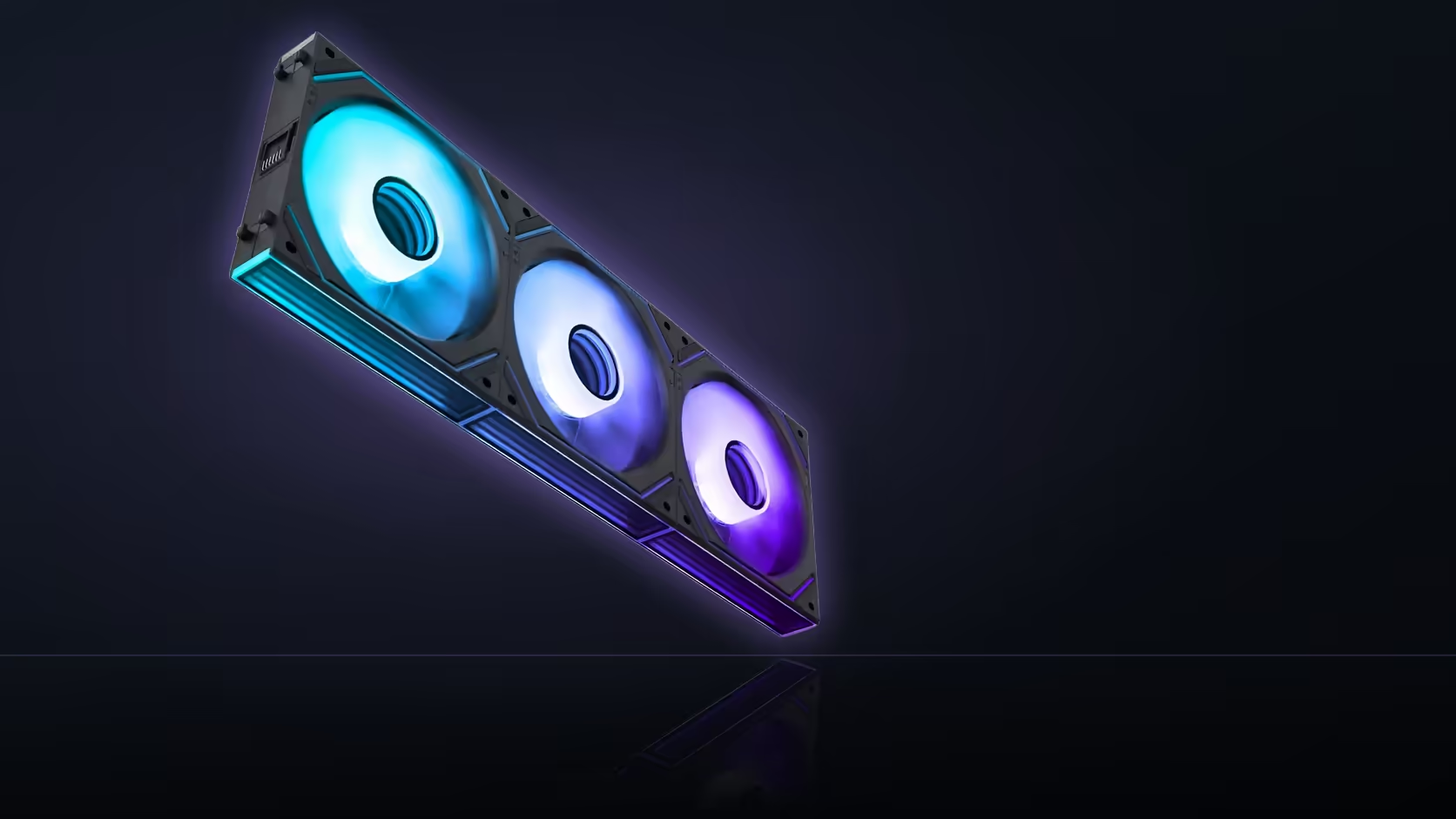
A front-loaded fan row rarely tells you what is happening behind it. Three fans lined up in a mesh panel can look identical from the outside while running completely different wiring underneath, and the difference only shows up once you are elbow-deep behind the motherboard tray counting connectors that should not be there.
Quick Answer
Yes. A tidy three-fan row can hide anywhere from one cable run to three separate speed leads, depending on which AsiaHorse family is fitted. The Nyota Pro's modular interlock brings a trio out on a single connector pair (roughly R599 for the pack), the Nyota A12 chains its leads into one run for about R499, and the Amici 5GT keeps each fan on its own four-pin cable even though the lighting can still be linked, at around R199 per fan.
🔌 What sits behind the mesh
Open the side panel on a build using the Nyota Pro and you will find one PWM lead and one ARGB lead leaving the row, because the fans clip together with a modular interlock that carries both signals from unit to unit. The Nyota A12 does something similar with its daisy-chained four-pin and addressable connectors, so a set of three still reduces down to a single run reaching the header. The Amici 5GT is the outlier: every fan keeps its own PWM cable, so three fans mean three leads converging on the tray, even though the ARGB side can still be linked across three or four units.
None of this shows on the front. A closed panel gives you no clue which wiring style sits behind it, which is exactly why it catches people out when they buy a case with limited rear clearance and only discover the cable count once the parts have arrived.
🧵 Why the count actually matters
A rear chamber has a fixed depth, and every extra cable takes up part of it. Three individual leads plus their sleeving bulk up faster than a single interlocked run, and in a case with a narrow gap between the tray and the side panel that difference decides whether the panel closes without a fight. It also changes what your motherboard needs to supply: individual leads want individual headers or a fan splitter, while a chained row is happy on one.
There is a layout argument too. An interlocked or chained row assumes the fans sit next to each other in a continuous line, so it does not work if your case splits fan mounts across two separate bays with a drive cage or a radiator bracket in between. Individual leads handle that split without complaint, because nothing forces them to share a run.
🛠️ Matching the family to the case
If your case has generous depth behind the tray and grouped fan positions, the interlocked Nyota Pro or the chained A12 keeps things simple and gives you one clean cable to route rather than three. If your fan positions are split across the case, or you already know the rear chamber is tight, the Amici 5GT's individual leads from Evetech's case fans range give you the flexibility to route each fan separately even though you are managing more cables overall. Pair either family with the right case accessories and check your intended fan layout before ordering, because the cable style is fixed once you have committed to a family.
Frequently Asked Questions
Which family produces the fewest cables?
The Nyota Pro, because its modular interlock links the fans mechanically and electrically, bringing the whole row out on one connector pair rather than several.
Which produces the most?
The Amici 5GT. Each fan keeps its own four-pin PWM cable even though the ARGB leads can be linked, so a three-fan row still leaves three speed cables reaching the tray.
Does the A12 behave like the Nyota Pro?
Close to it. Its linked four-pin and addressable connectors chain a trio into a single run, so the cable count at the header is the same either way.
Can you tell from the front which type is fitted?
No, and that is the whole issue. All three families present a similarly tidy face through the window regardless of what is routed behind the tray.
Does this affect which headers I need?
It does. A row of individual leads wants a splitter or several headers, while an interlocked or chained row is content with one PWM and one ARGB connection.
What if my case splits fan mounts across two bays?
Choose individual leads. An interlocked or chained row assumes adjacent fans and cannot be separated once the units are linked together.
Should cable count decide which fans I buy?
It is one factor among several, alongside airflow and how visible the row is, but it is worth checking before you assume any three-fan pack behaves the same way behind the panel.
Planning a fan layout that has to fit a tight rear chamber?
Browse Evetech's case fans range and check your case's clearance before deciding between a chained row and individually wired fans.