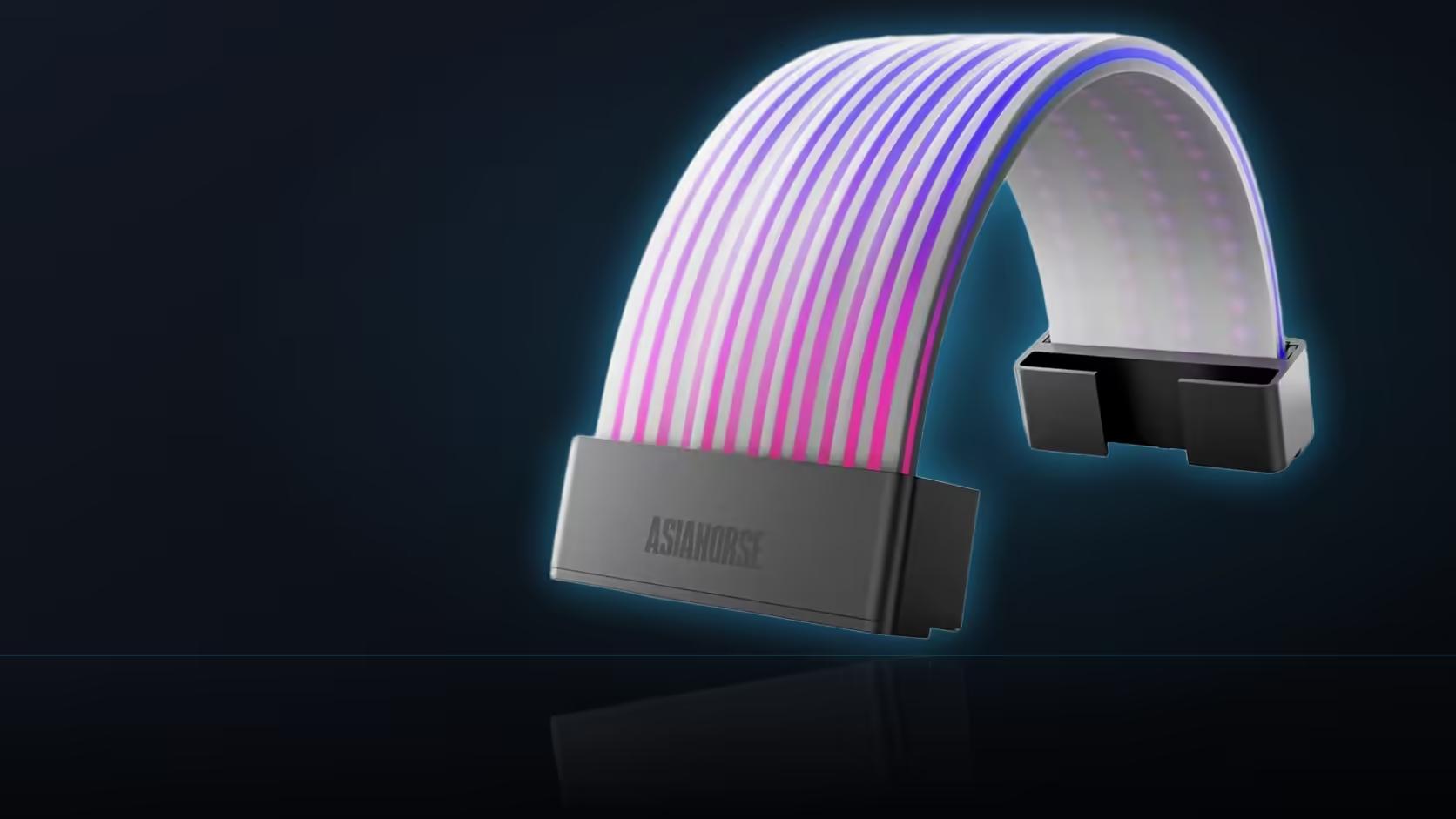
A build can get everything else right, matching finishes, a coordinated lighting scheme, carefully chosen colours throughout, and still fail on the one thing none of that can fix: whether you can actually reach a latch when you need to. Colour agreement is a genuine achievement, but it is not a substitute for physical access.
Quick Answer
Test every release, clip and screw that will ever need reaching before considering a build's appearance settled, regardless of how well the colours and finishes match. A cosmetic shell blocking a memory latch or a connector release has prioritised the wrong thing, no matter how well it matches the rest of an AsiaHorse-dressed build costing anywhere from R199 to R1,299 in accessories.
🔐 Which latches matter most
Three points get tested most often over a build's life: the memory latches on either side of the RAM slots, the graphics card's retention clip, and the release mechanism on any power connector that might need reseating, particularly the 16-pin GPU cable, which AsiaHorse itself advises seating firmly and checking. All three need to remain physically reachable no matter what cosmetic hardware surrounds them.
🧱 What tends to sit closest to a latch
Cosmetic shells and connector heads are the usual culprits, simply because they are frequently placed near exactly the areas that also need mechanical access: RAM covers sit right beside memory latches, and cable heads with right-angle connectors sit low and close to sockets that may need pulling free later.
🧪 When to check for conflicts
Test access as each accessory goes on rather than waiting until the whole build is finished. A conflict discovered while fitting a single shell means moving that one part; the same conflict discovered after the build is complete means potentially moving several accessories to get back to the point where the problem started.
🪛 Is a tool an acceptable workaround?
A thin plastic pick can reach into spaces fingers genuinely cannot, and it is a reasonable answer where a latch sits in an awkward spot despite reasonable planning. It is a workaround rather than a solution, though, and a build designed with access in mind from the start remains the better outcome over relying on a tool every single time.
🎛️ Does this rule apply to a hub too?
It does, arguably more than almost anything else in the build. A hub like the ASH-S1 carries eighteen possible connection points across its PWM and ARGB banks, and a hub with that many ports needs its connectors reachable more consistently than most single-purpose components, since you are far more likely to be back at it adjusting a connection than at almost anything else in the case.
🔄 What if a conflict is found late
Moving the offending accessory is usually still possible even at a late stage, since most cable covers and shells in this range clip or slide into position rather than being permanently fixed, which means repositioning one a short distance along its run is generally straightforward rather than requiring a full teardown.
🎨 Does appearance actually have to suffer?
Rarely. A shell shifted a short distance along a cable run to clear a latch usually satisfies both requirements at once: the access problem disappears, and the visible composition barely changes, since a few centimetres of movement along a run is not something most viewers would ever notice.
Check clearance around every latch as you build, weighing Evetech's case fans options against whatever else you are ordering from case accessories, with access in mind rather than colour alone.
Frequently Asked Questions
Which latches matter most to keep reachable?
The memory latches, the graphics card retention clip, and the release on any power connector that may need reseating, the 16-pin GPU cable especially.
What tends to end up closest to those latches?
Cosmetic shells and connector heads, since they are frequently placed near exactly the same areas that also need genuine mechanical access.
When should access be tested during a build?
As each accessory is fitted, so a conflict is caught while only one part has to move rather than several found much later.
Is a plastic pick an acceptable answer to blocked access?
It reaches spots fingers cannot, and it is a reasonable workaround, though a build designed for access from the start remains the better outcome.
Does this access rule apply to a hub as well?
Yes, arguably more so, since a hub with eighteen possible connections is revisited far more often than most single-purpose components in a build.
What happens if a conflict is only found late in the build?
Most covers and shells clip or slide rather than being fixed permanently, so repositioning one is usually straightforward even at a late stage.
Does fixing an access problem usually spoil the appearance?
Rarely. Shifting a shell a short distance along its run typically clears a latch without any visible change most viewers would notice.
Fitting cosmetic accessories to a build you will need to service later?
Check every latch stays reachable and browse Evetech's case accessories range with access in mind.