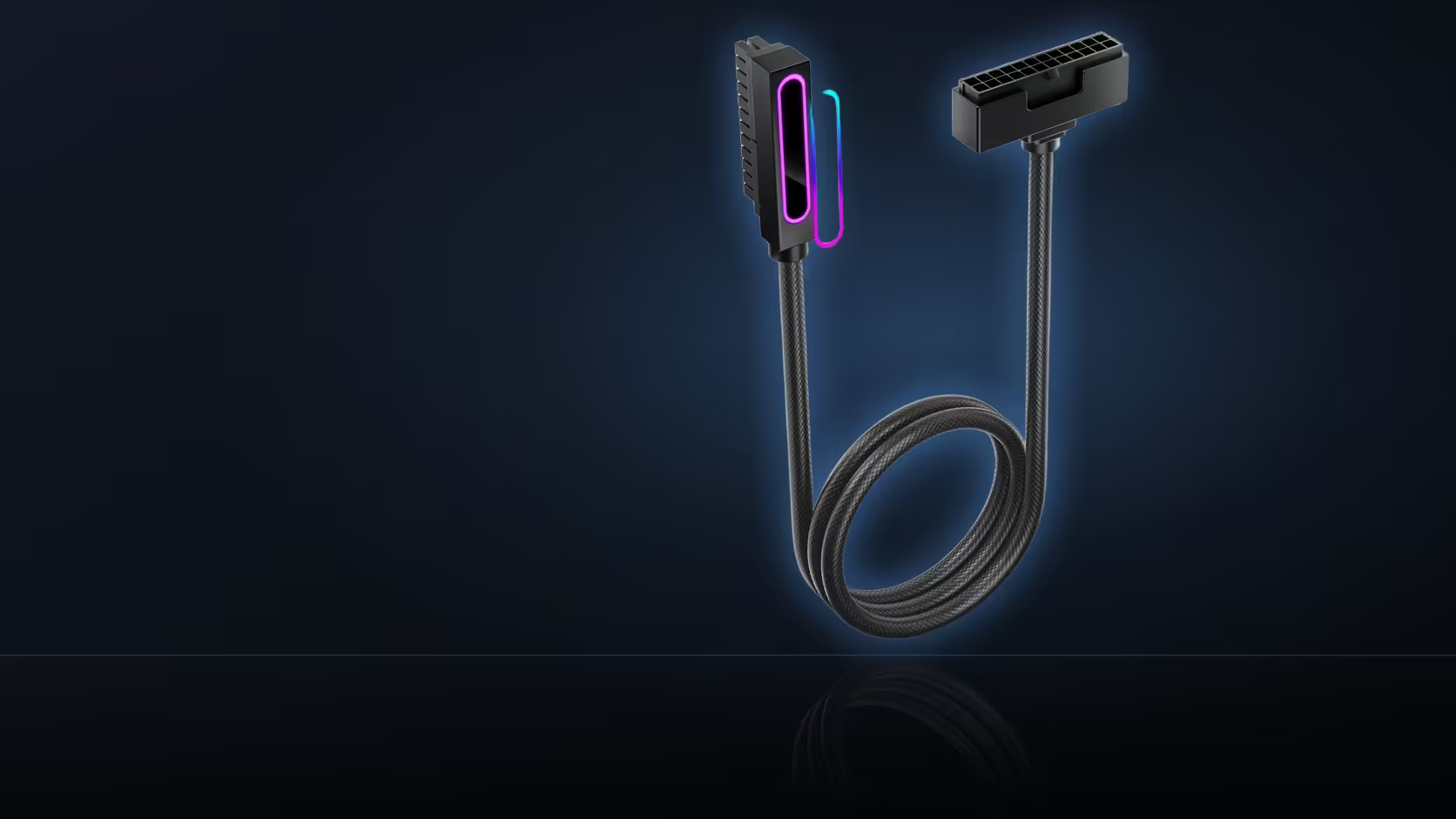
Open the box on a one-piece Hydrus cable looking for the little plastic combs that ship with every sleeved extension kit, and you will not find any. That is not a missing accessory - it is a genuinely different construction that simply does not need them.
Quick Answer
The description says the one-piece cable needs no combs to stay straight. That sets it apart from a sleeved extension made of separate strands. There is nothing to space, which removes an accessory and a fitting step.
🧵 What combs normally exist to do
On a typical sleeved extension, combs hold individual strands of wire at an even, consistent spacing, so a multi-wire run reads as a single flat ribbon rather than a loose, uneven bundle that drifts apart along its length. They solve a specific problem created by having several separate strands that could otherwise wander relative to each other.
🔧 Why that problem simply does not exist here
The Hydrus cable is built as a single, unified piece rather than a collection of separate strands loosely gathered under a sleeve - which means the individual conductors inside are already fixed permanently relative to one another and physically cannot drift apart the way separate strands can. There is nothing for a comb to space out, because the spacing was never a variable in the first place.
⏱️ What this removes from the fitting process
Skipping combs genuinely removes an entire step from the fitting job: route the cable, seat both ends into their respective sockets, connect the lighting lead to its header, and the visible run is finished at that point - no additional pass to straighten strands, position combs, or fine-tune spacing afterward. That is a meaningfully simpler job than the equivalent sleeved-kit install.
🎨 Could combs be added purely for decoration anyway
There genuinely is nothing for a comb to grip in the way it would on a sleeved run with separate strands - a comb clipped onto a one-piece cable would be purely decorative rather than functional, holding nothing in place that was not already fixed to begin with, so there is no practical reason to add one even if a builder wanted to for appearance's sake.
🌊 Flexibility, comparison with sleeved kits, and long-term shape retention
Being one piece does come with a genuine trade-off worth knowing about before routing: it is meaningfully less flexible than a bundle of separate sleeved strands would be, which is worth factoring in specifically when planning a particularly tight turn near the socket, since a one-piece construction resists a sharp bend more than individually sleeved wires would. Comparing this directly against a sleeved kit is instructive too - a sleeved kit ships combs precisely because its strands genuinely are separate and need that spacing help, while the Hydrus cable's one-piece design solves the exact same underlying visual problem, a tidy, flat-looking run, through an entirely different construction method from the outset. And that tidy line holds up over time rather than degrading: the jacket is rated for over 40,000 bend cycles and holds its own shape reliably, meaning the line it takes when initially fitted is genuinely the line it keeps for the life of the build, without gradually sagging or drifting the way an under-combed sleeved run sometimes can. cable solutions rounds out the category this cable belongs to, and other accessory-free lighting options that skip the comb step entirely sit at NZXT case lighting.
Frequently Asked Questions
What do combs normally do?
They hold individual strands at an even spacing so a multi-wire run reads as a flat ribbon rather than a loose bundle.
Why is that unnecessary here?
Because the cable is built as one piece, so the strands are already fixed relative to each other and cannot drift apart.
Does that make fitting quicker?
It removes a step. Route the cable, seat both ends, connect the lighting lead, and the visible run is finished.
Could combs be added anyway?
There is nothing for them to grip in the way they would on a sleeved run, so they would be decoration rather than function.
Does a one-piece cable bend as easily?
It is less flexible than separate sleeved strands, which is worth knowing when planning a tight turn near the socket.
How does this compare with a sleeved kit?
A sleeved kit ships combs precisely because its strands are separate. The two approaches solve the same problem in different ways.
Does it stay straight over time?
The jacket is rated for over 40,000 bends and holds its own shape, so the line it takes when fitted is the line it keeps.
Wondering why no combs came in the box?
Have a look at Evetech's power supply range and see how a one-piece cable holds its shape without them.