Quick Answer
Deal hunters want the best rand-per-gigabyte without falling for a slow kit dressed up as a bargain. The 4800-to-6000 MT/s jump is the speed step worth buying, usually a few percent gain; a 6000 CL30 32GB kit runs about R1,800 to R2,200 at Evetech.
When Speed (MT/s) Is Worth Paying For
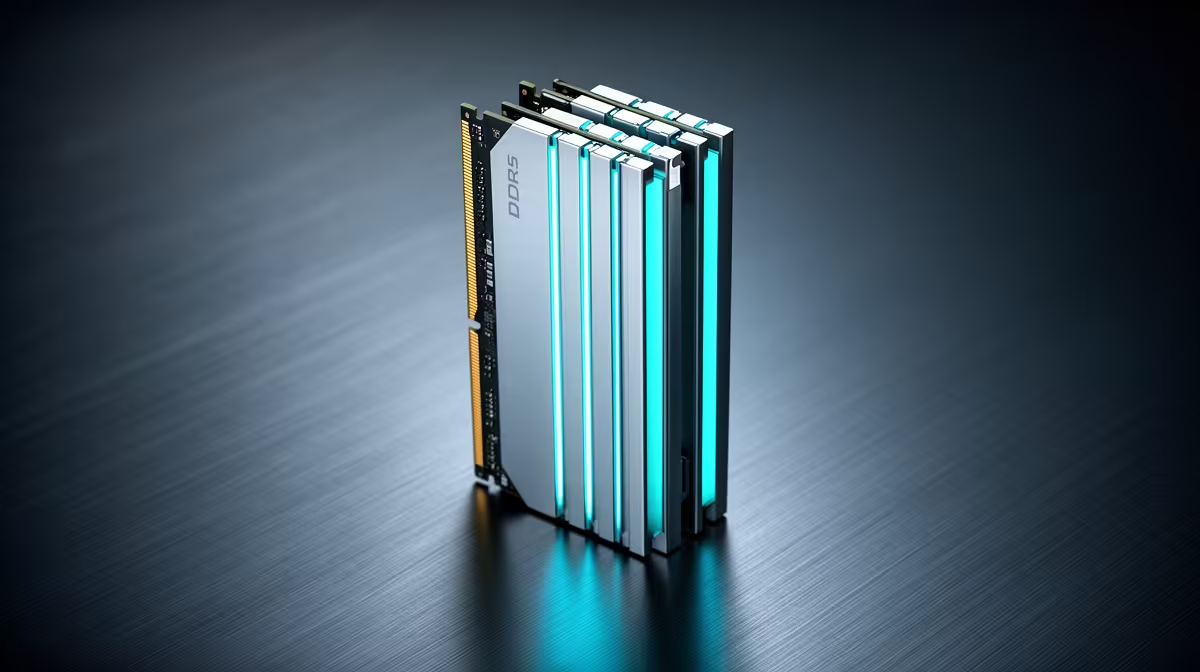
Speed is the MT/s figure (4800, 6000, 7200). The jump from 4800 to 6000 MT/s is the one worth paying for, often a few percent in 1% lows and snappier loads; beyond that returns shrink fast. A 4800 kit might run R1,100 while a 6000 CL30 kit like the Corsair Vengeance DDR5-6000 CL30 32GB sits near R1,800 to R2,200, and that roughly R700 to R1,000 delta is justified. On AM5 stop at 6000; Intel Core Ultra boards can use 6400 to 7200 usefully.
Spotting A Real DDR5 Bargain
A cheap kit is only a deal if it actually hits a useful speed with its profile on. A Crucial Pro DDR5-5600 32GB at 6000 MT/s beats a no-name 4800 kit even at a similar price. Compare rand-per-gigabyte at the same rated speed and CL, and ignore boxes that bury a slow JEDEC default behind shiny RGB.
FAQ
Is XMP or EXPO safe to enable on my board?
Yes. XMP (Intel) and EXPO (AMD) are tested factory profiles you switch on in BIOS to reach the rated speed. Without them the kit defaults to a slow JEDEC speed like 4800 MT/s, so you would be wasting what you paid for.
What DDR5 speed is the AM5 sweet spot?
6000 MT/s CL30 is the AM5 sweet spot because the memory controller runs 1:1 there. Pushing to 6400 MT/s often forces a slower 2:1 mode that can actually lose performance, so 6000 is the safe target.
Do I need 32GB or is 16GB enough?
16GB still games at 1080p, but 32GB is the comfortable 2026 buy for multitasking, modded games and creator apps. A 32GB DDR5-6000 kit lands around R1,400 to R2,200 locally, a small premium for real headroom.
step from 4800 to 6000 MT s; only Intel rigs benefit from pushing past 6000. After installing, enter BIOS and switch on EXPO or XMP so the kit runs at its rated speed, not the 4800 MT s default.