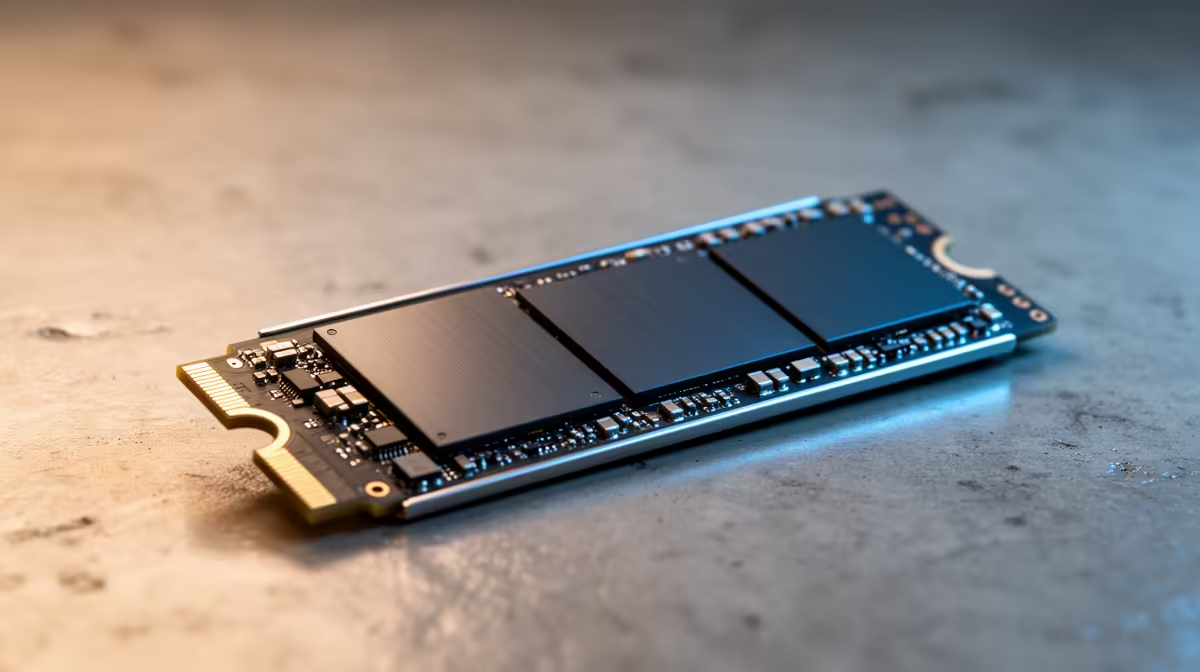
A good PCIe Gen3 NVMe SSD still loads games quickly. Gen4 and Gen5 drives can post much larger sequential numbers, but game loading also waits on small reads, decompression, CPU work and the engine. The visible gap is often seconds rather than the gulf suggested by the box.
Quick Answer
Keep a healthy Gen3 NVMe drive when your games load well and you need no extra capacity. For a new purchase, compare capacity, controller quality, endurance and price before chasing the highest generation. Gen4 or Gen5 earns more in large transfers, content work and platforms that use newer storage paths well. A faster link cannot fix a full or poor drive.
Evetech's SSD catalogue helps you compare interface and capacity, while the SSD best sellers give you current models to check in your motherboard.
Why Game Loads Scale Differently
The advertised sequential rate comes from large ordered transfers. A game load can mix many files, metadata requests and CPU decompression.
Once storage stops being the slowest stage, doubling its peak link speed cannot halve the loading screen. Engine design and processor work set another limit.
Different games produce different gaps. Use tests for your titles rather than one universal percentage.
Where Newer Drives Pull Away
Large video files, game installs, project copies and archive work can use sustained sequential speed. A capable Gen4 drive can finish those jobs faster when the source, destination and CPU keep up.
Gen5 adds more bandwidth, plus more heat and platform demands on some models. It makes sense for workflows that can feed it, not for a catalogue badge.
DirectStorage-aware games may use modern storage paths, though implementation and results vary. The exact game and platform still decide.
Check the Motherboard Link
A Gen4 SSD can run in a Gen3 M.2 slot at Gen3 link speed when compatibility is otherwise present. It does not create Gen4 bandwidth on an older board.
Installing an M.2 drive can disable a SATA connector or change how another expansion slot operates on some boards. Read the lane table in the manual and use the preferred CPU-connected socket.
Cooling matters for sustained work. Fit the motherboard heatsink correctly when one is supplied.
Capacity Can Matter More
A 1TB Gen3 drive with free space can serve a gaming library better than a 500GB Gen5 model that is always full. SSDs need room for updates, temporary files and cache behaviour.
Choose the library size first. Then compare the quality and generation within that capacity.
Upgrade from Gen3 when a measured load or transfer problem justifies it, or when you need more space and the newer model offers good total value.
FAQ
How much slower is Gen3 for game loading?
It varies by game and platform. The difference is often modest because storage is only one stage of the load.
Is Gen3 still worth buying in 2026?
Yes when the price, capacity and drive quality fit, or when your motherboard limits the slot to Gen3.
Which matters more for gaming, capacity or generation?
Capacity often changes daily convenience more. Meet the library size first, then choose the best drive design and link within budget.
Measure your real load and transfer times, confirm the M.2 slot link and spend on capacity before replacing a healthy Gen3 drive for a badge.