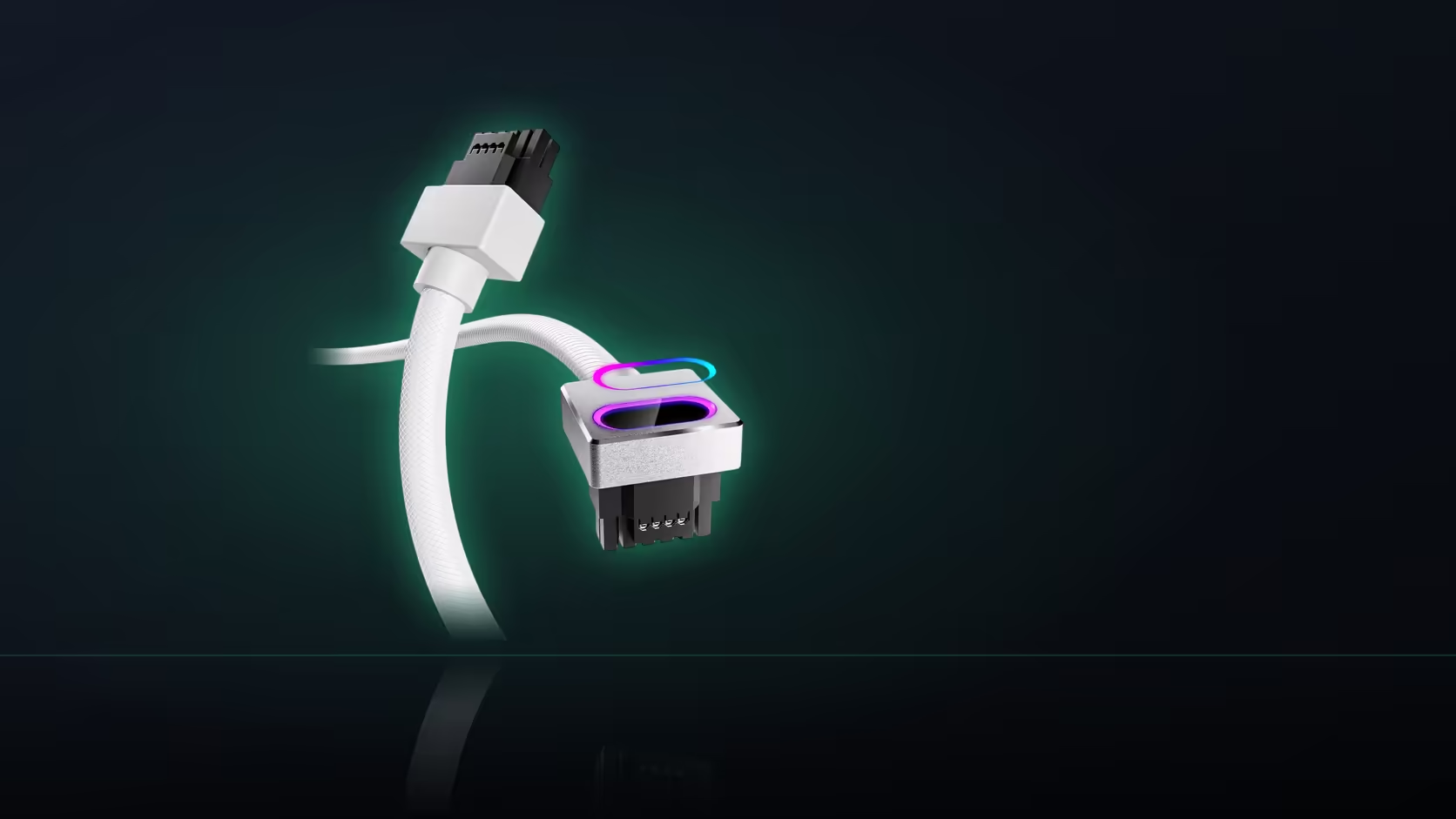
A single number gets asked to do too much work in most cable questions, and the 480W rating on the Hydrus 16-pin cable is a common example. It looks like it should tell you whether your graphics card is safe to run on this cable. It does not - not directly, and not on its own.
Quick Answer
No. The AsiaHorse Hydrus 16-pin (12VHPWR) cable's 480W rating, on the R699 model in black or white, describes what AsiaHorse rates the cable itself to carry - it is not your specific card's power draw. Your card's manufacturer publishes its own draw figure separately, and comparing that number directly against the cable's 480W rating is the actual check worth doing.
Where a card's draw figure actually comes from
Every graphics card manufacturer publishes a board power figure in that specific model's own specifications - a number describing what that card is designed to draw under typical or peak load. That figure has nothing to do with which cable delivers the power; it is set entirely by the card's own design, independent of AsiaHorse, independent of your power supply, and independent of anything stated about the Hydrus cable.
How to actually compare the two numbers
Pull up your specific card's published board power figure from its manufacturer's own specification page, and set that directly against the cable's stated 480W rating. That direct comparison - your card's number against the cable's number - is the useful check. Neither figure substitutes for the other, and neither one is automatically safe just because the card happens to appear on AsiaHorse's compatible list.
Does the compatible list already guarantee this comparison passes?
Not automatically. AsiaHorse states the list of supported cards and the cable's rating as two separate facts in the same listing - being named as compatible and staying comfortably under the rating are related but genuinely distinct claims. A card can be listed as compatible without that listing itself confirming exactly how much headroom exists between its draw and the cable's 480W ceiling.
What about transient power spikes?
Graphics cards can draw meaningfully above their nominal published figure for brief moments under load, a well-documented characteristic of modern high-performance GPUs. That is a genuine reason to think in terms of headroom rather than treating the published figure as an exact ceiling to sit right against - leaving margin between a card's typical draw and the cable's rating is the more conservative approach.
Is my power supply's total rating relevant to this specific question?
It answers a different question entirely - whether your whole system, everything drawing power at once, is adequately supported by the unit as a whole. That is worth knowing for its own reasons, but it does not tell you anything about what this one 16-pin connection specifically carries between the supply and the card.
Where the RTX 5090 exclusion fits into this
AsiaHorse's statement that the cable is not compatible with the RTX 5090 stands as its own separate fact, distinct from the 480W rating discussion - it is not explained purely by a wattage comparison, since AsiaHorse simply states the exclusion directly rather than framing it as a rating overflow.
Where both figures are published
The cable's 480W rating sits in AsiaHorse's product description, alongside the compatible card list and the native port requirement. Your card's own draw figure sits with that card's manufacturer, generally on the same specification page listing its clock speeds and memory configuration.
Browse comprehensive cable solutions and graphics card accessories once both figures have been compared.
Frequently Asked Questions
What is the 480W figure actually attached to?
The cable itself. AsiaHorse quotes it as the rating for this specific product, not as a property of any supply or card.
How does that relate to my particular graphics card?
Your card has its own published draw figure from its manufacturer, and comparing that directly against the cable's 480W rating is the useful check.
Does a card being on the compatible list already confirm it fits within the rating?
Not automatically. The list and the rating are stated as separate facts, worth comparing yourself rather than assuming they already align.
What about brief power spikes above a card's nominal draw?
Cards can draw above their published figure momentarily under load, which is a reason to leave headroom rather than sit exactly at a limit.
Is my power supply's total rating relevant to this specific comparison?
It answers whether your whole system is supported overall, a separate question from what this one connection specifically carries.
Does the rating vary between the black and white versions?
No. Both colours carry the same 480W rating, the same 50cm length and the same head design.
Where is the cable's rating actually published?
In the product description, which states 480W alongside the compatible card list and the native port requirement.
Ready to compare your card's real draw against this cable's rating?
Pull your GPU's published power figure, then browse Evetech's graphics card accessories once the numbers check out.