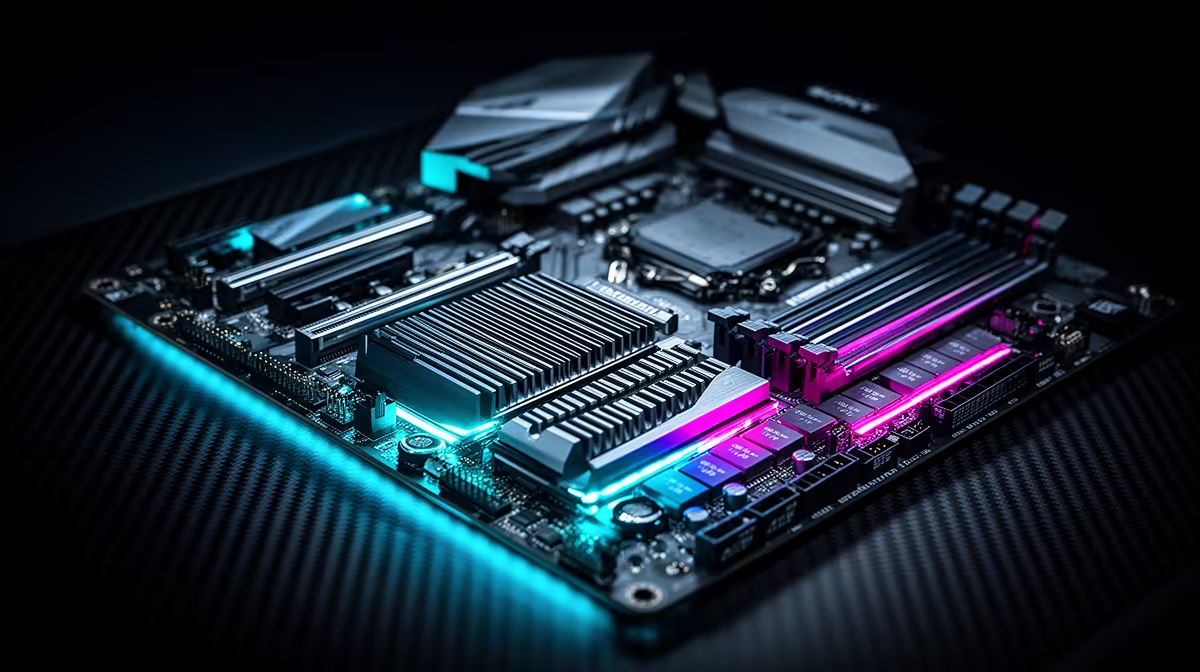
For console gamers moving to PC, VRM quality matters, but only in proportion to the CPU you choose. A mid-range chip runs fine on a decent B-series board's VRM; a high-TDP chip is where VRM phase count and cooling start to count.
Quick Answer
VRM quality matters when you pair a high-TDP CPU like a Ryzen 7 7700X (105W) or a Core i7 with a board, where a weak VRM throttles under load. For a 65-105W chip a solid B650 board with an 8+2 or better VRM (around R3,500 at Evetech) is plenty; you don't need a 14+2 phase board.
What VRM Quality Actually Does
The VRM feeds clean, stable power to the CPU. Under sustained all-core load a cheap VRM with few phases and no heatsinks overheats and throttles the CPU to protect itself, costing performance. A board with an 8+2 phase VRM and proper heatsinks handles a 105W Ryzen 7 comfortably; a 14+2 phase board only matters for high-TDP chips like a 170W Ryzen 9 7950X or heavy overclocking.
Matching VRM To Your CPU
If you're moving to PC with a Ryzen 5 7600 or Ryzen 7 7700 (65-88W), almost any B650 board's VRM copes; spend elsewhere. For a Ryzen 7 7700X or Core i7 at 105W-plus, choose a B650 or B850 with an 8+2 or stronger VRM and heatsinks. Only a 170W Ryzen 9 or serious overclocking justifies a 14+2 phase X670E board. Buy the VRM your CPU's TDP demands, not the biggest number.
FAQ
Does VRM quality matter for a gaming PC?
It matters in proportion to your CPU's TDP. A 65-105W chip runs fine on a solid B650 board's 8+2 VRM. A weak VRM only throttles when paired with a high-TDP CPU under sustained load.
What VRM do I need for a Ryzen 7?
For a 65-88W Ryzen 7 7700, most B650 boards suffice. For a 105W 7700X, pick an 8+2 phase VRM with heatsinks. You only need a 14+2 phase board for a 170W Ryzen 9 or overclocking.
Is a premium VRM worth it for console-to-PC gamers?
Usually not. Mid-range gaming CPUs don't stress a decent B-series VRM, so the money is better spent on the GPU. Reserve premium 14+2 VRM boards for high-TDP chips you don't need for gaming.
chosen CPU's TDP, then pick a board whose VRM has heatsinks and at least an 8+2 phase design for 105W chips. That match avoids throttling without overpaying for phases you won't use.