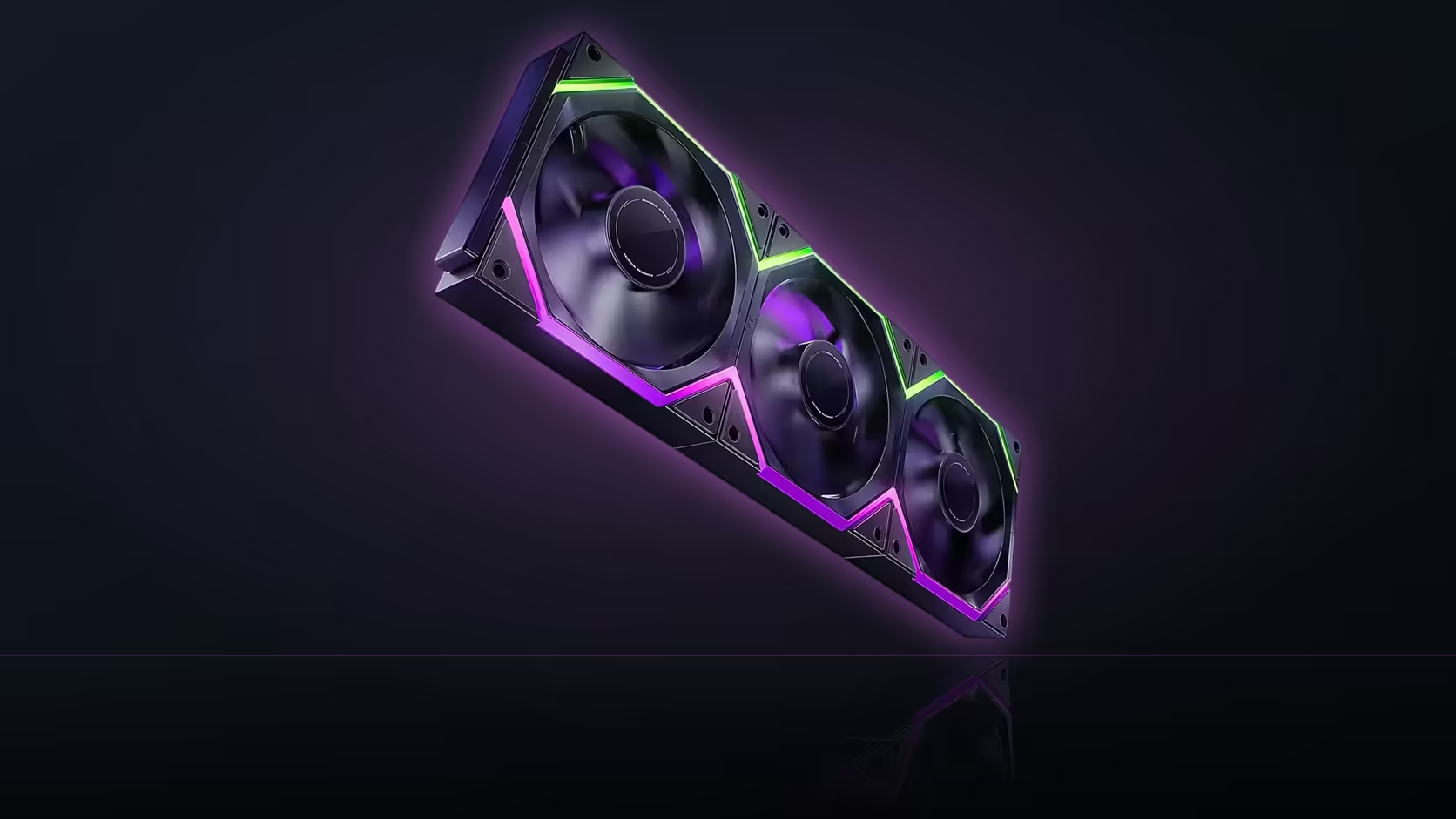
Two different questions get answered by two different numbers, and it is easy to reach for the wrong one. Dual-zone describes how a ring is divided for control purposes on the Nyota Pro; an LED count describes how many individual lights sit in that ring. Only one of those figures is something AsiaHorse actually publishes for this model.
Quick Answer
Dual-zone ARGB on the Nyota Pro refers to how the ring is split for lighting control, not to how many LEDs populate it, and no LED count is published for this fan. The three-pack costs R599 (VAT included) and its published lighting specification is dual-zone ARGB running standard effects from a motherboard header, full stop. Any specific LED figure attached to this model would be unverified and should not be treated as fact.
🔢 What "dual-zone" is actually describing
It is a statement about addressing, not about quantity. The ring is split into two zones that, with AsiaHorse's separately sold UMBRA hub, can show different colours or effects independently of each other. That structural detail says nothing about how many individual LEDs sit behind either zone.
🕳️ Why no count is quoted here
Our product data for the Nyota Pro does not publish an LED count, so none appears anywhere in this article. That is a gap in the available information, not a claim that the fan lacks lighting detail; it simply means the figure has not been confirmed for this specific model and should not be guessed at or estimated.
📊 Where counts do appear in the range
Other AsiaHorse fans publish this figure. The Nyota A12 lists a 16-LED ring, and the Amici 5GT lists a 24-LED infinity mirror. Both of those numbers describe LED count specifically, separate from any question of zone division, and both illustrate that the figure varies by model rather than being a fixed constant across the AsiaHorse range.
🧮 Does LED count actually matter for effect quality?
A higher count generally allows an effect to be drawn more finely around a ring, smoother gradients and tighter chase patterns among them. Zone division is a separate axis entirely: a fan could have many LEDs in one uncontrolled zone or fewer LEDs split across two independently addressable ones. The two specifications answer different questions, and conflating them risks assuming a detail that was never actually published.
For fans where full specifications, including LED counts, are listed, Evetech's case fan range is worth comparing directly, and the hub side of the Nyota Pro's own dual-zone story is covered by fan controller hardware as a separate category.
Frequently Asked Questions
What does dual-zone actually describe?
How the ring is divided for lighting control, a matter of addressing rather than of how many LEDs sit in it.
Is an LED count published for the Nyota Pro?
No, not in our product data, so any figure quoted for this model would be unverified.
Do other AsiaHorse fans list a count?
Yes, the A12 lists 16 LEDs and the Amici 5GT lists 24 LEDs in its infinity mirror ring.
Does a higher count mean better looking effects?
It generally allows finer detail in an effect, though zone division is a separate consideration entirely.
What is confirmed for the Pro's lighting?
Dual-zone ARGB, standard effects from a motherboard header, and full independent zone control reserved for AsiaHorse's UMBRA hub.
How would I get full zone control on this fan?
Through the UMBRA hub, which the listing names as the route, sold separately and not stocked by Evetech.
Comparing lighting specs across fan options?
See Evetech's full case fan range for models with published LED detail.