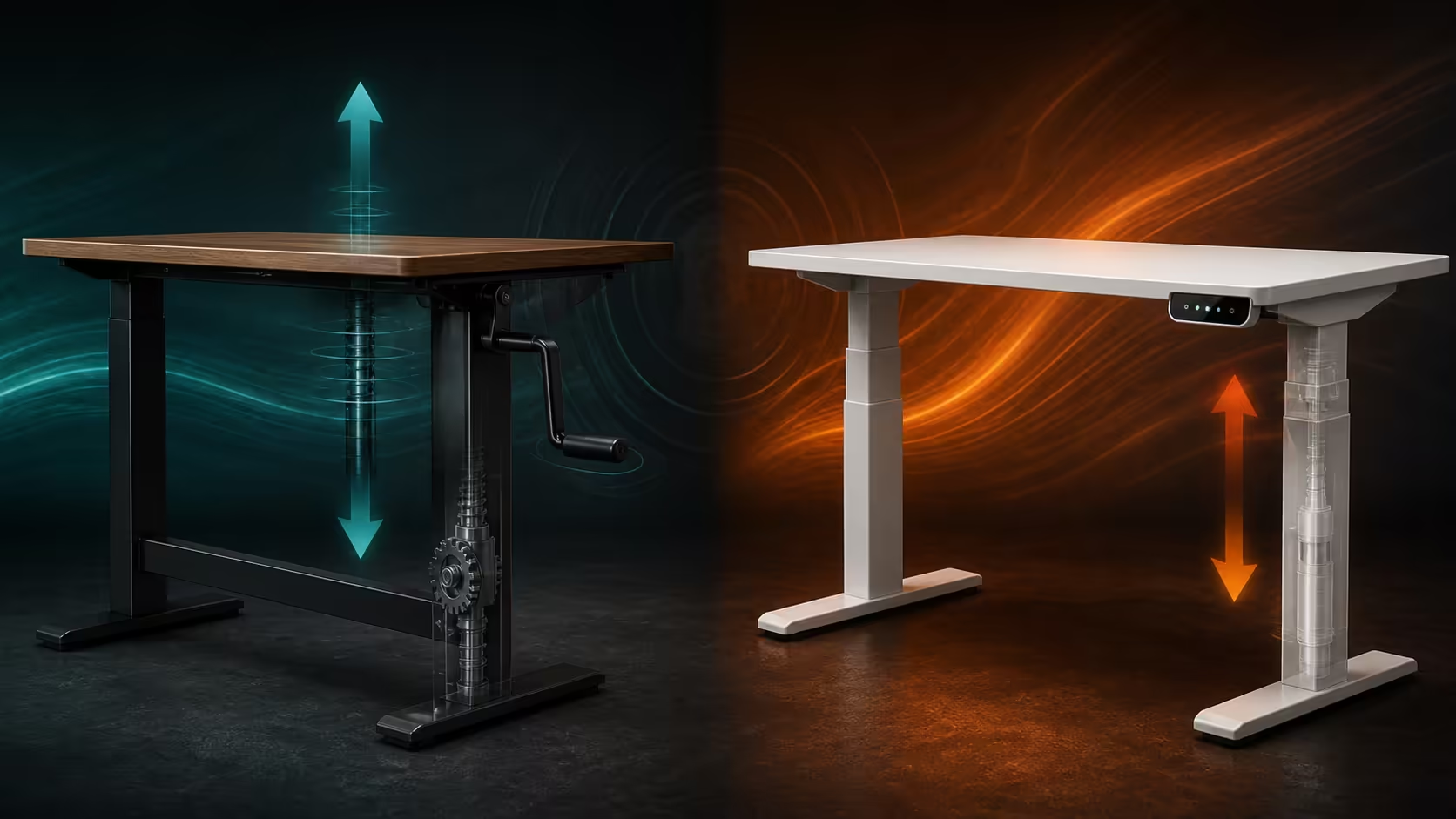
Electric and manual desks can reach useful working heights; the difference appears in how often and how consistently users move between them. In an electric standing desk versus manual sit-stand desk decision, the R4,999 AROZZI Arena Nordico demonstrates powered 71-115cm travel and LED memory recall.
Quick Answer
Electric adjustment is more convenient for frequent transitions and shared settings, while manual mechanisms can suit occasional changes and users comfortable repeating the setup themselves. The R4,999 Arena Nordico adds one-touch 71-115cm movement, saved heights and integrated rear and cable management.
⚡ Powered movement reduces transition friction
The motor lifts the worktop with everyday equipment in place, allowing a call, review or gaming break to use another posture without relocating the station. Memory keys return to tested positions instead of relying on visual judgement.
That speed matters most when changes happen several times per day. Someone who sets one height and leaves it will use the advantage less. Compare Evetech gaming desks according to the actual weekly routine.
Electric control still needs supervision. Clear chair arms and other obstacles, remain at the buttons and stop if the path changes.
Power also makes transitions easy to attach to tasks. A user can stand for a call, lower for detailed input and restore a gaming position without losing attention to repeated cranking. That convenience is behavioural value, not an automatic posture benefit.
The controller should stay visible and clear of papers. Memory keys need a simple map, particularly when two people share the station.
🖐️ Manual movement places more work on the user
A crank or other manual method can reach comfortable seated and standing positions when its range fits. The user must perform the adjustment, stop accurately and often remember the previous point.
Manual systems may suit rooms without frequent changes or users who prefer mechanical simplicity. Evaluate the complete motion with equipment loaded. A control that is easy on an empty display floor may become awkward beside a chair and drawer.
Recorded marks can support accuracy. Each user should still test personal posture rather than copying a shared measurement.
Marks or recorded measurements can improve repeatability. The ergonomic result can be sound; the difference is the effort required to reproduce it. If that effort discourages movement, the theoretical second posture may be used less.
Control access also matters. A crank blocked by drawers or chair movement makes every transition more awkward, while an electric button needs a clear, reachable location.
Noise, smoothness and stopping control are qualities of individual designs, not guaranteed by the mechanism category. Assess the actual desk rather than assuming all electric or manual movement feels the same.
Both types need a clear path. Before changing height, move the chair and inspect under the top; a manual control does not remove collision risk.
🧩 Compare the complete workstation
Both mechanisms need stable frames, suitable ranges, screen support and moving cable routes. The Arena Nordico carries its white top on sturdy steel; rear-panel adjustment helps with monitor mounts, and two quick-release baskets support power and excess lead below.
Run a complete 71-115cm cable-freedom test. Family context sits in the AROZZI gaming setup range, while broader gaming setup products help inventory the station.
Shared use increases the value of memory because each person can recover a known position. Manual systems can still be shared if measurements are recorded and users are willing to adjust carefully.
Cable management influences both choices. A route that must be rearranged before movement creates more friction than the control mechanism alone. Support bricks, preserve vertical slack and inspect return near the floor.
The strongest decision comes from a one-week scenario: count likely transitions, regular users and equipment changes. Choose the method whose effort fits that pattern without pretending every feature will be used.
Price should be judged against transition frequency, not mechanism labels alone. R4,999 is the concrete cost of this white electric desk. Fit the decision to the users, tasks, room and maintenance needs.
Frequently Asked Questions
Can a manual desk provide ergonomic positions?
Yes, when its range fits and the user adjusts it carefully. Ergonomics depends on the final body relationship, not motor presence.
Why are electric desks easier for shared use?
Memory control can return different users to saved heights quickly. Clear key assignments prevent accidental overwriting.
Does powered movement remove cable risk?
No. Every lead crossing to a fixed point needs slack at the high position and controlled return below.
Who may prefer manual adjustment?
A user making rare height changes may accept the extra effort. Room layout and control access should still be checked.
How much is the Arena Nordico electric option?
The white model is R4,999. It moves between 71cm and 115cm with LED memory presets.
Ready to choose the adjustment effort your routine will actually tolerate?
Explore Evetech gaming desks with transition frequency, shared users and full cable movement included in the comparison.