Quick Answer
For a family gaming room, a streaming microphone matters once anyone records, streams or does a lot of voice chat - a shared cardioid USB condenser around R900 to R2,000 at Evetech is the simplest upgrade over headset mics. For a room used only for casual single-player or controller play, a dedicated mic is optional.
When A Shared Mic Earns Its Place
The trigger is voice activity. If family members join Discord squads, party chat, or record play sessions, one shared USB condenser sounds far clearer than individual headset mics - and it is easier to manage than several. An entry cardioid model around R900 to R1,500 handles a family room well.
If the room is mostly couch co-op or single-player with controllers, a dedicated mic adds little. The TV and headset mics cover the occasional chat, and the budget is better kept for now.
Choosing For A Shared Space
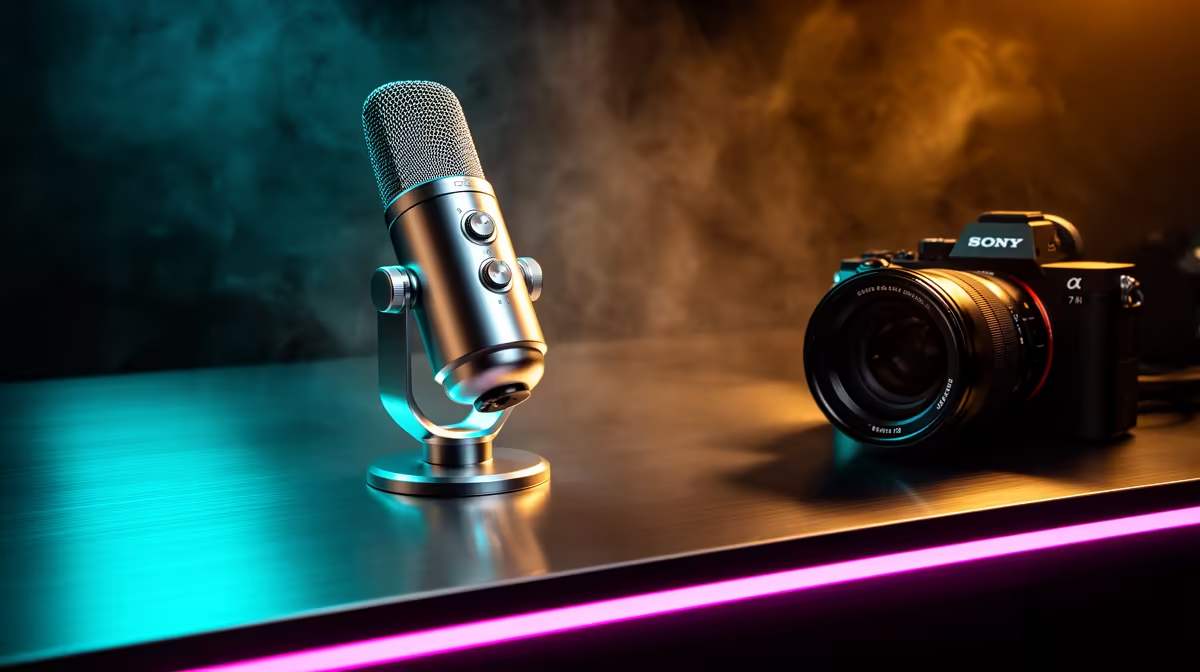
Pick a cardioid pattern so the mic focuses on the speaker and ignores TV audio and background noise - important in a busy family room. A weighted desktop stand keeps it stable and out of younger players' way, and plug-and-play USB means no interface to configure.
If two people often need to speak at once for co-op streams, a multi-pattern mic with an omnidirectional mode (around R3,000) is the only reason to spend more.
Spend Bands
A shared entry cardioid USB mic runs R900 to R1,500. A multi-pattern model for two simultaneous voices sits at R2,500 to R3,500. A sturdy desktop stand adds R300 to R700.
FAQ
Does a family room need a dedicated mic?
Only if there is real voice activity - streaming, recording or frequent Discord chat. For casual single-player or couch co-op, headset mics and the TV cover the occasional voice fine.
Can one mic serve the whole family?
Yes. A single cardioid USB condenser on a stand handles turn-taking well. You only need a multi-pattern mic if two people regularly speak into it at the same time.
How do I keep TV noise out of the mic?
Use a cardioid pattern, set a low gain, and place the mic facing away from the TV near the speaker. That combination keeps room and TV audio out of your comms.
For a shared room, set one cardioid USB mic on a weighted stand facing away from the TV - it focuses on whoever is talking and keeps background noise out.