Checking FIFA 22 PC requirements properly means more than finding one component that sounds familiar. The game needs a compatible processor, graphics hardware, memory, storage and supported software working together. For South African players, a PC that handles the match smoothly and a connection that reaches the chosen game service consistently are two separate parts of the experience.
Quick Answer
Compare your complete PC with the official requirements for the edition you own, not with a single processor or graphics-card name. Meeting a minimum target may start the game, while the recommended tier generally leaves more room for busy scenes and background tasks. Online responsiveness also depends on packet loss, Wi-Fi quality and the route to the match service.
✅ Compare the whole machine with the official table
Start by identifying what is actually inside the PC. Windows system information and the graphics control panel can help distinguish integrated graphics from a dedicated card, while storage settings show how much free room remains. Match those details, along with the operating system, against the official table for FIFA 22 rather than relying on a similarly named computer model.
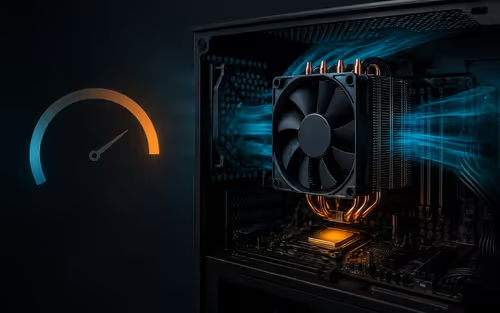
Do not turn a published requirement into a promise of a particular frame rate. Resolution, graphics settings, background applications, driver condition and thermals all influence the result. The sensible question is whether the system reaches the stated baseline with enough free space and cooling headroom to stay stable through a session.
If an older PC misses the target in several places, choose an upgrade path based on the actual weak point. A gaming PC deal can be a useful reference when comparing a balanced new system, but a purchase decision should still account for the screen, storage, cables and games you already use.
📶 Separate rendering trouble from connection trouble
Low frame consistency and high network delay can feel similar during a match, yet they need different tests. Try an offline game first. If motion becomes uneven there as well, inspect graphics settings, temperatures and background activity. If offline play is smooth but online play stutters, note ping variation and packet loss instead of immediately changing graphics options.
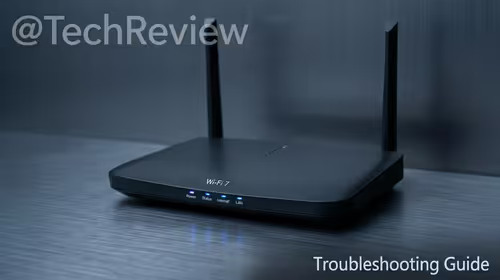
Fibre commonly gives a steadier starting point for online play than a mobile connection, but no connection type guarantees the same route every time. ISP peering, busy-hour congestion and the game service's selected region still matter. An Ethernet test is a useful divider: it can reveal whether wireless interference inside the home is contributing to the problem.
For a South African household using LTE, a fast speed test does not capture every match condition. Test at the times you normally play, without concurrent updates or streaming, and compare several games before deciding there is a consistent network fault. That record gives an ISP or support desk something concrete to investigate.
🧩 Storage, settings and peripherals shape the session
An SSD can shorten game and menu loading because it improves file access. It does not replace the processor and graphics hardware responsible for rendering the action. Leave enough free storage for the game, updates and temporary files, then avoid filling the drive to its limit just before a large patch.
Controller comfort is also part of a useful PC setup. A compatible gaming controller can provide the familiar layout many players expect, but test it in the game before an online session. Confirm the cable or wireless pairing, in-game input selection and any accessibility settings you rely on.
Keep software changes measured. Install one driver or adjustment, test a repeatable match scenario and record the effect. Updating several things at once may make the issue disappear, but it also hides the reason. Save a stable configuration before experimenting with a new graphics setting or control profile.
🛡 Decide whether an upgrade is justified
An upgrade makes sense when a repeatable local test identifies a real shortfall: the system does not meet the required hardware, storage is inadequate, or stable settings still leave the game unplayable. It is less useful when the only issue appears during an unstable online route, because faster local hardware cannot shorten the network path.
Before spending, list the games and applications that share the PC. A machine selected only for one title may be a poor fit for schoolwork, streaming, editing or future games. Comparing the full workload also helps avoid buying a powerful component that an older power supply, display or case airflow cannot support safely.
Frequently Asked Questions
What should I compare with FIFA 22 requirements?
Check the processor, graphics hardware, memory, free storage and operating system against the official table for the edition you own. A complete comparison is more reliable than matching one component.
Is the minimum requirement enough for online matches?
It may allow the game to run, but it leaves less performance headroom than the recommended tier. It also says nothing about the quality of the internet route during a match.
Why can a match feel slow on a capable PC?
Packet loss, Wi-Fi interference, ISP routing and congestion can affect online response independently of frame rendering. Compare offline and online behaviour to separate the two.
Does an SSD improve FIFA 22 during play?
An SSD helps file access and loading. Frame performance during a match is driven mainly by the processor, graphics hardware, settings and system condition.
How should I test stutter before upgrading?
Test a comparable offline scenario, watch temperatures and frame behaviour, then try Ethernet for online sessions. Change one variable at a time so the result has a clear explanation.
Ready to compare a PC for smooth game sessions?
Browse balanced gaming systems and controller options with your full PC workload in mind.