Most an OLED monitor questions come down to a handful of practical trade-offs, so here is the honest breakdown.
Quick Answer
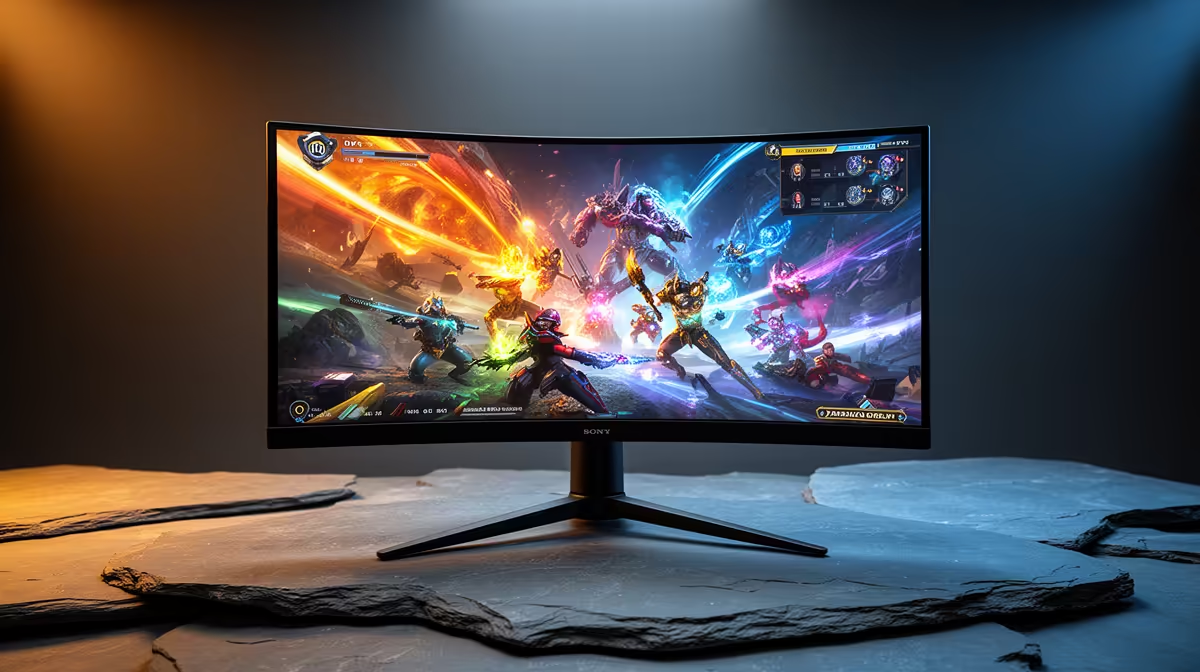
240Hz OLED panels stay expensive in SA because the panels themselves are costly to make and import duties plus the weak rand add a premium; expect them from around R12,000.
Where Durban buyers should focus
In Durban, the same online range and delivery apply, so focus on specs over stock anxiety. For 240Hz OLED, pick the model that suits your games and desk, then add accessories later. Nationwide shipping means no metro premium on choice.
What drives 240Hz OLED pricing and value
The headline figure rarely tells the whole story. For 240Hz OLED, weigh how the part performs at your target resolution and how often you'll upgrade. Buy the tier that removes your biggest bottleneck rather than the most expensive option on the shelf.
How this affects an SA build
Local pricing, the rand and import costs shape what 240Hz OLED costs here, so the smart move is to match the part to real use. A mid-range pick that hits your frame-rate or workflow target beats an overspend you won't feel.
South African pricing rewards buyers who match parts to actual use.
Keep your eye on real frame rates and daily comfort rather than spec-sheet bragging rights.
Plan a touch of headroom so the build still feels good a couple of years on.
FAQ
Does living in Durban change the choice?
Not the specs. Durban buyers get the same online range and nationwide delivery, so choose by your games and budget, not local stock worries.
How much should I budget for 240Hz OLED?
Set your resolution target first, then buy the tier that clears it. Mid-range parts handle 1080p and 1440p well; reserve top-end gear for 4K or creative work.
Will 240Hz OLED bottleneck the rest of my build?
Only if mismatched. Pair it with a balanced CPU, enough RAM and a fast NVMe so no single part holds the others back.
Compare current Evetech options against your resolution target and budget before you order.