A FIFA gaming PC does not need one oversized component to feel good in a match. Football games reward steady frame delivery, a responsive display and controls that behave consistently. The best setup is balanced around the resolution you use, the people who play with you and the space where the machine will live.
Quick Answer
Choose a FIFA gaming PC with balanced processor and graphics performance, enough memory, fast storage and cooling that can sustain a session. Budget for the display and every controller needed for local matches, not only the tower. In a South African res room or compact flat, give the PC clear airflow and use a local warranty route that is easy to follow if hardware needs attention.
🧩 Frame consistency matters more than a headline part
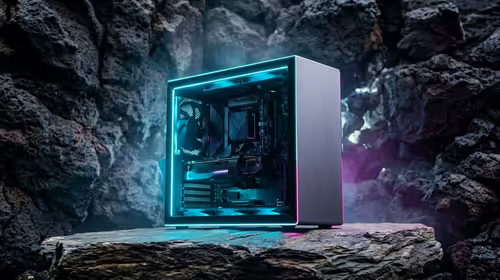
Football games feel best when movement, passing and camera tracking remain predictable. A powerful graphics card helps, but processor pacing, memory capacity, storage activity and background tasks can all interrupt that rhythm. Compare complete systems rather than deciding from one component name.
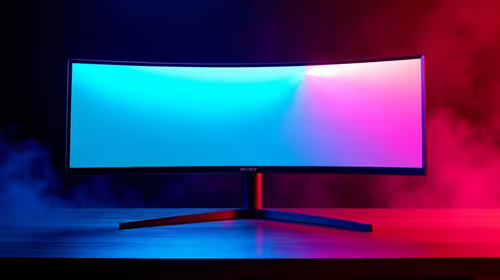
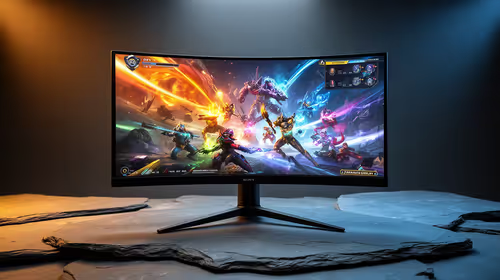
Start with the screen you already own or plan to buy. Resolution and refresh rate influence the workload, while display response affects how immediate the action feels. A sensible gaming PC deal is one that matches that screen and leaves room for the everyday work, study or streaming the machine may also handle.
Fast storage is useful because games, updates and operating-system tasks do not all happen at convenient times. It will not repair a weak processor or graphics configuration, but it can reduce the friction around launching, updating and moving through a busy PC.
🎮 Put local multiplayer in the budget
The tower is only one part of a couch match. Add every controller, cable, charging plan and seat position needed for the people who will actually play. One pad may be enough for online seasons, while a household or digs setup can need several inputs that each remain comfortable through a longer evening.
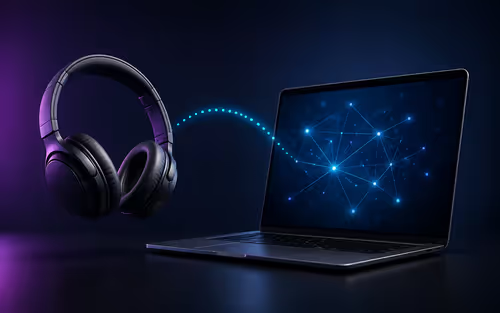
Wired controllers provide a simple low-latency check when you are setting up a new PC. Wireless can keep the room tidier, but it needs stable pairing, charged batteries and a connection method that suits the computer. Review gaming controller options with those practical details in mind rather than treating an extra pad as an afterthought.
Set the game and display to a responsive mode, then close heavy background downloads before a competitive session. That is often a more useful first move than replacing hardware because a single busy update can make a capable system feel inconsistent.
📶 Separate local response from online conditions
A controller or display issue can feel similar to network delay, but the remedies are different. Test a local practice match first. If the input feels sharp there but online play becomes erratic, check the home connection, Wi-Fi coverage and the route to the game servers before changing the PC.
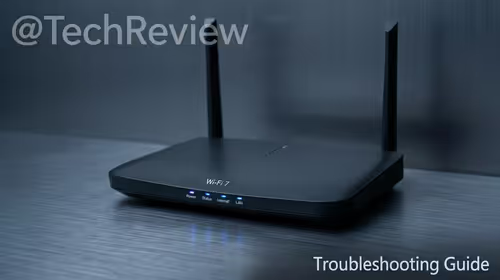
For South African players, Ethernet is useful where the router is nearby or a cable can be run safely. Wi-Fi can work well when the radio signal is strong, but thick walls and neighbouring networks may add variation that has nothing to do with graphics performance. Avoid downloading a large game patch while someone is trying to play a match.
🛡 Choose the desktop or laptop around the room
A desktop normally offers easier upgrades and can be positioned for good cooling. A gaming laptop saves space and moves easily between home, campus and family visits, but its sustained performance depends on the exact components and airflow. Neither format automatically wins without considering the desk, screen and intended use.
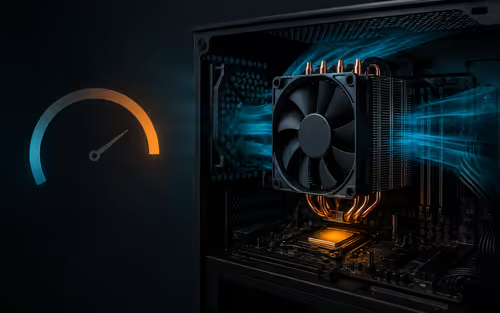
In a small South African room, do not push the rear exhaust against a wall or trap the machine in a closed shelf. Dust and warm summer air make clear vents more valuable. Keep the charger, monitor cables and controller leads arranged so that a quick clean or reset does not require dismantling the entire setup.
Buying locally supported hardware also gives a more practical path if something proves faulty. The Consumer Protection Act provides important remedies, while receipts, serial details and the seller's support process make those remedies easier to use.
Frequently Asked Questions
What makes a good FIFA gaming PC?
Balanced processor and graphics performance, sufficient memory, quick storage and reliable cooling all support steady matches. The display and controller complete the experience.
Is a strong graphics card enough for football games?
No. Processor pacing, background activity, display response and input stability can influence how smooth the game feels.
Should I choose a desktop or gaming laptop?
A desktop is easier to upgrade, while a laptop saves space and travels more easily. Compare sustained cooling and the exact components for either option.
How can I reduce input delay without buying new hardware?
Try a wired controller, select a responsive display mode and close disruptive background tasks. Test locally first to separate PC response from internet conditions.
Why include controllers in the full budget?
Local matches need an input for every player. Connection method, charging and comfort affect the session as directly as the PC itself.
Ready to build a smoother match-day setup?
Compare gaming PCs and controllers as one complete system for your screen, room and playing style.