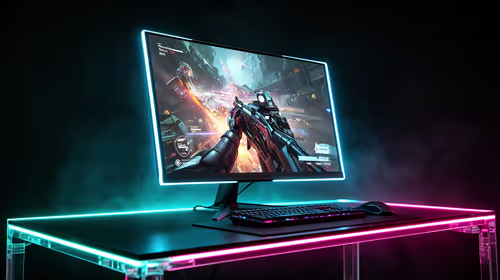
The useful part of Fortnite system requirements is not merely whether the game launches. Your PC has to produce a playable frame rate at the resolution, visual settings and display refresh rate you actually use. A modest machine may suit relaxed matches at restrained settings, while someone chasing a smooth competitive feel needs more room in the processor, graphics and cooling plan.
Quick Answer
Match Fortnite's current official minimum and recommended tiers against your full PC specification, then judge the result against your monitor rather than a single launch test. Minimum hardware is an entry point, not a promise of high frame rates during a crowded fight. If performance is uneven, separate graphics limits from connection trouble before spending on an upgrade.
🔌 Start with the whole PC, not one component
Fortnite uses more than a graphics card. Compare the official processor, memory, graphics, storage and operating-system guidance with the actual parts in your system. The Windows version and available drive space matter as much as the headline CPU or GPU name, particularly when an update needs room for temporary files.
Use the display goal to make the comparison meaningful. A 1080p screen at a conventional refresh rate asks less of a PC than a higher-resolution panel or a fast esports display. Lowering a demanding visual option can be sensible, but it cannot cure a processor that is already saturated or memory that is constantly paging to the drive.
📶 Frame rate and online delay are different problems
Low FPS makes the picture stutter on the PC. Network delay affects when a server receives an action. They can happen together, which is why a difficult online session can make a capable graphics card seem guilty when the connection is the real variable.
For South African players, test a local training session or replay first, then try the same settings in an online match over Ethernet. If the local result is smooth but online play becomes erratic, compare the fibre connection with LTE at a different time. Busy-hour congestion, Wi-Fi interference and a capped mobile connection can change how a match feels without changing the PC at all.
Note the display resolution, selected rendering mode, frame-rate cap, connection type and the moment a problem begins. Randomly reducing every setting at once hides the clue that would have identified the cause.
✅ Choose hardware around how you play
Someone playing occasional Battle Royale sessions has a different target from a player who records clips, keeps voice chat open and wants a high-refresh display to stay responsive. A desktop offers more room to tune memory, storage and graphics later, while a portable setup needs to sustain its performance in its own chassis.
The Fortnite gaming PC range is a practical starting point for comparing desktop options against your screen and workload. Look beyond a single component label: paired parts, airflow and enough storage for the game plus patches all affect the day-to-day result.
🛡 Keep updates from becoming a storage surprise
Game updates are not static, so leave spare drive capacity instead of running the installation volume to its limit. Check the download size first if data is limited, and schedule large downloads for a dependable connection where possible.
For a student moving between home, res and digs, portability can outweigh future desktop upgrades. The Fortnite gaming laptop selection helps frame that decision, but assess its display, graphics capability, memory and cooling together. A laptop should be tested on a hard surface with clear vents, not judged only by a short burst on a bed or couch.
Frequently Asked Questions
What should I compare with Fortnite requirements?
Compare the official processor, graphics, memory, storage and operating-system tier with the complete specification of your PC. Include your intended resolution and monitor refresh rate so the comparison reflects the experience you want.
Are minimum requirements enough for competitive play?
They can get a player into the game, but competitive play usually benefits from extra headroom and settings chosen for consistent frame pacing. The monitor target matters as much as the game's ability to open.
Why does Fortnite feel slow despite a capable GPU?
A processor bottleneck, heat, background task, storage pressure or unstable network can imitate a graphics problem. Test a local session and an online session separately before changing hardware.
How can SA players tell fibre lag from low FPS?
Watch frame behaviour in a local mode, then repeat a similar online test over Ethernet and compare it with LTE if available. A smooth local test with unstable online play suggests the network path deserves attention.
Do Fortnite updates affect storage planning?
Yes. Leave room for patches and temporary installation files, then check the update size before using limited data. A crowded drive can complicate an otherwise straightforward update.
Would a gaming laptop suit regular Fortnite sessions?
It can, provided its display, memory, graphics capability and cooling match the intended settings. Sustained performance matters more than a brief menu or benchmark result.
Ready to match a Fortnite setup to your screen?
Compare desktop and laptop choices with your resolution, refresh target and everyday connection setup in mind.