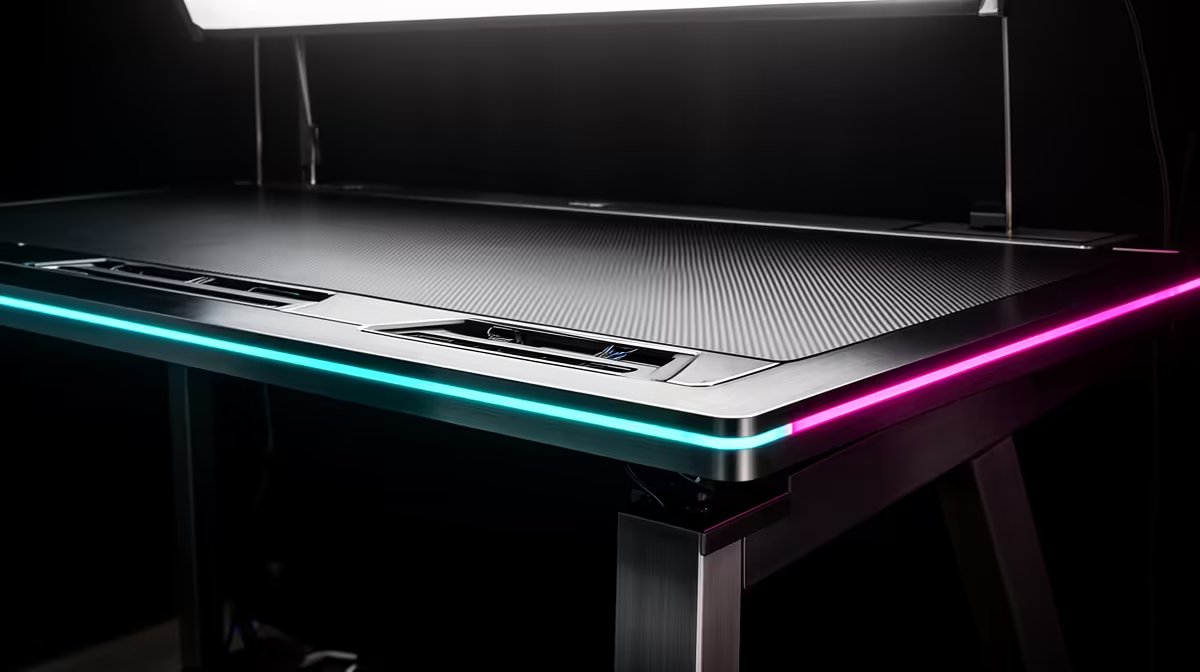
A desk is the foundation every other peripheral sits on, so a flexing or undersized top undermines a good monitor, chair and keyboard at once. Get the width, depth and frame right and the rest of the setup finally feels planted.
Quick Answer
For CAD or detailed work, pay for a steel frame and a desk that holds steady under hand pressure; wobble at 30kg of monitor and gear ruins precise mousing. A braced frame from about R2,500 beats a thin-leg bargain that shakes when you type.
The Measurements That Decide Fit
Three numbers settle most desk choices. Width sets how many monitors and how much working space you get: 120cm for a single screen, 140cm to 160cm for dual or ultrawide. Depth should be at least 60cm so a 27-inch monitor sits an arm's length away and your wrists rest on the surface. Weight rating matters once a heavy monitor arm, a tower on top and speakers add up, so a desk rated to 80kg or more avoids sag. A steel frame resists the wobble that kills precise work.
Stability Under Real Load
Press down hard on the front edge of any desk before you commit. Thin-leg flat-pack frames flex under a 7kg monitor and a heavy hand, which shows up as a shaking screen while you type or draw. A cross-braced or C-leg steel frame stays planted. If you mount a monitor arm or a mic boom, the desk also needs a clamp lip of standard thickness, so check the top edge depth against the arm's clamp range.
How To Buy For CAD learners
Start from the room, not the catalogue. Measure the wall space, then pick the widest stable desk that fits with a little clearance. For CAD learners, prioritise a steel frame and at least 60cm of depth before any extra. A monitor arm is often the highest-value add-on because it frees the surface and improves posture. Buying the frame right the first time means you only upgrade accessories later, not the whole desk.
Tailored To CAD learners
Match the choice to how, where and how often this kit is used in your space, since the right fit for your routine beats a spec sheet that flatters a different use case. For this use, prioritise a steel frame and at least 60cm of depth, with capable desks from about R1,500 and dual-monitor surfaces near R3,000.
FAQ
How wide should my gaming desk be?
Allow 120cm for a single 27-inch monitor and keyboard, and 140cm to 160cm for dual monitors or a 34-inch ultrawide. Depth of at least 60cm keeps the screen a comfortable arm's length away.
Does a steel frame really matter?
Yes for anyone mounting a monitor arm or doing precise work. Steel frames resist the wobble that thin-leg desks show under a heavy monitor and fast typing, which protects accuracy and reduces fatigue.
Should I get a sit-stand desk?
Only if you work long hours and value posture changes; a manual or electric sit-stand frame costs more and is best added as a later phase. A stable fixed desk plus a good chair covers most buyers first.
wall space and monitor footprint first, then buy the widest steel-framed desk that fits with clearance, and add a clamp-on monitor arm to reclaim the surface.