


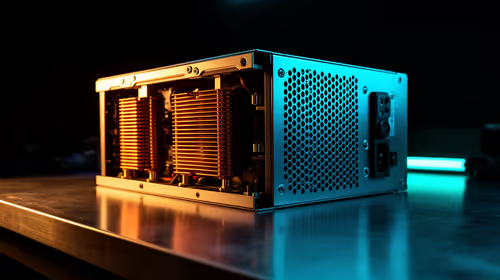
1000W PSU Planning for RTX 5090 Builds in SA
1000W for RTX 5090 needs a full-build check, not a simple yes. Review GPU guidance, CPU draw, transient load, connectors, PSU quality, and upgrade plans before deciding.
Read moreA global memory price hike takes weeks to reach South African shelves, since contract pricing, shipping and distributor stock delay the pass-through until older stock clears. That lag explains why SA RAM prices sometimes feel behind or ahead of global headlines.
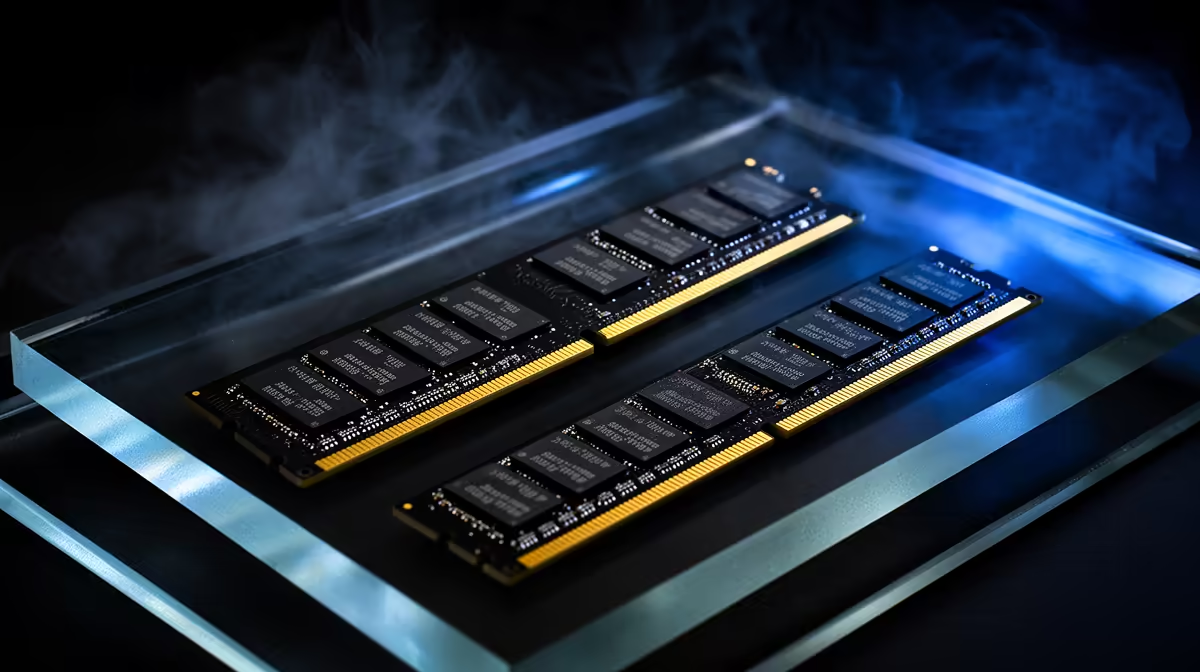
A global DRAM price move does not reach a South African RAM kit the same afternoon. Memory is sold through contracts and spot channels, assembled into modules, shipped, cleared, distributed and finally priced from local inventory. The shelf can lag a headline while old stock remains, then jump when the replacement shipment lands.
Think in inventory layers. A local seller prices the kits already bought, the distributor holds another batch at its own cost and new factory output is still moving through the channel. Contract changes affect future orders first. Exchange rate, freight and kit specification then decide how much of the move reaches SA.
Evetech's DDR5 kit catalogue gives you exact capacities, speeds and timings to compare. The popular memory page helps show which current kits buyers are choosing while the channel catches up.
Large PC makers and module companies can buy DRAM through negotiated contracts covering volume and delivery windows. Smaller or immediate purchases can be influenced by spot prices.
A headline about contract pricing describes an upstream deal or index, not the cost basis of every kit already built. Module brands still bin chips, add PCBs and heat spreaders, validate profiles and package the product.
Different kits can use different dies or contracts, so their rand prices need not move together.
A distributor or seller may hold units bought before the increase. Those can stay near the older price until they sell. The next replenishment reflects the new chip cost, currency and freight.
The reverse also happens. Global prices can fall while expensive local stock remains. A later shipment creates the visible reduction.
Inventory depth is private and changes by kit. No one can promise the exact week a global move appears on a particular product page.
Memory is traded internationally. A weaker rand can raise landed cost even when dollar DRAM pricing is flat. A stronger rand can soften part of a global increase.
Import payment timing and currency cover can delay that relationship. The daily exchange-rate chart is not a direct retail formula.
Compare dated prices on the exact kit rather than converting a US headline with today's rate.
Air freight is faster and more expensive; sea freight takes longer and groups inventory into larger arrivals. Customs processing and inland distribution add more variation.
Module brands may also prioritise larger markets or system-builder orders. A popular specification can clear faster than a niche speed bin.
This is why SA can look behind a global rise one month and ahead of a later fall.
Decide capacity first, then speed and timings supported by the motherboard and CPU. Compare a matched kit, not two separate modules sold at a similar price.
Watch several suitable SKUs. One old-stock kit can offer value while a near-identical replenished model reflects the new cycle.
Do not buy unstable memory settings to beat an expected rise. Compatibility and warranty matter after the price headline fades.
Existing inventory carries an older cost, while new contract pricing takes time to move through assembly, shipping and distribution.
Yes. Exchange rate, low stock or a new higher-cost shipment can move the shelf first.
No. Capacity, memory die, bin, brand, distributor and stock age can differ.
Track several compatible DDR5 kits by date and let local stock, landed cost and specification guide the purchase instead of one global headline.
Existing inventory carries an older cost, while new contract pricing takes time to move through assembly, shipping and distribution.
Yes. Exchange rate, low stock or a new higher-cost shipment can move the shelf first.
No. Capacity, memory die, bin, brand, distributor and stock age can differ. {{PRODUCTS: { facets: { query: "memory" }, limit: 12, title: "Memory Kits", style: "4" } }}
1000W for RTX 5090 needs a full-build check, not a simple yes. Review GPU guidance, CPU draw, transient load, connectors, PSU quality, and upgrade plans before deciding.
Read more
RTX 5080 Super with a 750W PSU is more comfortable than lower wattage if the unit is quality. SA builders should still confirm GPU guidance, CPU draw, connector type, airflow, and upgrade room.
Read more
How to fix FPS drops after a RX 9070 XT starts with driver cleanup, chipset updates, thermals, and power checks. For SA gaming PCs, confirm PCIe seating, monitor refresh, frame caps, and per-game graphics settings before replacing parts.
Read more
How to fix low FPS Windows 11 Wi-Fi 7 issues starts by checking whether the problem is frame rate or network lag. Test ping, drivers, power settings, Ethernet, and game FPS before adjusting visuals.
Read more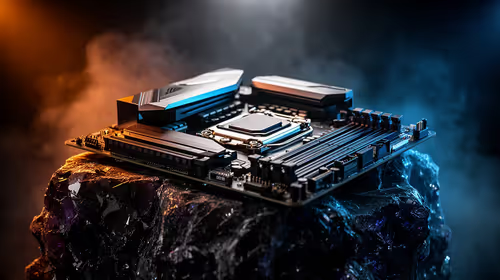
AM5 is smart for SA builders because it supports newer Ryzen CPUs, DDR5 memory, and a longer upgrade path. Compare board cost, cooling, gaming needs, and local part availability before choosing your next PC platform.
Read more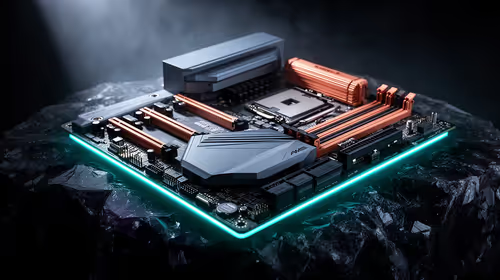
AM5 gives Randburg gaming builders a longer upgrade path. For SA buyers, DDR5 support, newer board features, and future CPU options can justify the platform. Weigh board cost, cooler support, BIOS maturity, and upgrade timing before choosing.
Read more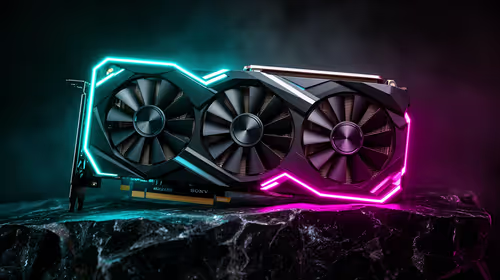
RTX 5090 on a 550W PSU leaves almost no practical room for OC plans. Treat the setup as constrained, with CPU draw, power spikes, cable quality, thermals, and stability checks more important than chasing extra clocks.

FPS drops on a Ryzen 9 9950X3D build often have a fixable cause. Check settings, drivers, thermals, background tasks, network conditions, and bottlenecks before assuming a part must be replaced.

The difference between PCIe 5.0 and PCIe 4.0 for SA gamers is mostly bandwidth headroom. Compare GPU slot needs, NVMe speed, motherboard support, and upgrade timing before paying extra for a newer platform.

Gaming PC stuck pixel checks in South Africa should confirm the monitor fault first. Use colour tests, screenshot comparison, cable swaps, display menu checks, and clear photos before deciding on support.

AMD's current driver now lists a Radeon RX 9050 4GB, while product coverage details a narrowed memory system. SA buyers should weigh the low VRAM ceiling against current local Radeon options.

Samsung Display has demonstrated a 16-inch 2.5K OLED laptop panel running at 300Hz. SA buyers should wait for a named notebook, full panel specifications and a local price before planning an upgrade.

Microsoft says some Windows 11 game crashes after recent updates are linked to RGB-related drivers. Affected SA gamers should confirm the update and driver before using the published registry workaround.
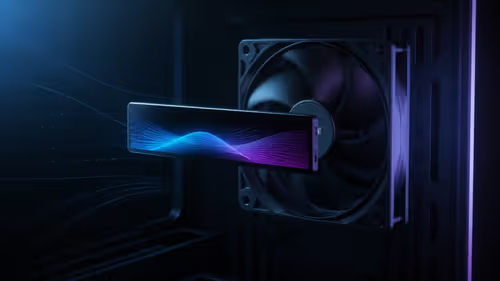
Thermalright's Fan Frame Vision-1 adds a 640x172 status screen to a standard 120mm fan. SA builders should check clearance, USB routing and local support before treating it as an easy upgrade.
1000W for RTX 5090 needs a full-build check, not a simple yes. Review GPU guidance, CPU draw, transient load, connectors, PSU quality, and upgrade plans before deciding.

Wi-Fi 6E vs Wi-Fi 6 matters for 4K video editing when files move across a network. The real-world difference between Wi-Fi 6E and Wi-Fi 6 for video editing in 4K depends on NAS access, cloud uploads, router range, and SA creator workflows.
RTX 5080 Super with a 750W PSU is more comfortable than lower wattage if the unit is quality. SA builders should still confirm GPU guidance, CPU draw, connector type, airflow, and upgrade room.

Wi-Fi 6E vs Wi-Fi 6 for Video Editing in 4K comes down to router support, latency, client devices, band support, and home network layout. SA buyers should match the choice to their setup instead of assuming one option always wins.